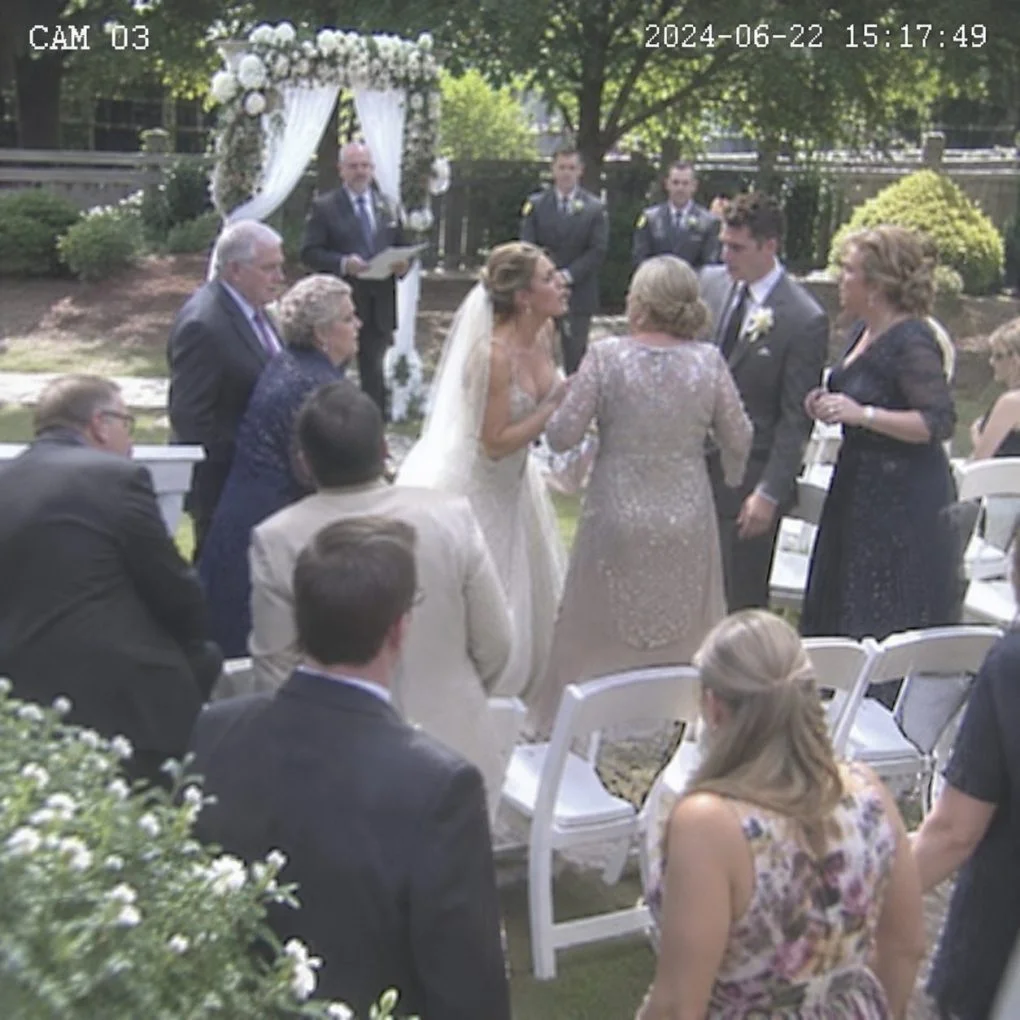
“Put her parents in the back. They won’t complain,” my future sister-in-law laughed, unaware I could hear every word. Then my fiancé’s mother started planning what she’d do with the home I’d bought before meeting him. I didn’t interrupt. Instead, I made one phone call that changed our wedding day…..
“Put her parents behind the pillars,” my future sister-in-law said. “Your boss is coming, Adam. Do you really want everyone seeing them in the front row?”
I was sitting on my bedroom floor, folding wedding programs, when I heard her through my phone. Three days before our wedding, my fiancé, Adam Pierce, had called to ask about the rehearsal and forgotten to end the call. I opened my mouth to say his name, but his mother spoke first.
“After Saturday, I’ll take the downstairs bedroom,” Marian said. “It’s ridiculous for Claire to keep a whole room empty when I could be living there.”
“She uses it when her parents visit,” Adam answered.
“Exactly. They can get a hotel.”
I stared across the room at my wedding dress, hanging from the closet door where my mother had carefully stitched the hem. My father had spent the previous weekend fixing a loose porch step at the house I bought seven years before meeting Adam. Neither parent had ever asked me for a key, much less a bedroom.
My name is Claire Sutton. I’m thirty-four, a physical therapist in Dayton, Ohio, and I had spent nine months planning a garden wedding for a man I believed understood how hard I’d worked to have a home. Adam still rented his own apartment; we’d agreed he’d move in after the ceremony, once we were married.
His sister Brianna laughed. “She’ll complain, but she always gives in. Remember how you got her to cover the rehearsal dinner?”
I had paid that bill because Adam said his mother was struggling. I remembered him kissing my forehead afterward, saying we made a good team, and felt my thumb catch on the edge of a folded program.
Then Marian said, “And the house loan? Brianna can’t keep her salon open without it.”
Adam lowered his voice. “The broker says Claire has to sign herself. I’ll bring it up after the honeymoon. Once we’re married, she won’t want to embarrass me by refusing.”
My phone screen went dark. The call had ended, but I kept sitting there while the washing machine thumped down the hall, listening to a noise so ordinary it made what I’d heard feel worse.
I opened our shared wedding email account to check the latest seating plan. My parents had been moved from the front row to seats behind the catering tent. Below that message was another email, from a loan officer asking when the legal owner of my house would approve a proposed $78,000 home-equity line.
Adam had replied that morning.
“She doesn’t know about it yet,” he’d written. “I’ll handle her after the wedding.”…The next part of the story is here.
I didn’t sleep that night. At two in the morning, I looked at the quilt my mother had made from my father’s old work shirts when I bought the house. Marian had called this room empty. It was the room where my parents stayed when Dad’s bad knee made the stairs painful.
I’d explained away so much. Marian corrected my mother’s pronunciation of words at dinner, while Brianna joked about my father’s work boots leaving marks on her car mats. Adam always squeezed my hand afterward and said, “You know how they are.” I’d mistaken tenderness for protection.
Thursday afternoon, I went to Adam’s apartment with the seating chart folded in my purse. I asked whether my parents would still sit in the front row. “Of course,” he said, not looking up from his laptop. When I asked whether Marian was moving into my house, he laughed and said she was only talking about visiting.
“And the loan against my house?”
That made him look up. He called it an idea and said Brianna’s salon needed help. “We’re about to be married, Claire. Don’t make every family decision feel like a courtroom.”
“I didn’t know there was a decision.”
He reached for my wrist, the same gentle gesture that once made me feel safe. “Can we just get through Saturday? Everything will make sense afterward.”
I went home without arguing. On Friday, a real-estate attorney explained what I already suspected: marriage wouldn’t put Adam’s name on my deed, and no lender could legitimately use my home as collateral without my consent. I told the broker I hadn’t authorized the inquiry and wouldn’t sign.
I also changed my locks. Adam had a spare key for feeding my cat when I worked late, but he had never lived in the house, and I didn’t intend for that key to become somebody else’s invitation.



