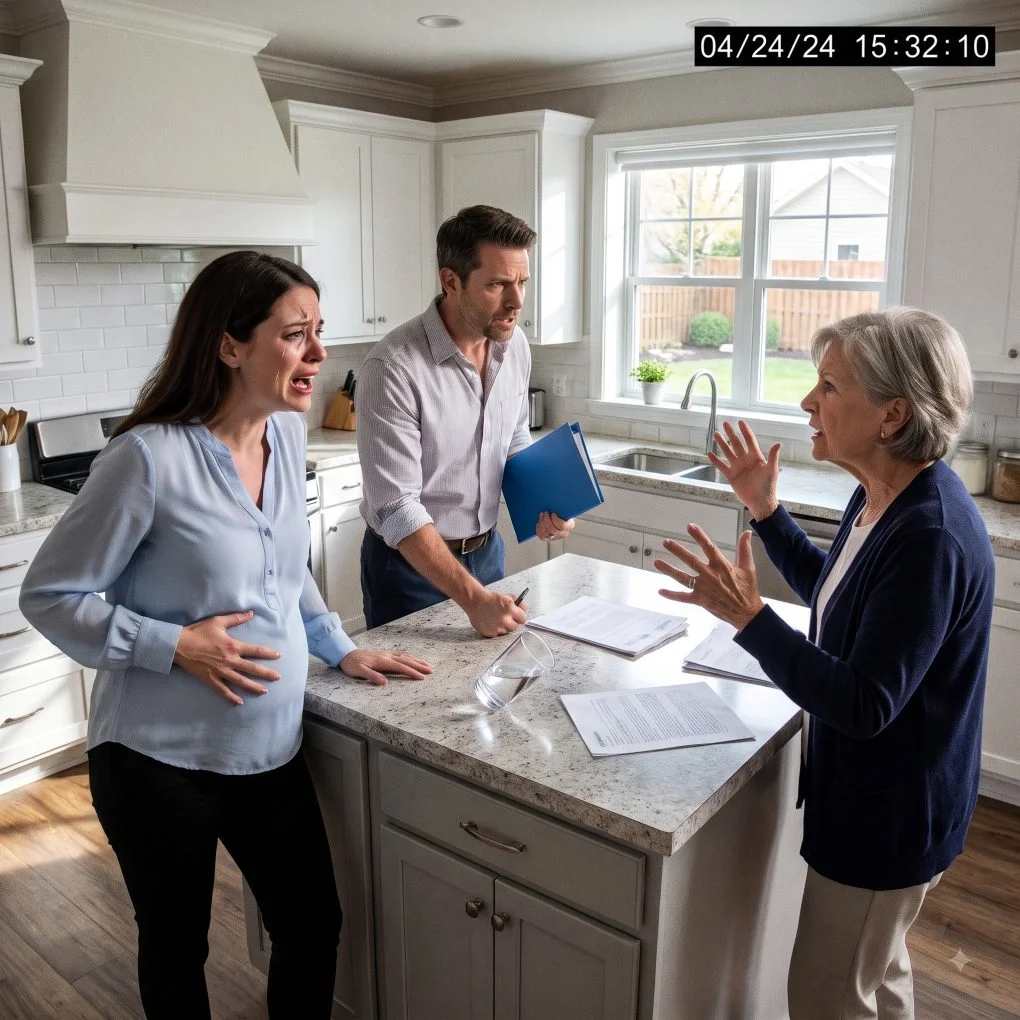
My mother-in-law stood in the kitchen doorway while I lay on the floor, seven months pregnant and struggling to get up. My husband said, “Stop making a scene.” Hours later, the hospital preserved evidence, and the bank halted a suspicious property transfer. By sunrise, both were begging me to answer…
At 5:42 on a Thursday evening, seven months pregnant, I lay on my kitchen floor with one hand beneath my belly while my husband stood over me and said, “Stop making a scene.”
His mother, Lorraine, watched from the doorway, holding the dish towel I had embroidered for her birthday. I asked her to call an ambulance; she looked at her son instead, waiting for permission.
I’d come home from my shift at a Columbus dental clinic to find a blue folder on the counter, beside a half-eaten slice of the banana bread I’d baked before work. Its first page said PROPERTY TRANSFER AGREEMENT, and beneath it was the address of the brick house my father had left me before I married Adam.
“Why is my house in a contract?” I asked. Adam said his mother’s struggling renovation business needed a short-term loan and that we were “only moving things around on paper.” When I saw an unfamiliar signature above my printed name, I snapped one photograph and reached for another.
Adam caught my wrist and shoved me away from the counter. My heel caught the kitchen mat; I fell hard against the tile, and a sharp pain tightened across my abdomen.
For years I’d explained away his temper. He could be gentle when I was sick, bringing tea without being asked, and then go silent for days if I questioned his spending. I had learned to apologize first because silence frightened me more than arguments.
“Adam, the baby,” I whispered. Lorraine took two steps toward me, then stopped when he said, “She’s fine. She’s trying to scare us.”
I couldn’t reach my phone, which had slid under the refrigerator. I pressed the emergency button on my smartwatch and told the dispatcher that I was pregnant, injured, and unable to stand; the ambulance arrived while Adam was still insisting I’d slipped.
At the hospital, nurses documented the bruises on my wrist and monitored our daughter’s heartbeat. She was alive, but the doctor kept me overnight because of the fall and contractions that wouldn’t settle.
My lawyer, Rachel Kim, answered my call after I sent her a photograph of the folder I’d managed to take before Adam grabbed me. She contacted the title company and lender named on its cover, warning that I disputed every signature and had authorized no transfer.
At 1:13 a.m., Rachel sent me the bank’s copy of an affidavit supporting the application. It claimed I’d signed voluntarily, in front of two witnesses.
The first witness was Adam.
The second was Lorraine.
And the affidavit was dated 5:43 p.m.—one minute after I’d hit the kitchen floor.…Read the next chapter here.
I read the affidavit three times, hoping I’d misunderstood the time. Lorraine had been standing in the doorway when I begged her to help; according to the paperwork, she had somehow been watching me happily sign away the home where my father had taught me to make pancakes.
Our daughter was still moving beneath the monitor straps, each small kick making me want to cry with relief. A nurse brought me ice water and quietly placed my phone within reach, the sort of ordinary kindness I’d stopped expecting at home.
Rachel arrived the following morning and explained what she knew. The house was in my name alone, inherited before the marriage, and Adam had no authority to convey it to a company owned by his mother. The lender had paused funding, and the title company had suspended its scheduled closing after receiving Rachel’s fraud notice; neither institution could simply erase my ownership.
The proposed buyer was Lorraine’s newly formed LLC, and the requested loan was $410,000. Adam had described the transfer as a restructuring to rescue her business, but the paperwork would have handed her company control of my house while placing new debt against it.
I remembered my father repainting the upstairs window frames one summer, long before I knew Adam. He’d left pencil marks on the pantry door to measure my height as a child, and when he died, I kept them because they were one of the few ways his hands still seemed present.
Lorraine had moved into our finished guest apartment eight months earlier after claiming she couldn’t afford her own place. I paid the utilities and stocked her refrigerator; in return she criticized how often I worked and told Adam that a real wife wouldn’t keep her inheritance separate.



