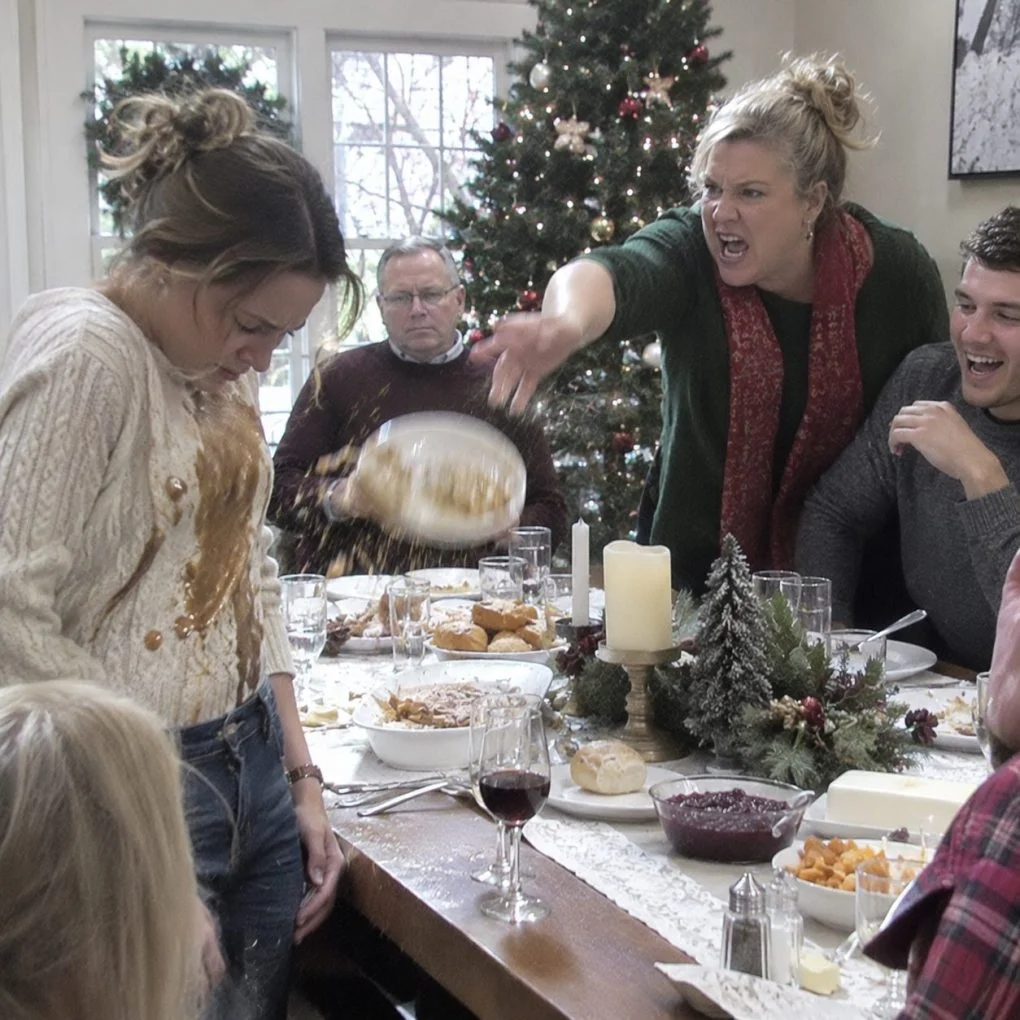
Mom threw a plate of Christmas dinner at me and shouted, “You’re nothing without this family!” My brother laughed. Dad kept eating. I quietly walked out, still wearing my ruined sweater. Sixty minutes later, Mom called twenty-three times. She had just discovered who’d been paying their mortgage…
“YOU’RE NOTHING WITHOUT THIS FAMILY!”
My mother threw her Christmas dinner at me, splashing gravy down the cream sweater my grandmother had knitted, before the plate shattered against the chair behind me. My younger brother Jason laughed into his wineglass.
Dad kept cutting his turkey. All I could hear was the scrape of his knife and my niece Lucy asking if I was hurt, while I pressed a napkin to my sweater, waiting for somebody to tell Mom she’d gone too far.
“Get out of my house, Rachel,” she said. “And don’t come back expecting us to rescue you.”
I was forty-three, a nurse practitioner in Dayton, Ohio, and I hadn’t asked my parents for money since college. I’d come straight from a twelve-hour hospital shift, carrying a lemon pie I’d baked before dawn because it was Mom’s favorite, and the argument had started when Jason announced he needed me to guarantee another business loan.
His catering company had already failed once, leaving Dad to pay suppliers he couldn’t afford. I said I couldn’t risk my credit, especially when I’d spent years helping with other family expenses, and Jason rolled his eyes as though my refusal were a personal insult.
“Helping?” Mom repeated. “Your brother is the one who’s kept this roof over our heads.”
I looked at Dad, expecting him to correct her. Four years earlier, after his bypass surgery and the closure of his repair shop, he’d asked me to transfer $2,540 a month into his checking account for the mortgage, promising it would be temporary and begging me not to frighten Mom about their finances.
I’d worked extra weekend clinics to keep those payments going. Some mornings I ate toast standing beside the sink because I was too tired to make breakfast, yet every month I sent the money before paying myself anything beyond my own bills.
“It’s Christmas,” Dad murmured without looking up. “Don’t start.”
I set my napkin on the table, retrieved my coat, and walked past the family photographs lining the hall. Lucy followed me as far as the doorway and whispered, “I’m sorry, Aunt Rachel,” but I couldn’t trust myself to speak without crying.
At home, I photographed the stained sweater, then emailed my parents the transfer records and a simple sentence: “I won’t send another mortgage payment after this month.” An hour after I’d left, my phone showed twenty-three missed calls from Mom.
Her last voicemail began with an apology, then dissolved into sobbing.
“Rachel, I looked at the mortgage account. If you’ve been paying us all this time, why does it say we haven’t made a payment in three months?”…The rest of the story unfolds here.👇
I played Mom’s voicemail three times, not because I couldn’t understand it, but because I couldn’t bear what it meant. For forty-eight months, I had sent Dad $2,540 before the mortgage was due, and now the house was three payments behind while my brother still spoke as if he were the one keeping it standing.
Mom called again the next morning. “Your father says he used the money for Jason’s business,” she whispered. “He said he’d put it back before anyone noticed.”
I had been twenty-nine when Dad taught me how to change a tire in that driveway, kneeling beside me in the cold because he refused to let me depend on somebody else for everything. Now, at forty-three, I was staring at the bank-transfer history on my laptop and wondering why he’d taught me independence only to punish me for having it.
I agreed to come over on December twenty-sixth, but asked my aunt Helen to sit with us. She had been at Christmas dinner, looking down at her plate when the gravy hit my sweater, and I needed one witness who wouldn’t pretend later that none of it happened.
The house smelled of stale coffee and pine cleaner. Mom approached me with her arms open, but I stepped around her and sat at the kitchen table, where a faint brown stain remained between the saltshaker and the centerpiece.
Dad produced the mortgage statement. Payments due in October, November, and December were marked unpaid; he had sent the money to Jason’s catering account instead, hoping a holiday contract would repay him before the lender noticed. The contract fell through, and he’d hidden the notices from Mom in a drawer beneath his tax records.
“You let her think Jason paid the mortgage?” I asked.
Dad rubbed the bridge of his nose. “I was embarrassed your mother knew my shop had closed. Jason said he’d make things right.”



