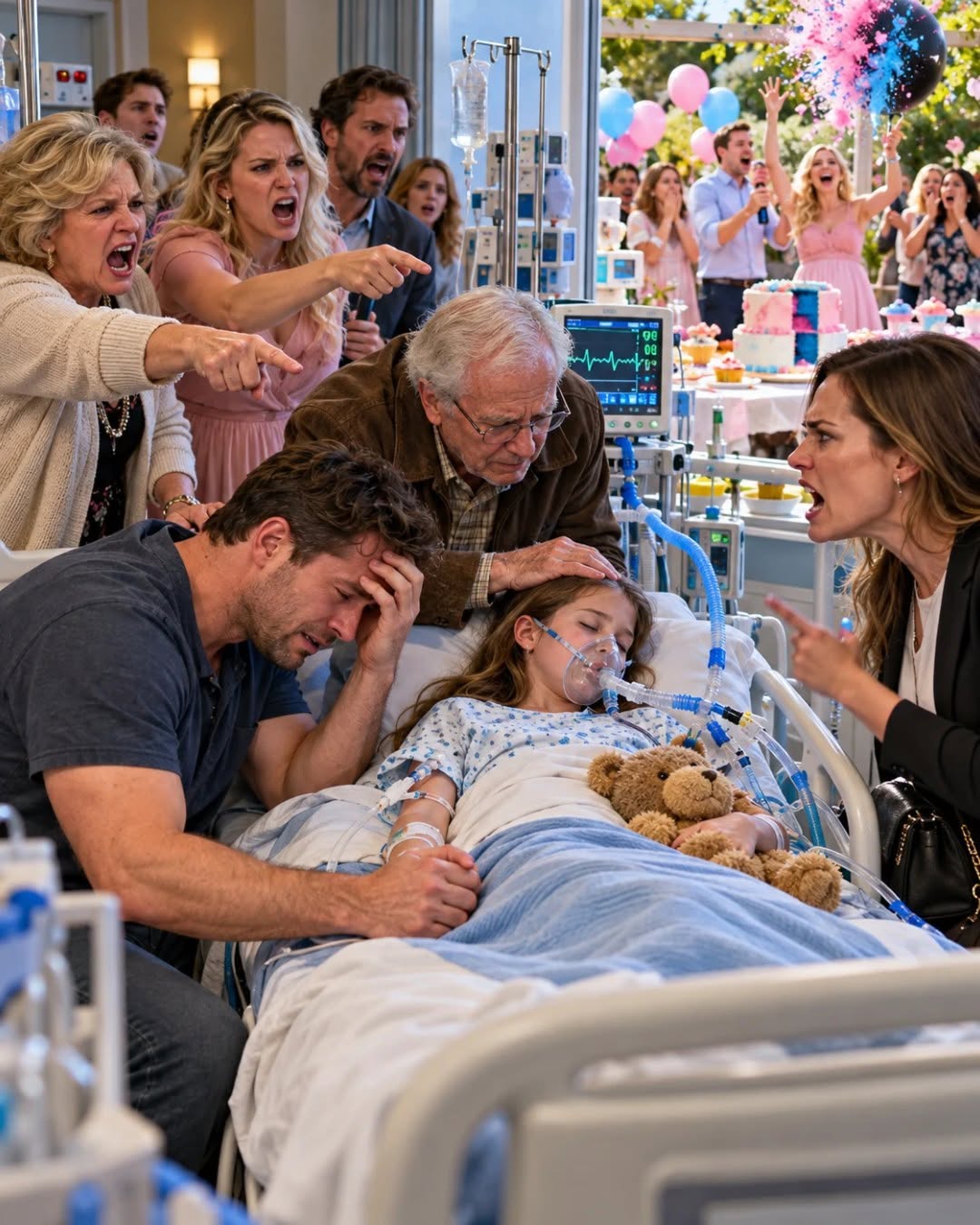
It started at 2:00 a.m. — the kind of quiet hour when the world feels asleep, and you’re alone holding your breath.
I woke to the sound of Emma struggling. Not a cough, not a whimper — a ragged, tight wheeze that tore right through the dark. Just hours before, my eight-year-old had been curled up beside me on the sofa, laughing at her favorite cartoon, cheeks warm and bright, eating buttered popcorn like it was the best thing in the whole world. She’d gone to bed at 8:30 p.m., healthy and happy — and now, every breath was a fight.
Her inhaler did almost nothing. I watched her chest heave, saw the fear widen in her big brown eyes, and my blood turned cold. I grabbed the phone and dialed emergency services before my mind could even catch up. “Please hurry — my daughter can’t breathe properly.”
Inside the ambulance, I held her small hand. The paramedic worked calmly, adjusting monitors, administering oxygen, but Emma’s breathing didn’t ease the way it should. By the time the hospital doors swung open, the doctors were already moving fast. This wasn’t just a bad attack — this was serious.
Dr. Patricia Williams pulled me aside in the hallway, her voice steady but grave. “Emma has severe airway inflammation and respiratory compromise. She’s going to need intensive monitoring and breathing support — the next 48 to 72 hours will be critical. You did the right thing bringing her in.”
I called my boss, Frank, voice shaking so bad I could barely get the words out. He didn’t hesitate. “Stay with your girl. We’ve got everything covered here. Don’t worry about a single thing at work.”
Three weeks earlier, I’d promised to order the cake for my little sister Stephanie’s gender reveal. I’d smiled, said of course I’d do it, picked out her favorite chocolate from Morrison’s Bakery, marked the date on my calendar — proud, even, to be asked.
By Friday, the reminders came fast and hard. My mother called, texted, called again — “Don’t forget the cake, don’t be late, everyone’s counting on you.”
When I finally told her — “Mom, Emma’s in the ICU. She can’t breathe on her own right now. I can’t leave her.” — the silence on the other end lasted exactly two seconds. Then she laughed, sharp and sharp-edged.
“It’s just asthma, Monroe. She’s had little attacks before. Give her a puff and come on home. You promised.”
“This isn’t a little attack,” I said, my voice cracking. “They’ve got her on a breathing machine. The doctors say it’s critical.”
But she didn’t want to hear it. To her, this wasn’t a medical emergency — it was me letting the family down. “You’re being dramatic,” she said. “Stephanie has waited so long for this day. Do you want to ruin it for her?”
By Saturday morning, the tone shifted from nagging to ultimatums. Mom called, voice cold and final: “Show up at that reveal, or don’t bother showing up anywhere in our lives ever again. The choice is yours.”
I stared at the phone, then at Emma — asleep, tubes in her arms, mask over her face, looking so small beneath the hospital blankets. The choice wasn’t hard at all.
Stephanie called next. She didn’t ask how her niece was. She didn’t say I’m sorry or that sounds scary. She just said, “Where are you? Everyone’s asking.”
The messages started pouring in after that — from cousins, from aunts, from Uncle Paul. They didn’t ask about Emma’s oxygen levels or what the doctors had said. They asked why I was being selfish, why I couldn’t “sacrifice” for family, why I was making such a big deal out of nothing.
“Kids get sick,” Uncle Paul texted. “My grandson had pneumonia and we still made it to the holiday dinner. Emma will get over it — family is forever.”
I read those words sitting three feet from my daughter’s bed, watching her struggle to draw a single easy breath, and my heart felt like it was tearing in two. But nothing — nothing — prepared me for what happened next.
Jessica, my ex-wife, walked into the ICU.
We’d split up two years before. We kept things civil — swapped schedules, shared birthdays, kept our distance. But she didn’t look at Emma first. She looked at me.
“Monroe, we need to talk.”
She stood there, crisp and sharp, and started questioning everything — had I given Emma her inhaler on time? Had I taken her to all her specialist appointments? Did I actually know how to manage this?
“I take her to every appointment,” I said, my voice tight. “I pick up her prescriptions. I sit with her when she’s scared. You know that.”
“Maybe she needs someone who can focus fully on her health,” Jessica said, cool as ice. “Someone more consistent. I’ve been speaking with my lawyer. We might need to revisit the custody arrangement.”
I stared at her, stunned. “You’re here — now, while she’s fighting for her life — to tell me you want to take her away?”
She didn’t flinch. “I’m doing what’s best for Emma.”
By Sunday morning, Stephanie was desperate. She called from her husband Derek’s phone, voice high and frantic — I’d blocked Mom, so she couldn’t get through.
“Thirty-five people are here!” she cried. “Everyone keeps asking where you are. I look ridiculous!”
“Stephanie —”
“Emma’s doing this on purpose,” she cut in. “She knows you’ll drop everything for her. She’s just greedy for your attention.”
I looked at my daughter — pale, still, fighting just to breathe — and something inside me went quiet. “Don’t you ever say that about her. Not ever.”
“It’s true!” Stephanie pushed on, relentless. “Remember Christmas two years ago? You dragged her home because she had a fever? And Fourth of July? You left early because she was overwhelmed? You always choose her over us!”
“I choose her because she’s my child,” I said slowly. “Because she’s vulnerable and she needs me. That’s not choosing against you — that’s loving her the way she deserves.”
I hung up.
By midday, the photos appeared online. Pink and blue balloons. A table piled high with food. A beautiful cake — someone else’s cake — covered in frosting and flowers. “So grateful for family who actually shows up,” the caption read. Dozens of likes. Dozens of comments.



