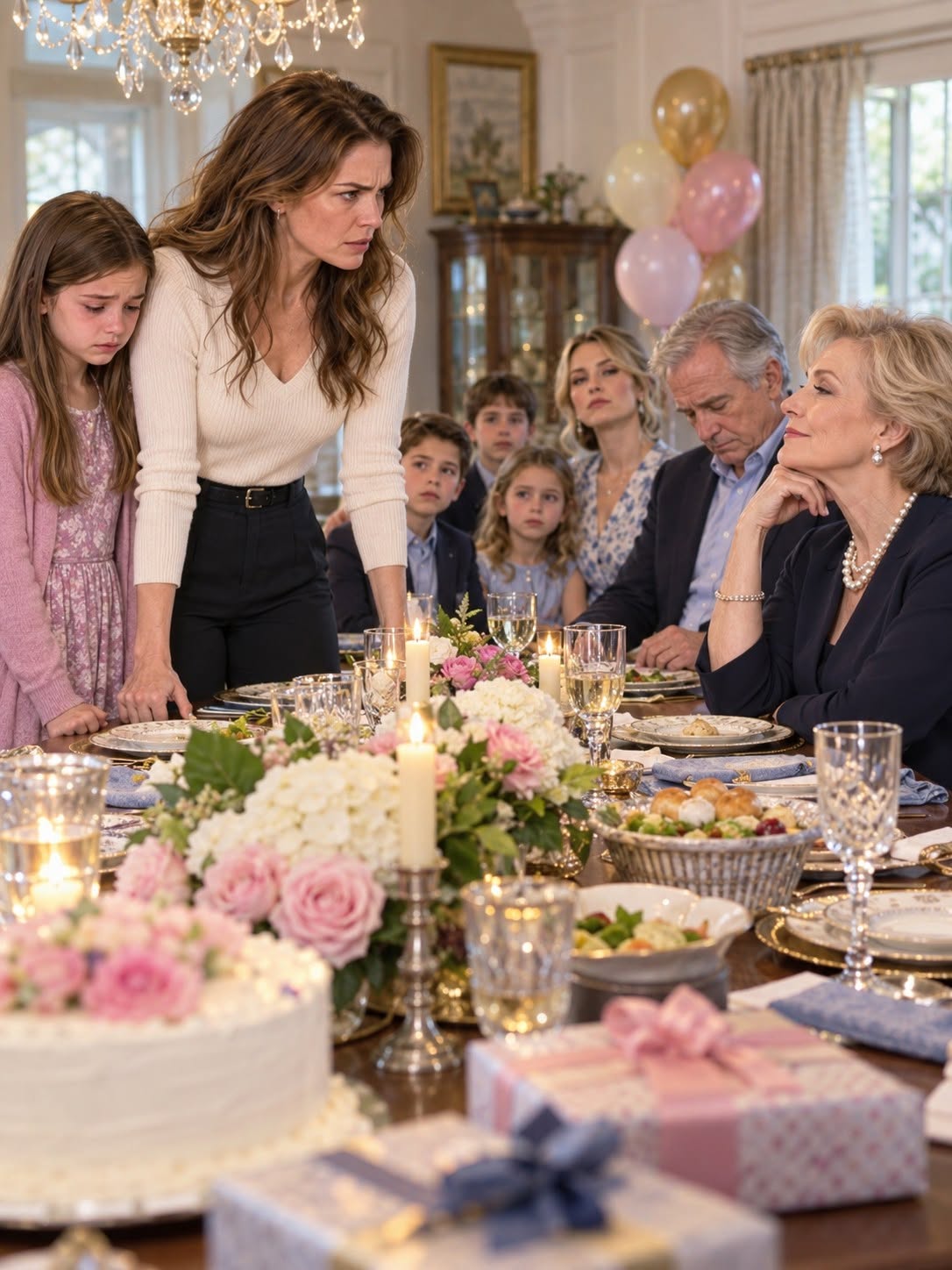
The air inside my parents’ dining room had always smelled faintly of lemon oil, dry old books, and the unspoken rule that my mother’s comfort was the pivot upon which the entire universe turned. For thirty-six years, I had inhaled that scent without realizing how thoroughly it could suffocate a person. It was a sensory trap, layered with thirty-six years of compliance, quiet compromises, and the exhausting, silent gymnastics of trying to earn an affection that was never distributed equally.
On a Tuesday evening in late October, just three days before my mother’s grand milestone seventieth birthday, the mahogany table was covered not with food, but with an exhaustive, glistening sprawl of paper logistics. Swatches of champagne-colored silk, glossy brochures for a catering hall downtown, seating charts written in my mother’s precise, looping cursive, and a physical mockup of a four-tier fondant cake towered near the center piece.
My mother, Eleanor, sat at the head of the table like a benevolent queen reviewing the tribute of her provinces. Her silver-streaked hair was freshly blown out, framing a face that had weaponized its own aging into a tool of absolute authority. Beside her sat my father, Thomas, a man who had long since surrendered any claim to independent speech, staring down at his water glass with the hollow, practiced resignation of a lifelong hostage. Across from us was my sister, Katie, her fingers already sticky from a box of imported French macarons she had torn open without asking, and her three children scattered around the room like debris from a storm.
Thirteen-year-old Elliot was slumped against the velvet upholstery of the armchair, his thumbs flying across a brand-new smartphone I knew cost more than my weekly groceries. Nine-year-old Ruby was lying flat on the antique Persian rug, coloring inside a book with markers that bled through onto the wool. Five-year-old Nico was under the sideboard, rhythmically kicking a wooden table leg while my mother beamed down at him as if he were composing a symphony.
And then there was Sienna.
My twelve-year-old daughter sat beside me, as far away from the center of the table as she could get without falling off her chair. Her hands were folded neatly in her lap, her fingers laced so tightly her knuckles showed white. She had been quiet the entire evening, watching the adults with that painful, hyper-vigilant clarity that only children of emotionally volatile households ever develop. She had spent all afternoon brushing her hair, putting on her favorite sweater—the one with the small embroidered daisies near the collar—hoping against hope that this dinner would feel like belonging.
“The florist called today,” Eleanor announced, her voice ringing out with the crisp, theatrical cadence she used when she wanted every person in a five-mile radius to acknowledge her importance. “He tried to tell me that white hydrangeas would wilt under the reception hall spotlights. Can you imagine? After all the times I’ve used him. I had to remind him precisely who brings him half his referrals in this county. By the time I hung up, he was apologizing profusely. Naturally.”
Katie let out a high, bright laugh, popping another macaron into her mouth. “You always know how to handle them, Mom. If I tried that, they’d walk all over me.”
“Well, Katherine, some people command respect and others merely request it,” Eleanor replied smoothly, her eyes gleaming with satisfaction. She didn’t look at Katie when she said it; she looked at me. It was a microscopic micro-expression, the kind of flicked glance that a seasoned bullfighter gives a wounded animal before the final pass. It was a look designed to remind me of my permanent station in the family hierarchy: the dutiful, hardworking, endlessly dependable workhorse who was allowed to haul the cart, but never allowed inside the manor.
For decades, I had swallowed those glances. When I was Sienna’s age, I had watched Katie receive the lead roles in school plays because Mom “socialized” with the drama teacher, while I was told I lacked the necessary sparkle. When we graduated college, Katie was handed a down payment for her first condo because she “needed a soft landing,” while I was given a handshake and a lecture about the value of student loans because hardship builds character. When Katie got married, Mom threw her an engagement party that rivaled royal weddings; when I married Ben, my parents showed up twenty minutes late and complained about the parking.
I had always told myself it didn’t matter. I had built a good life with Ben—a solid, unglamorous life rooted in hard work, quiet stability, and an absolute commitment to shielding my daughter from the generational poison running through my family’s veins. We didn’t need their money. We didn’t need their approval.



