Part 2
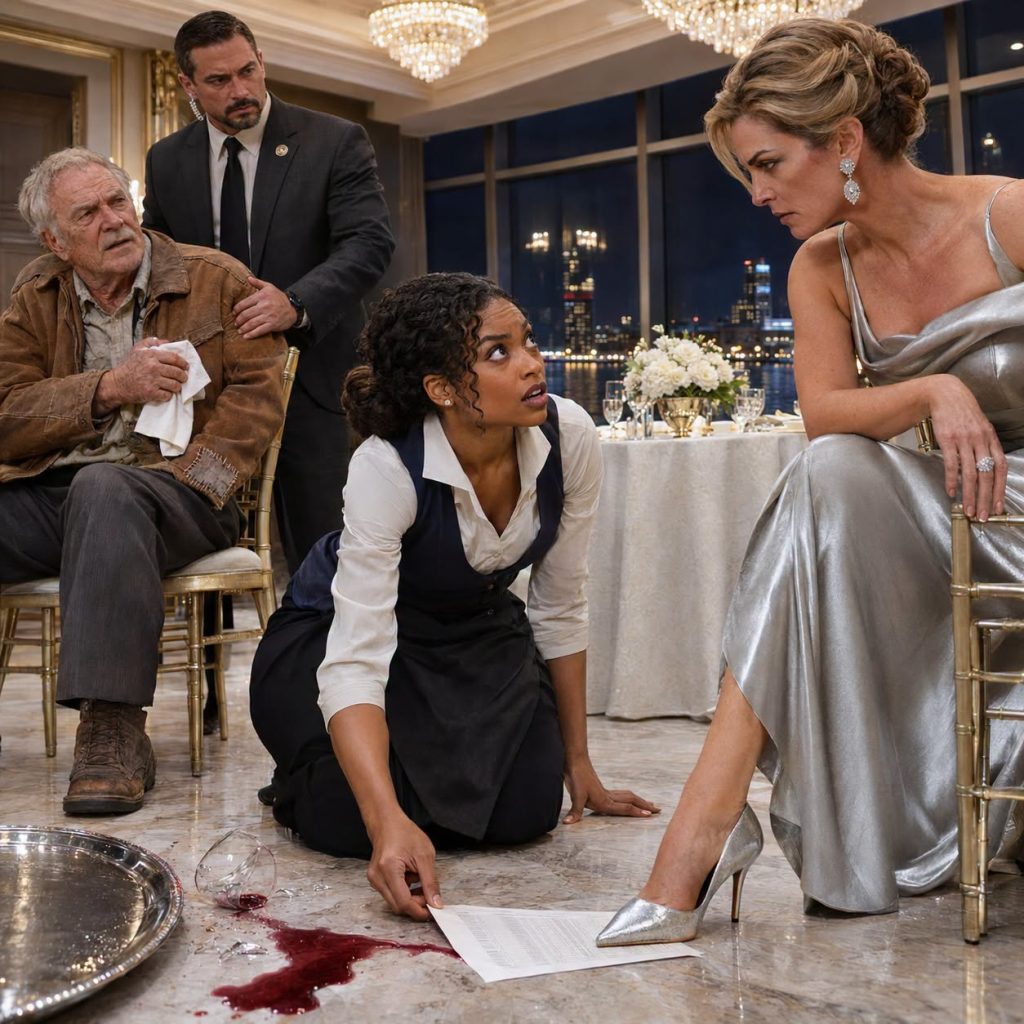
I let go of the paper and took a picture of it while Vivian’s shoe was still on it. She bent for my phone. Callahan pushed himself up and caught the back of the chair, turning it between us. One leg scraped hard across the floor. “Would you like to do that again,” he asked her, “while those people are filming?” The woman by the bar moved closer. Vivian lifted her foot, and I gathered the page and the envelope. My hands were shaking so badly I had to tuck the papers under my arm.
“Where did you get my grandmother’s name?” I asked. Callahan lowered his voice. “She gave it to me. I’ve been calling families who applied for home care. Your grandmother said I could pull her file.” Grandma Ruth had mentioned a man calling about her old application. I’d assumed he was another person with a clipboard and a waiting list. “She got a denial,” I said. “I read the letter to her.” Callahan nodded toward the sheet. “According to that, she got fourteen months of home visits.”
Vivian looked past me at the guests holding phones. “You’re looking at a preliminary accounting report.” Callahan took a folded page from his inside pocket. “Then why did you send the same figures to the donors?” Vivian turned to Vince. “Get her out of here.” He reached for me again, and the woman from the bar stepped beside me. “Go ahead,” she said, holding her phone at chest height. Vince stopped with his hand open. I could see the half-moon marks his fingers had left on my arm.
I looked for the dates on Grandma’s report and found a signature instead. Two tall loops in the L, a long slash under the last name. Grandpa Leon used to sign my birthday cards with that same ridiculous flourish. I’d teased him that you could spot his signature from across a parking lot. Beneath it, the form said he’d verified Grandma’s final home visit on June twelfth. “He died in February,” I said. I said it again, louder, because Vivian had started talking over me. “My grandfather died four months before this visit.”
Callahan closed his eyes for a second. “I suspected they’d copied old signatures. I needed a family to confirm it.” I thought of Grandpa’s funeral and the row of foundation staff who’d come in matching blue scarves. Vivian had hugged Grandma and told her to call if she ever needed anything. “You stood next to his casket,” I said. Vivian’s face tightened. “And I’m asking you to consider what happens to the families still receiving services if a donor sees a video of you shouting fraud in a ballroom.”
“Which families?” a man asked. He’d been seated at the head table. I recognized his face from the gala program and his name when Vivian said it. General Nathaniel Reed, the active-duty four-star officer invited to give the keynote. He held a dinner program folded lengthwise. Callahan gave him a short nod. “Nate.” Reed looked at the blood on Callahan’s cuff, went to the bar for a clean towel, and handed it to him. “You told me you had questions about the fund,” he said. “How many families?” “Eleven I could reach,” Callahan replied.
A hotel supervisor arrived and asked if I wanted police or medical help. Callahan asked for both. I agreed to give a statement, then called Grandma from the service hall and told her what I’d found. She listened until I described Grandpa’s signature. “Look in the bottom of my sewing basket when you get home,” she said. “There’s a blue folder. I kept it because Leon told me to keep every scrap.” When I asked what was inside, she said, “The bill they sent me after they said I didn’t qualify.”
By eight the next morning, I’d photographed every page in the folder. One bill listed an agency I’d never heard of. Grandma was at the kitchen table trying to open a jar of instant coffee when somebody knocked. Through the peephole, I saw Callahan with his hand bandaged and General Reed beside him in a gray coat. Callahan had asked by text if he could bring Reed over. I’d said yes, then spent half an hour wondering what a four-star general could possibly need from me. “Ms. Carter?” Reed called through the door. “Before the board meets today, there’s something you should see about the company that billed your grandmother.”
Part 3
General Reed waited for me to unhook the chain. He and Callahan had come in Reed’s own car, and Callahan was carrying coffee in a cardboard tray. Grandma took one look at his bandage and asked whether he’d had stitches. “Three,” he said. “I told them two would do.” While she found him a mug with a handle he could grip, Reed put a printout next to the bill from her sewing basket. The agency’s registered address was a suite downtown. Grandma looked at it and tapped the page. “That’s where Vivian told me to mail my application.”



