 The pediatric intensive care unit was quiet except for the rhythmic, rhythmic hiss of Caleb’s oxygen monitor and the soft hum of the fluorescent fixtures recessed into the ceiling.
My son slept deeply, his small face pale against the hospital pillow, the green heart the triage nurse had drawn beside his name on the whiteboard still visible under the dim nightlight. I stayed seated in the stiff vinyl recliner beside his bed, the heavy wool of my Army service uniform jacket draped over the backrest, the brass pins cold against the synthetic leather.
I held the phone to my ear, my knuckles white against the black plastic case.
“Say that again, Mr. Harris,” I said. My voice was pitched low so as not to disturb Caleb, but every word came out clipped, shaped by eleven years of military radio protocol. “Give me the date on that document.”
Michael Harris, the branch manager of First Heritage Federal Credit Union, exhaled heavily over the line. Paper rustled in his background.
“The durable power of attorney and custodial transfer form bears the date of October fourteenth, two years ago,” Harris said. “It purports to carry your signature, Morgan, giving your mother, Patricia Whitaker, full fiduciary authority to reallocate, transfer, and liquidate the custodial trust established by Thomas Whitaker for the benefit of Caleb Whitaker.”
A cold, heavy stillness settled in my chest.
October fourteenth.
“Mr. Harris,” I said, my voice dropping an octave, “on October fourteenth two years ago, I was a first lieutenant assigned to Task Force Saber at Patrol Base Gamberi in eastern Afghanistan. I was eight thousand miles away from Maryland, living out of a reinforced shipping container, running logistics convoys through mountain passes.”
“I pulled your military file from our defense liaison desk the moment your mother stepped out of my office,” Harris replied. His tone was measured, but beneath it ran the unmistakable tension of an executive who had just realized a federal crime had walked through his lobby. “The document includes a civilian notary seal from Montgomery County. The notary stamp indicates that you personally appeared before them, presented a Maryland driver’s license, and signed the instrument in their presence.”
I stared at the white wall across the room. On the bedside table sat the paper cup of cold black coffee Daniel Brooks had brought me three hours earlier, the cardboard sleeve stamped with the post exchange logo.
“I didn’t lose my license, Mr. Harris. My license was in my physical possession in my body armor chest rig in Nangarhar Province.”
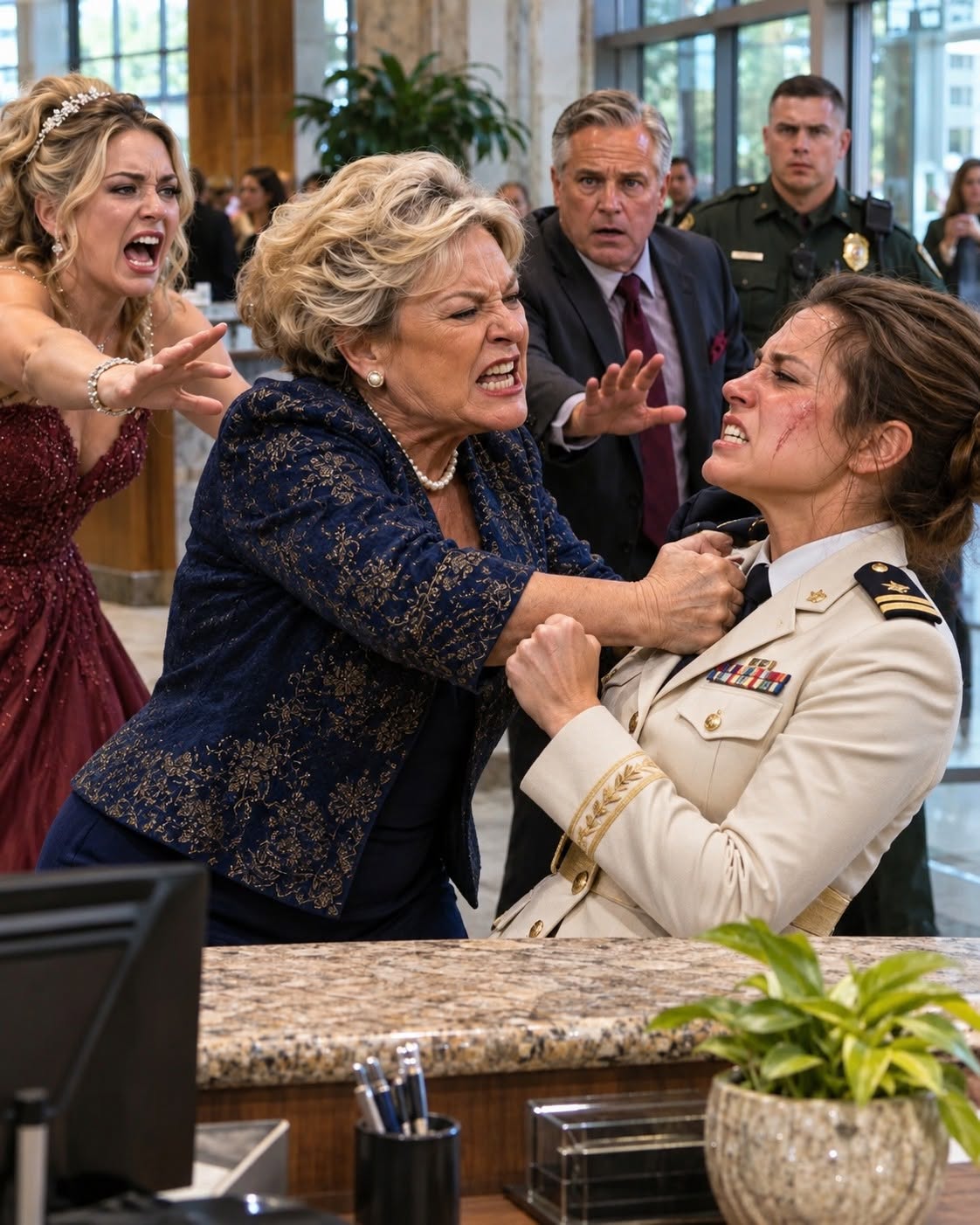
“Then we are looking at identity theft, bank fraud, and felony forgery of a federally insured financial instrument,” Harris said cleanly. “When your mother presented the paperwork this morning, she demanded an immediate wire of eighty-four thousand dollars to an account in Vanessa Whitaker’s name, claiming it was an urgent distribution for family necessities. When my assistant manager told her our fraud algorithms had flagged the account because of your freeze yesterday, she created a scene. She told the tellers you were an unfit mother, that you were neglecting your child, and that you had abandoned your familial obligations.”
A bitter taste rose in my mouth.
*Buy a veil.*
The fifty-cent transfer I had sent Patricia three days ago with that memo had been my final line in the sand—a petty, desperate assertion of boundaries after watching my seven-year-old child wheeled into major abdominal surgery while my mother and sister shopped for lace in Bethesda. But I had thought Patricia’s retaliatory threat to “empty the account” was merely her usual hysterical bluster.
I hadn’t realized she had laid the groundwork for grand larceny two years before Caleb ever fell ill.
“Did you release any funds?” I asked.
“Not a dime,” Harris said firmly. “First Heritage takes our servicemember protections under the Servicemembers Civil Relief Act and Department of Defense banking regulations very seriously. Your late father was a valued member here for three decades, Captain. Master Sergeant Thomas Whitaker sat in the very chair your mother occupied this morning when he set up this trust. He looked me in the eye and told me that money was strictly for Caleb’s future, protected by every firewall the law allowed.”
My father’s face flashed in my memory—his weathered jaw, the bronze star ribbon on his dress uniform, the rough, calloused hands that had taught me how to clean an M4 carbine and balance a household ledger before I was sixteen.
“What is the next step?” I asked.



