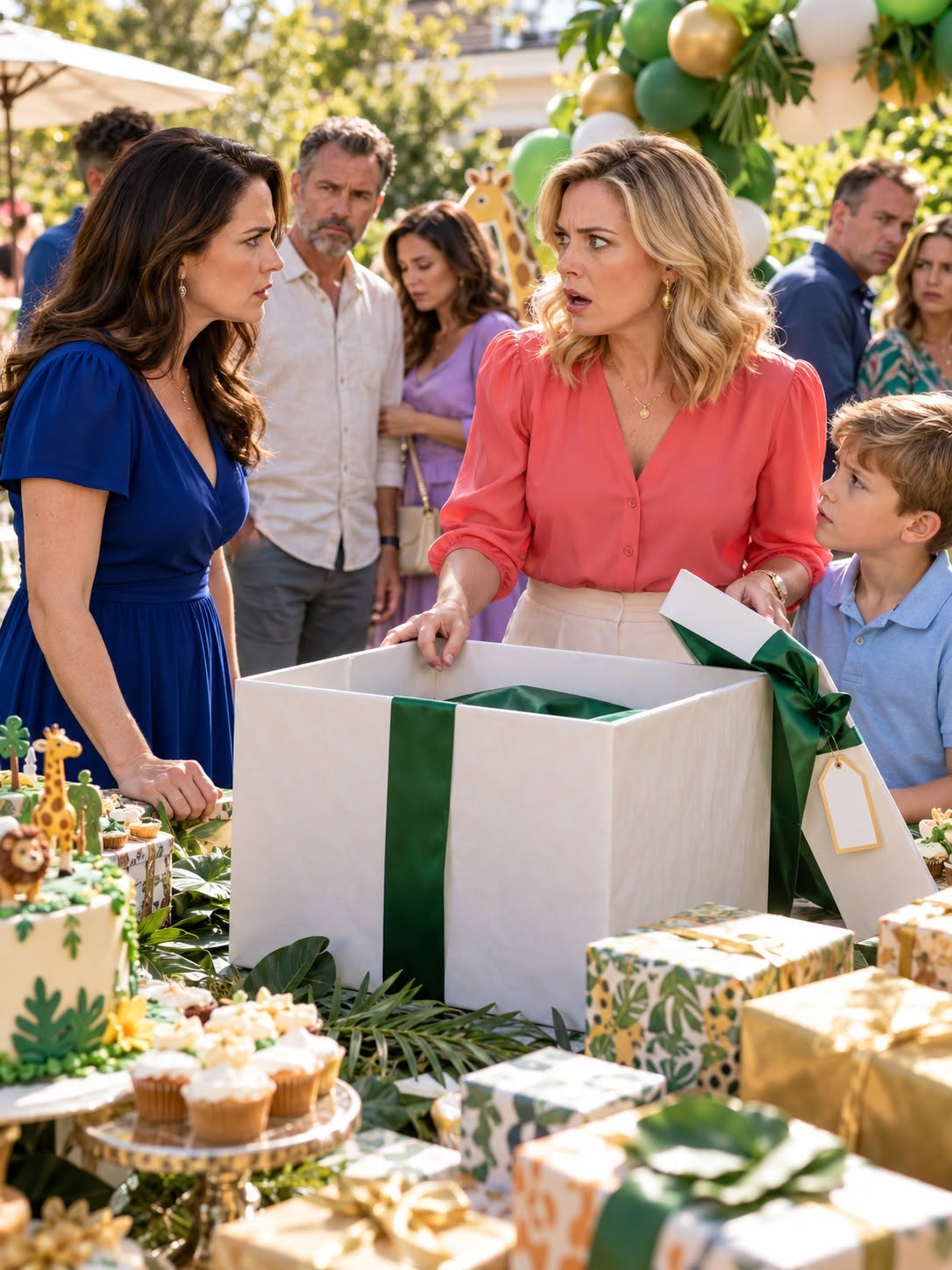
 The scent of cardstock, hot glue, and citrus-scented lemon polish had defined our kitchen for twenty-one days. To anyone stepping through the side door of our bungalow, the room looked less like a culinary space and more like the frantic backroom of an upscale event boutique. Reams of textured paper in shades of jungle moss, gilded bamboo, and sun-bleached khaki lay in precise, labeled stacks along the granite island. Thin skeins of emerald satin ribbon hung from the magnetic knife rack, unspooling in neat green waterfalls toward the floor.
At the center of it all sat Mia.
She was nine years old, with eyes the color of steeped black tea and a spill of chestnut curls that she perpetually secured behind her ears with plastic yellow barrettes. Her small, calloused fingers—strengthened by years of gripping handrims—moved over the edge of a scalloped cardboard cutout with surgical precision. She was humming a disjointed melody from a movie soundtrack, her tongue caught lightly between her lips as she guided a calligraphy pen across a place card.
*Tyler’s Tenth Safari Adventure,* the gold ink read, shimmering under the overhead pendant light. *Welcome, Tracker Logan.*
Every letter had been measured with a clear plastic ruler. If the ink bled even a microscopic fraction into the tooth of the paper, she discarded the card into a small recycling bin by her wheels and began again without a word of complaint.
“Mia, honey,” I said, setting down a mug of black coffee beside her workspace, careful not to jostle her alignment board. “You’ve been at this since four o’clock. Your shoulders are going to seize up before tomorrow morning. Take a break. Let’s watch the nature documentary we queued.”
Mia didn’t stop her stroke. She finished the crossbar of the *A*, lifted the nib with a practiced flick, and blew softly across the wet gilt. Only then did she look up, her face flushed with the radiant, stubborn earnestness that had carried her through three spinal surgeries and two years of intensive physical rehabilitation.
“Tyler said he wanted it to look like an authentic explorer’s outpost, Mom,” she explained patiently, as if educating a slow child on the fundamental laws of physics. “Like the ones in the 1920s with the vintage compasses and the field journals. If I use printed labels from the computer, it’ll look cheap. Aunt Brenda said the budget couldn’t stretch to professional stationary, so if I don’t hand-letter them, nobody will.”
I swallowed the tight, bitter knot that instinctively formed in my throat whenever my sister’s name entered our household conversations.
“Brenda’s budget,” I murmured, leaning against the island counter and looking at the spread of receipts pinned beneath a bronze pig paperweight near the microwave.
The numbers were burned into my retinas. They had formed a running ledger in my banking app for three weeks, a quiet drumbeat of financial concessions I had convinced myself were acts of sisterly generosity.
*Botanical Garden West Terrace Rental:* $800.00. (Brenda had claimed the city park was “too common” for Tyler’s milestone double-digit birthday, but her card had mysteriously declined twice at the municipal booking office).
*Arthur Pendelton, Close-Up Magician & Illusionist:* $300.00. (Tyler had seen him at a country club event eight months prior and thrown an inconsolable tantrum until Brenda promised he would appear).
*Bespoke Balloon Canopy and Hand-Crafted Sweet Cart:* $450.00. (Brenda had sent me the link from an upscale Pinterest board with three crying-face emojis and the caption: *If only I weren’t drowning in Tyler’s soccer fees this month…*).
*Artisan Catering & Mocktail Station:* $750.00. (Because, Brenda insisted, hot dogs and juice boxes were an insult to the children of the district’s premier families).
Total: $2,300.
I had paid every single dime.
I hadn’t done it because I had money to incinerate. I worked fifty-five hours a week as a freelance architectural draftswoman, sitting until my lower back throbbed, converting contractor scribbles into municipal blueprint submissions. I drove an eight-year-old sedan whose air conditioner whistled like a tea kettle in the July heat. I cut my own hair over the bathroom sink.
I had paid it because when Mia was six, a runaway delivery van had mounted a curb outside her preschool, shattering her lower lumbar spine and permanently severing her ability to run through sprinkler systems, kick a soccer ball, or walk down the aisle as a flower girl without assistance. In the three years of silence, clinical sterile smells, and pediatric physical therapy that followed, my extended family had slowly, imperceptibly retreated behind a wall of polite distance.



