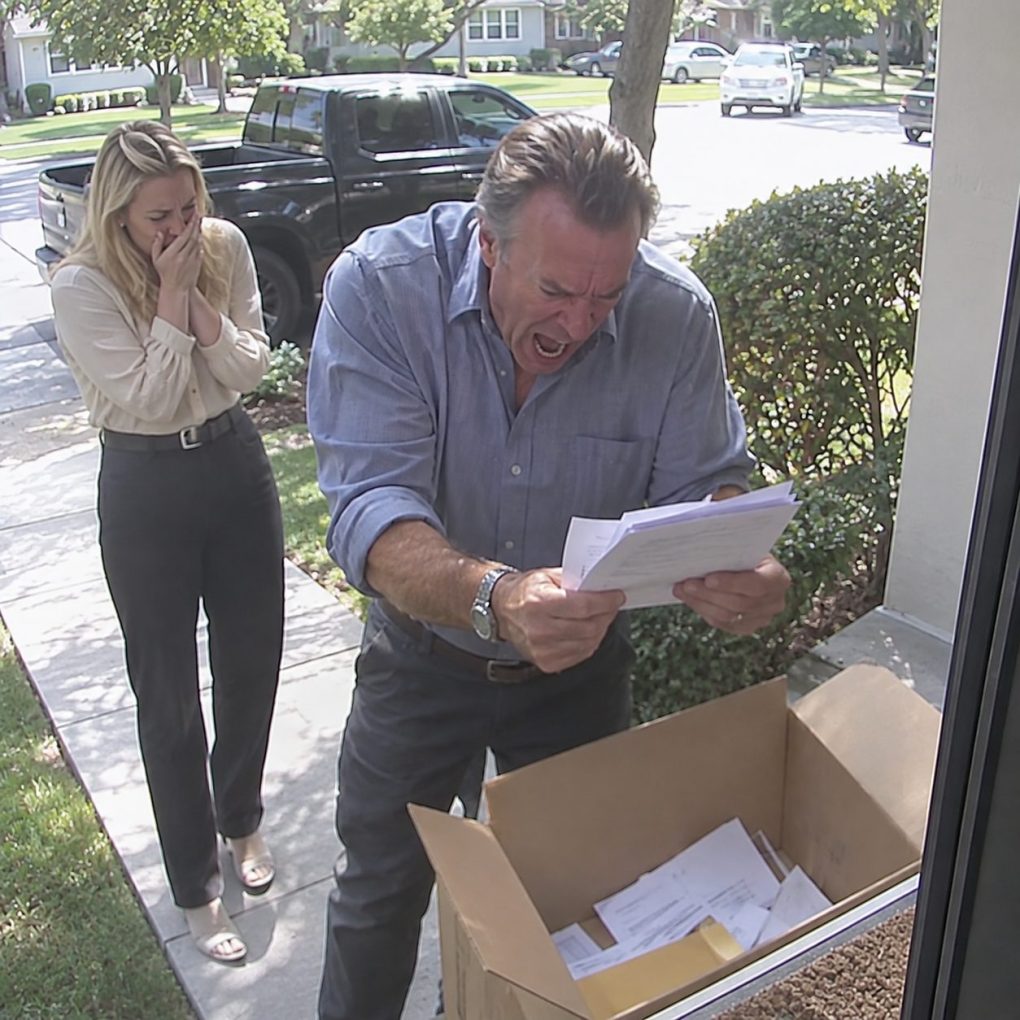
“YOUR SISTER OWES $800,000, AND YOU’RE GOING TO PAY EVERY PENNY!” Dad announced in front of twenty relatives. My sister laughed, certain I would surrender. Instead, I smiled and booked a flight. By sunrise, Dad was standing outside my locked house, holding a box. Then he read what was inside—and completely lost control…
“YOU HAVE UNTIL MORNING TO FIND EIGHT HUNDRED THOUSAND DOLLARS, OR I’LL DESTROY EVERYTHING YOU’VE BUILT!” my father shouted into the phone at 11:17 p.m. I sat beside a half-packed suitcase, folding the same sweater again because my hands wouldn’t stop shaking. “Okay, Dad,” I said.
He mistook my silence for surrender. Four hours later, I was airborne on a red-eye from Los Angeles to New York, while he expected a check I had never promised to write.
My name is Caroline Bennett, I’m thirty-six, and I own a freight-planning software company in Pasadena. Eight years ago, I built its first scheduling system at my kitchen table, living on discounted groceries and barely sleeping; now twenty-seven employees depended on me for their paychecks. Dad had met our largest clients at a company dinner I invited him to, hoping he might finally tell me he was proud.
My younger sister, Madison, had never been asked to earn anything slowly. Dad paid for her apartment, rescued her failed boutique, and celebrated her $800,000 loan for a luxury home-staging business, while I received birthday texts. She was brave, Dad said; I was lucky.
I still helped. When Madison’s boutique closed, I covered her rent; when Dad needed surgery, I managed his appointments while she posted photographs from Cabo.
Two weeks earlier, an accountant named Leah had contacted me about something she found while closing Madison’s books. She said my name appeared on a personal guarantee for the $800,000 loan, even though I had never met the lender or signed a single page.
I consulted an attorney, disputed the signature in writing, and saved every message. Dad didn’t know, and I let him believe his threat worked because I had a critical client meeting in New York.
Before leaving, I placed a small cardboard box on my front porch where my doorbell camera could see it. I’d changed the locks the previous week after Dad let himself in with his old spare key and searched my desk for bank statements.
At 8:06 the next morning, he arrived in his pickup, marched up the steps, and ripped the tape from the box. After landing, I watched the recording and recognized the way he set his jaw.
Inside were copies of the loan guarantee, my attorney’s formal fraud-dispute notice, and an email printed in Dad’s own words. He read that last page twice, then hurled the box against my door and screamed so loudly the neighbor across the street came outside.
The email wasn’t from me. It was the instruction Dad had sent Madison explaining exactly how to forge my signature.…The rest of the story unfolds here.👇
The first time Leah told me about the guarantee, I almost thanked her and ended the call. My father’s name was on enough family paperwork that I assumed she had simply confused our files, until she sent a scanned page with my signature copied beneath the word GUARANTOR.
The signature had a strange little hook at the end, the mistake I used to make before changing it four years earlier. Leah said Madison’s private lender was reviewing the file after several missed payments and had asked why the person supposedly guaranteeing the loan had never provided current financial statements.
Leah had worked for Madison’s company for eleven months. When she asked for the guarantor’s authorization, Madison told her to stop digging; Leah resigned and preserved emails she had received in the ordinary course of her job.
One message, sent by Dad, read: “Use the signature page from Caroline’s old supplier agreement. She’ll pay when she realizes we’re going to lose the building.” Attached was the very document I had signed in his office years ago, when he claimed he needed help setting up a vendor account.
The $800,000 had gone to Madison’s failed business, but Dad had personally guaranteed the debt, too, and pledged a commercial property he owned as collateral. He didn’t ask me for money because he thought I owed it; he asked because the lender was questioning the fake guarantee, and cash could make that scrutiny disappear.
I remembered being twenty-four and sending Dad my first bonus so he could replace the store’s broken heating system. When I lost a major client the following winter, he called to ask whether I could still cover Madison’s car payment; I told him I couldn’t, then spent the evening feeling ashamed.



