In New York, Simone Price, my attorney, called outside my hotel. She confirmed the lender had received my sworn statement denying the guarantee, the preserved emails, and a copy of the identity-theft report I’d filed; the lender was investigating rather than treating my liability as settled.
“None of this means the debt vanishes,” Simone cautioned. “It means they must determine who actually agreed to repay it.” I was grateful she never promised me instant justice, only a careful way to defend what was mine.
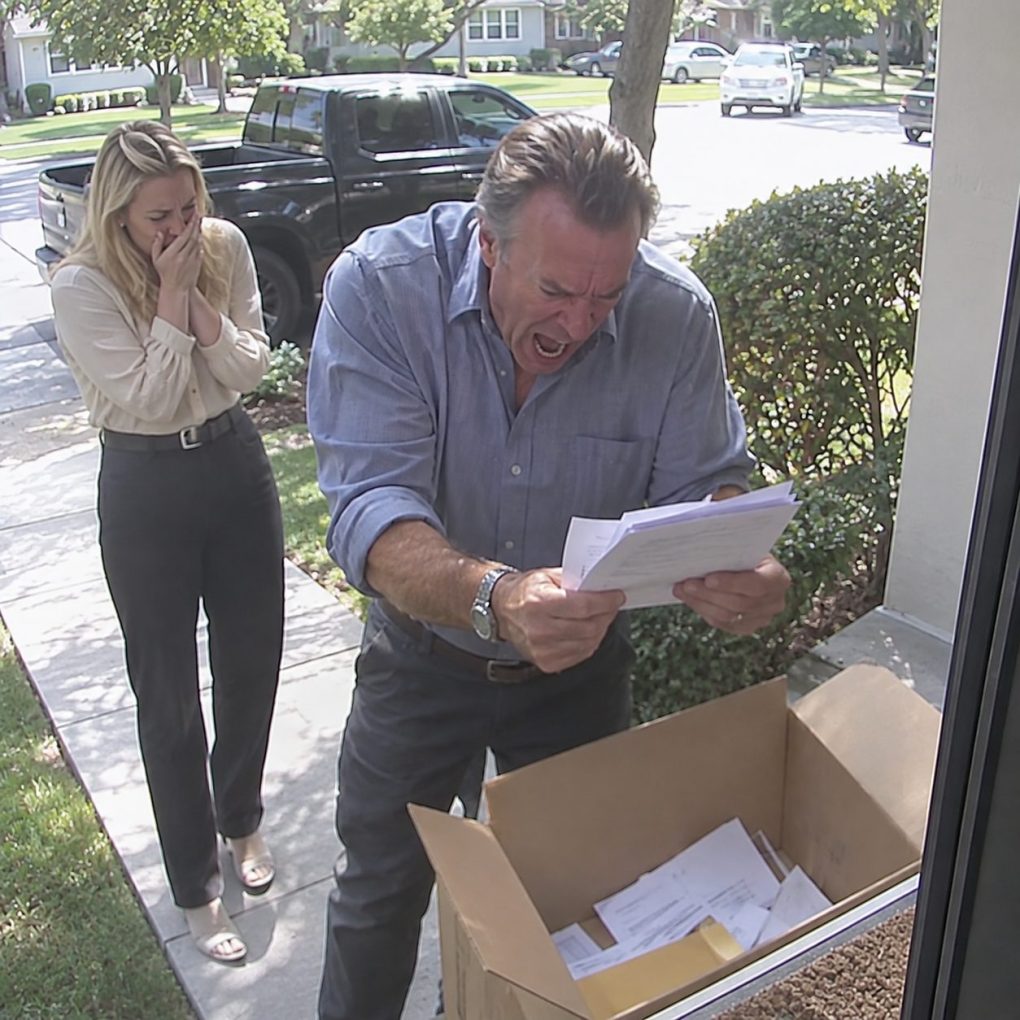
Dad had left six voicemails since opening the box. In the first he called me ungrateful, in the third he begged me not to ruin Madison’s life, and in the sixth he said, “If you think you can humiliate me, you haven’t seen what I can do.”
At 12:40 p.m. New York time, Madison texted a picture of our father sitting at the old kitchen table, his face in his hands. I remembered how he used to insist I pay for my own school lunches so I’d learn responsibility, while Madison’s cash waited in an envelope by the toaster.
I almost called him. Instead, I asked Leah whether she was safe from retaliation and forwarded the newest threats to Simone, then walked toward the conference room where my company was scheduled to finalize its biggest contract yet.
My phone rang before I reached the door. It was Daniel Reeves, the client who had spent a year evaluating our software, and his voice was so careful that I stopped walking.
“Caroline,” he said, “your father just emailed our board accusing you of stealing eight hundred thousand dollars. He attached a statement signed by your sister, and our legal team is asking us to put today’s agreement on hold.”
My father hadn’t only threatened my company. He had reached inside it.
I stared at the hallway carpet as people passed with paper cups. For a moment I was twenty-four again, listening as Dad explained why Madison needed my savings more than I did.
Then I asked Daniel for the email. I forwarded it to Simone, told our chief financial officer exactly what was happening, and walked into the meeting instead of catching the next flight home.
I didn’t ask the client to believe me because I was hurt. I showed its lawyers the lender’s acknowledgment of my fraud dispute, the original supplier agreement, and Dad’s instruction to copy my signature; I also confirmed that my company had received none of the loan proceeds.
Daniel listened without interrupting. The agreement was postponed while his lawyers did an independent review, which frightened me more than I admitted, but they did not terminate negotiations or repeat my father’s accusation as fact.
I called Dad afterward with Simone on the line. He became quiet when she explained that his allegations had been preserved and further contact should go through counsel.
“You’d let your sister lose everything?” he asked. “You signed her loan,” I answered. “You tried to make me responsible for it, and when I refused, you tried to take my livelihood. That wasn’t an accident, Dad.”
I had rehearsed this conversation without realizing it, every time I swallowed a complaint just to keep the peace. I put the phone down and did not call him back.
Three weeks later, Daniel’s company signed the contract after its review, and Simone secured a written retraction of Dad’s accusation. When the confirmation arrived, one of my engineers handed me coffee without knowing why I was crying.
Six weeks later, at a settlement conference, Dad pushed a repayment plan across the table with my name at the top, while Madison sat beside him looking at her shoes. “You want me to lose the shop?” he demanded, meaning the building whose broken heater I had once paid to repair.
I set his email beside the plan and said, “You risked that building, Dad. You don’t get to use my name to save it.” The lender’s attorney confirmed they were not seeking payment from me during the guarantee review.
The lender pursued Madison’s business and the people who had actually guaranteed its debts. A court later found the purported guarantee bearing my name unenforceable, while investigators examined how it was created.
Over eighteen months, Dad sold the commercial property he had pledged to reduce the debt, and Madison closed her business and sold its inventory. Both later pleaded guilty in the criminal case involving the forged documents, with restitution and probation; the remaining debt was addressed through a negotiated repayment arrangement.
None of it felt like watching villains fall. I remembered helping Madison practice spelling words and Dad warming my hands on cold mornings; losing them meant grieving those memories, too.



