I spent ten years saving for my dream beach house. Then my neighbor called, furious about the strangers partying there every weekend. My security footage showed my sister handing guests drinks while her husband welcomed everyone inside. But the real shock came when I heard what they’d been telling people about me…
“One more party at your beach house, and I’m calling the police!” my neighbor shouted before I could say hello.
I stood in my Raleigh kitchen, holding a grocery bag with the milk still sweating through the paper. “Mrs. Dawson, nobody’s staying there,” I said. “The house is supposed to be empty.”
“Then somebody forgot to tell the thirty people on your deck.”
I opened my security app. Music spilled from the living-room camera, and there, beneath the windows overlooking the Atlantic, stood my younger sister, Kelsey, handing champagne to her husband’s relatives. Her father-in-law was dancing beside my dining table, and somebody had dragged my mother’s old wicker chair out onto the deck.
My name is Morgan Ellis. I’m thirty-nine, and I spent ten years saving for that cottage in Emerald Isle, North Carolina. I worked weekends managing hospital staffing, drove a car whose heater only worked when it felt like it, and ate lunch from the same plastic container until the lid cracked. When I finally bought the place three years ago, Mom helped me paint the kitchen cabinets white. She died the following winter, and I kept her crooked blue brushstroke behind the pantry door.
I hadn’t visited in six weeks because of a demanding work schedule. Kelsey had an emergency key and alarm code because she lived twenty minutes away and had agreed to check for storm damage. I never gave her permission to stay there, let alone host parties. She’d hugged me after Mom’s funeral and promised I would never have to worry about the cottage alone.
“Kelsey says it’s their family vacation home,” Mrs. Dawson said, her anger softening. “I thought perhaps you’d sold it.”
On the camera, Kelsey raised her glass while her husband, Derek, brought out a white three-ring binder. He laid it open on the table, directly beneath the camera I had installed after a break-in two years earlier.
I pinched the screen to zoom. Across a printed cover I could make out the words BLUE HERON HOUSE — GUEST RESERVATIONS. Beneath it lay a sheet headed OWNER AUTHORIZATION.
My stomach tightened. Then I recognized the photocopy beside it: my driver’s license, which I had emailed Kelsey the year before when she helped me submit a storm-insurance claim.
I called her. She rejected the call, then sent a text: Busy with family. Can we talk tomorrow?
Mrs. Dawson had already sent me a link to a vacation-rental listing for my address, showing weekends booked well into January. The host name was not Kelsey’s.
It was mine. And the listing claimed I had personally signed every rental agreement.
I sat in my truck for several minutes before starting the drive to the coast. I wanted to call Kelsey and demand an explanation, but my lawyer, Daniel Price, told me to preserve the camera recordings and listing screenshots first. He also advised me to call the county sheriff about the disturbance and make clear I had not authorized anyone to rent out the property.
Halfway there, Mrs. Dawson called again. “I’m sorry I yelled,” she said. “Your mother used to sit beside me at sunrise. I know what that place means to you.” The music had stopped, but guests were still there.
I kept one hand tight around the steering wheel. I remembered Mom washing blue paint from her fingers at the kitchen sink, telling me that the house smelled like salt and possibility. Kelsey had been there that weekend too; she’d laughed at our crooked cabinet handles and promised she would help watch over everything when I was away.
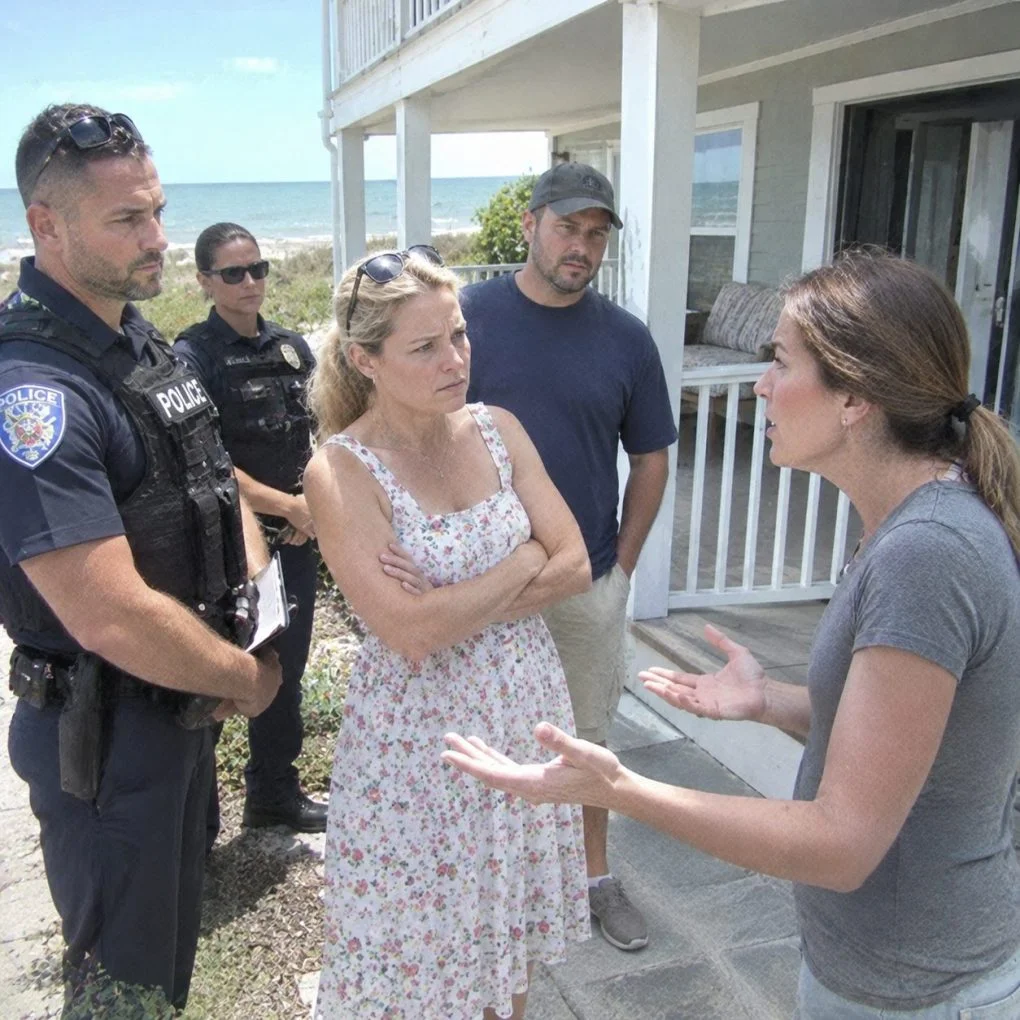
Near town, Mrs. Dawson reported the music had started again. I called the sheriff’s nonemergency line, identified myself as the owner, and asked for the disturbance to be documented. Two deputies were at the house when I arrived; I showed them my identification, deed information, and video. Kelsey insisted she had my permission, but her binder held only a printed agreement with a signature I hadn’t provided.
The deputies explained that the financial dispute would require investigation, and they documented the disturbance while asking everyone to leave the property. Most of the guests were bewildered, not defiant. One elderly aunt apologized to me, saying Derek had told her the family rented the house together every summer.
Kelsey followed me into the kitchen after the others began packing. “You barely use it,” she said. “We were keeping it occupied, and the money was paying for maintenance.”



