I opened the pantry and found Mom’s blue brushstroke covered by a removable white adhesive panel bearing the words GUEST SUPPLIES. Her wicker chair sat outside in the rain, one leg cracked. On the refrigerator was a laminated list of checkout fees, including sixty dollars for “extra cleaning” that I’d never agreed to.
“You charged strangers to sleep in the beds I made with Mom,” I said. “You didn’t even ask me.”
Derek arrived carrying the binder. He claimed the bookings were his business and that Kelsey had assured him I was fine with it. When I asked where the money had gone, he shut the binder and said it was none of my concern.
Daniel sent a formal preservation notice to the booking platform and the couple, and I arranged for the locks and keypad codes to be changed once everyone had left. The platform suspended the listing while it reviewed the forged authorization, and a detective accepted my complaint along with the footage, guest receipts, and messages.
That evening, Daniel called with figures supplied by two guests and the records we’d saved: over $80,000 in payments had been collected, including deposits for future stays. Several families had already booked holidays they would now lose.
Then he forwarded a photograph of a signed event contract.
Kelsey and Derek had taken an $18,000 deposit for a wedding reception at my house the following Saturday. Seventy-four people had been invited, and the bride believed I was a relative who had generously donated the venue.
The bride was my cousin, Anna. Kelsey had told her I was too selfish to attend.
I called Anna that night. She answered with the excited voice I remembered from childhood, then went silent when I explained that I had never approved her reception and Kelsey had collected money using my name.
“But Kelsey said you offered the house because we couldn’t afford a ballroom,” she whispered. Anna’s mother, Aunt June, was my late mother’s younger sister; she had worked overtime for months to help pay for the wedding. Hearing Anna cry, I understood that Kelsey had stolen more than a few weekends from me.
I wasn’t going to turn Anna’s wedding into a weapon. With Daniel’s help, we gave her the forged contract and booking receipts, and a local community hall found an opening for the following Saturday. The cottage had never been insured or approved for a seventy-four-person reception, so using it wasn’t an option. The flowers had to be rearranged, the guest tables squeezed closer, but Anna could still marry without standing inside a lie.
Kelsey called forty-six times that week. When I finally answered with Daniel listening, she snapped, “You’re making me look like a criminal over a house you barely use.”
“You took eighteen thousand dollars from Anna,” I said. “Tell her where it went.”
Derek shouted from the background for her to hang up.
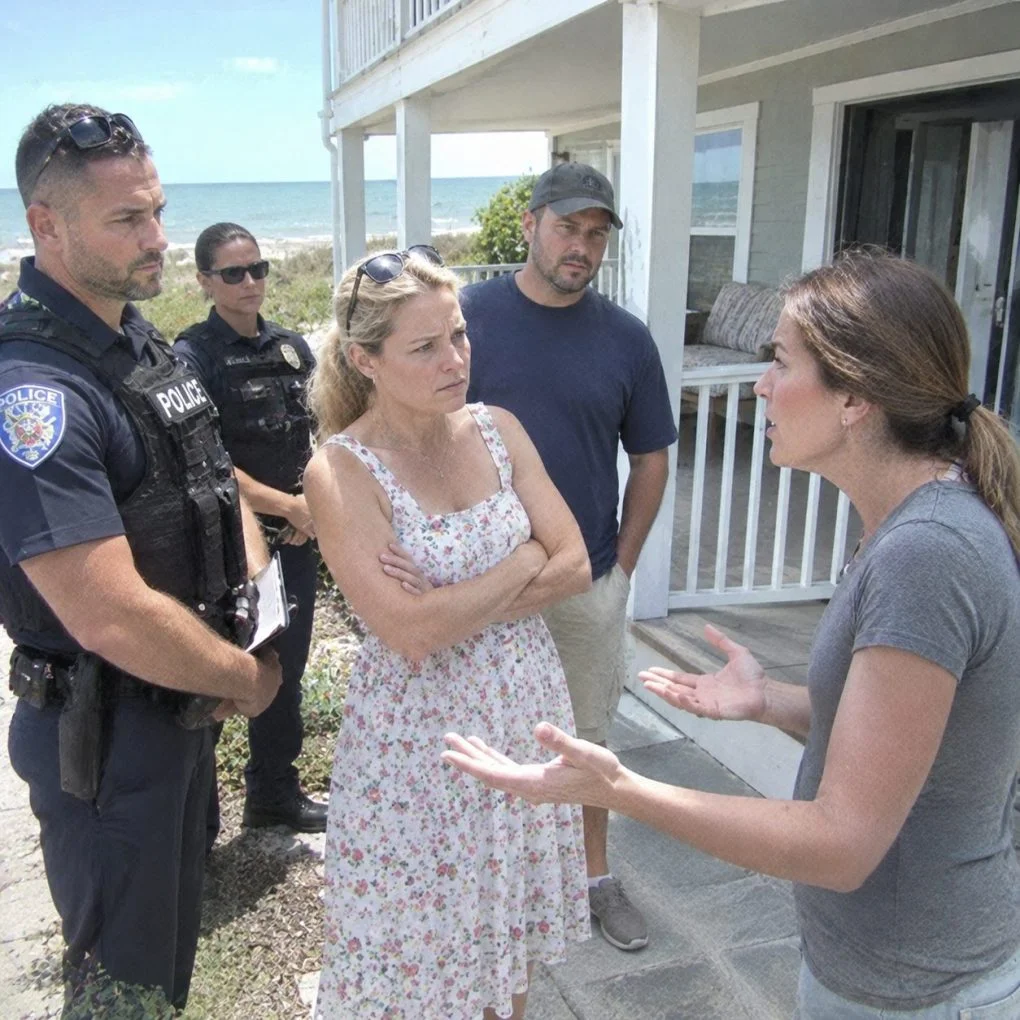
At a family meeting before the wedding, Kelsey tried one last time to call it a misunderstanding. Aunt June laid her receipt on the table; Derek’s father admitted he’d been told the house belonged to his son. Then I showed them the listing using my name and the forged permission, and Kelsey finally stopped smiling.
“You all had a lovely time there,” she muttered.
“Yes,” Aunt June said, folding the receipt. “Because you charged us to use somebody else’s home.”
Kelsey wasn’t invited to Anna’s reception. I went, carrying a framed photograph of Mom that Anna had asked to place beside the flowers. When the band played Mom’s favorite old song, Aunt June squeezed my hand without saying anything.
The legal process took months. Investigators obtained booking records showing Derek ran the rental account with my identity documents while Kelsey supplied keys and answered guests. The payments had covered credit-card debts and the down payment on a new boat, not the maintenance she’d claimed.
The platform reimbursed some guests, and others pursued chargebacks. In a civil settlement, Kelsey and Derek agreed to pay for property damage and unreimbursed losses, with credits to prevent double recovery; they sold the boat and a second car to fund it. They also pleaded guilty to fraud-related charges in a separate criminal case and received probation and restitution orders.
The strongest moment wasn’t hearing the sentence. It was walking back into my kitchen after the last stranger’s key had been disabled, removing their laminated checkout rules, and finding Mom’s crooked blue brushstroke still there behind a sticker.
Months later, Kelsey came to the gate and said she’d assumed I wouldn’t miss the house because I had so much more than she did. I told her a key was something I’d trusted her with, not something I’d given her to sell. She cried, but I didn’t invite her inside.



