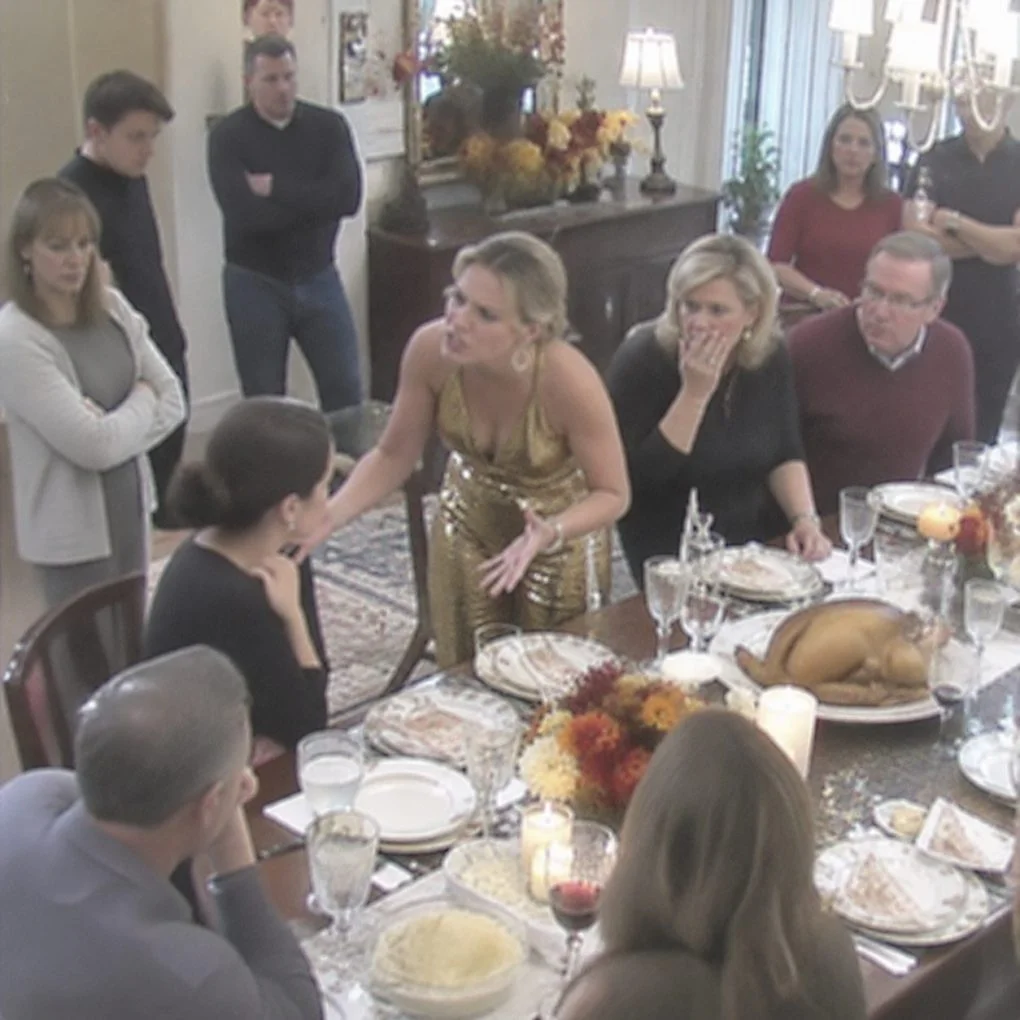
My mother said there wasn’t room for me at Thanksgiving. That evening, my younger sister welcomed wealthy guests in a glittering gold jumpsuit and laughed about my “ordinary life.” Neither mentioned the $680,000 I’d invested in their home. Then my uncle opened a legal envelope—and demanded my parents explain something…
At 4:18 on Thanksgiving afternoon, my younger sister Veronica stood in our parents’ dining room wearing a shimmering gold jumpsuit and announced that I was “too ordinary” to be invited. I know because my cousin Leah sent me a video, and I watched it alone beside an untouched turkey sandwich.
Twenty relatives sat around the walnut table I’d helped Dad carry upstairs years ago. Mom passed the gravy while Dad smiled at Veronica as though she’d won an award instead of humiliating me.
“Some people don’t belong in the same room as serious investors,” Veronica said, lifting her glass. Nobody challenged her, although three guests had borrowed money from me.
My name is Hannah Pierce, I’m thirty-nine, and I live outside Columbus, Ohio. Four years earlier, when Dad’s business debts threatened their home, I sold my stake in the payroll company I’d helped build and spent $615,000 buying the house, plus $65,000 replacing its roof and failing heating system.
The deed was solely in my name, and my parents signed a five-year agreement allowing them to live there rent-free. They knew who owned it, but I never corrected them when they called it “our family house,” because I thought keeping their dignity mattered more than being thanked.
Veronica arrived the following year with expensive luggage and plans to launch a private-events company. She began calling the place “our estate,” and Mom laughed whenever she used the phrase.
On Tuesday, Mom told me Thanksgiving would be small this year, just her and Dad. Wednesday, I discovered Veronica was inviting relatives and prospective clients to dinner, promising them exclusive use of the property for future celebrations.
I asked Mom why I wasn’t invited. “You make Veronica uncomfortable with your questions about money,” she said, and hung up before I could remind her who had paid for the roof.
I had already consulted a lawyer, not because of the insult, but because a prospective customer had contacted me about an event booking I’d never authorized. My lawyer prepared a notice identifying me as owner and demanding they stop collecting deposits or promising use of the property in my name; a private courier was arranged to deliver it that afternoon.
At 5:06, Leah called again. Through her whispering, I heard the front door open and a man ask for my father by name.
“There’s a legal notice,” she said. “Your dad just read it, and he’s gone completely white.”
Then Uncle Paul spoke loudly enough for everyone to hear.
“Richard, if Hannah owns this house, why did Veronica take twenty-four thousand dollars from me to rent it for my daughter’s wedding?”…Discover what happens next here.
For a moment, all I could hear was Leah breathing on the phone. Then Veronica’s voice rose above the dining-room noise: “It’s a misunderstanding. Hannah only handles the paperwork.”
I’d spent four years handing my parents a safe place to live, and my sister had apparently turned it into a product she could sell. I told Leah not to argue with anyone or send me secret recordings; the people who’d paid deposits needed to keep their contracts and speak with my attorney.
That evening, Uncle Paul called from his car. He had promised his daughter a June wedding at the farmhouse, and Veronica had taken $24,000 from his retirement savings as a deposit for the grounds, dining room, and garden.
“Richard showed me a signed authorization,” he said. “He told me you were a silent partner and didn’t want your name advertised.”
The word silent made my throat close. I’d been silent when Dad told his friends he had saved the house himself, silent when Mom showed strangers the new kitchen and praised Veronica’s taste, and silent when my sister joked that I dressed like someone who worked for her.
But none of my silence had given them permission to forge my name. On Friday morning, my lawyer received copies of Veronica’s event contracts from Paul and two other relatives: deposits totaling $52,000, collected into Veronica’s business account for events she had no legal right to host.
The supposed owner’s authorization was attached to each contract. It carried a copy of my signature from a renovation approval I’d signed two years earlier, with a date changed and a paragraph claiming I’d granted Veronica exclusive use of the house for private events.
Dad had signed beneath it as “property manager.” I could almost hear his familiar voice telling a contractor that he made all the decisions, though every major repair invoice and property-tax statement had gone to me.



