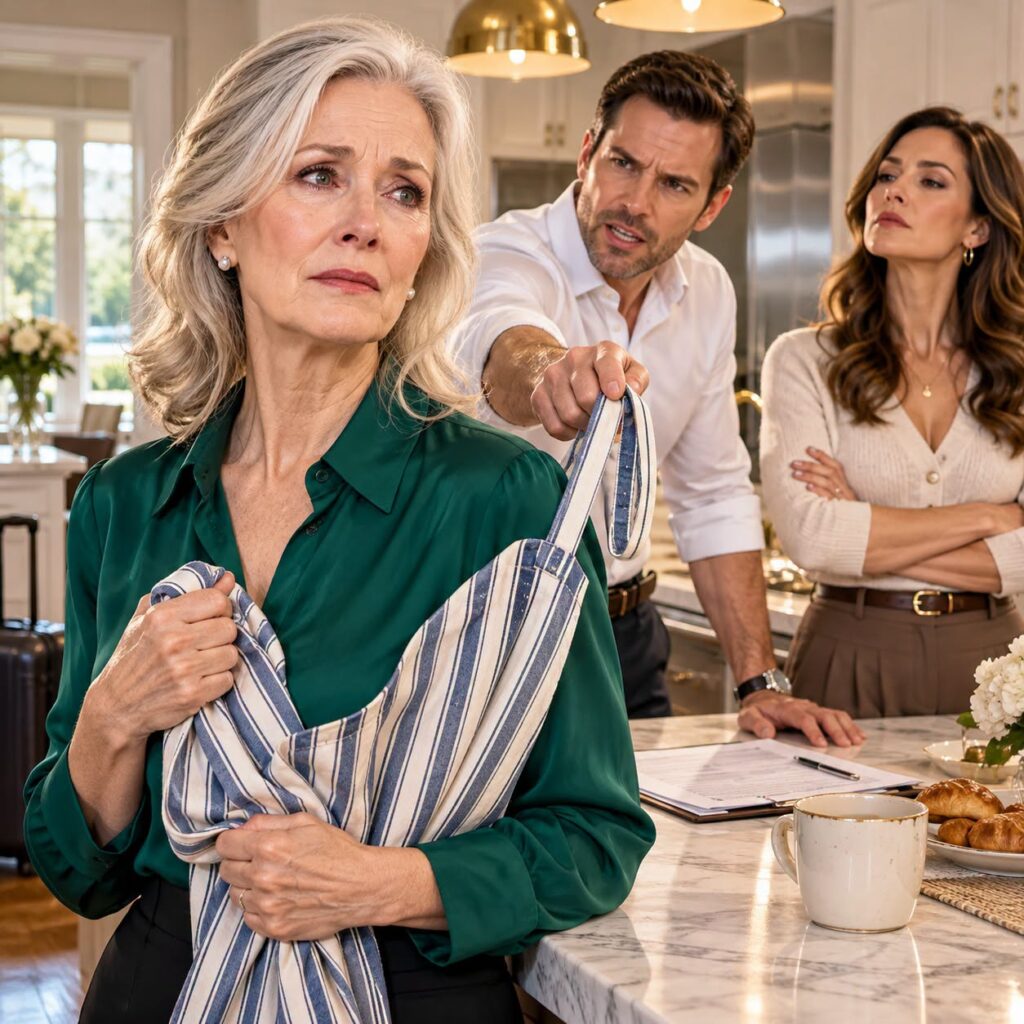
Megan had written it.
“Mom still thinks we don’t know about Hearthland’s offer,” the message read. “Once she’s staying here, we can make her sign. She won’t risk having nowhere to go.”
I read those words until they stopped looking like English.
Megan had found the confidential offer in the folder I’d left at her house during an earlier visit. Instead of asking me about it, she’d told Trent. Together, they had calculated exactly how frightened and dependent I would have to feel before surrendering my company for nothing.
“Why would they send a forged document before I signed the agreement?” I asked.
“To scare the buyer off,” Karen said. “Or force you to settle cheaply once the sale stalled.”
It almost worked. Hearthland’s board postponed the vote. Its lawyers demanded proof that I could convey clear title.
At six that evening, Megan called seventeen times. I let every call ring.
Then Karen’s assistant walked in holding another email from Hearthland.
“This one came directly from your daughter.”
Attached was a signed declaration claiming I was confused, financially reckless, and unable to understand business contracts. Megan demanded that negotiations stop until a court could appoint someone to manage my affairs.
At the bottom, beneath the accusations, was a sentence that made my hands shake.
“I am prepared to petition for guardianship of my mother.”
“A threat isn’t a court order,” Karen said, taking the declaration from my hands. “Your daughter cannot appoint herself your guardian.”
“I know,” I said. “But she can frighten people into doubting me.”
So we gave Hearthland facts instead of family accusations. My accountant supplied the time-stamped footage, signed payroll records, and a statement confirming where I had been. Karen sent copies of the real ownership documents, the unsigned residency agreement, and Trent’s email chain.
She warned Trent to preserve evidence and stop claiming ownership of my brand.
Two days later, we filed a civil lawsuit seeking a declaration that the assignment was fraudulent, an order barring their company from using my trademarks, and damages for interfering with the sale. Karen referred the forgery to law enforcement.
“Real consequences,” she said, “take evidence and time.”
I had both.
At the preliminary hearing, Megan twisted her wedding ring beside Trent. Their lawyer could produce no witness who’d seen me sign, no original signature page, and no explanation for why Trent’s company had been formed before I moved in.
The judge issued an order preventing T&M Ventures from claiming ownership while the case proceeded.
Outside the courthouse, Megan grabbed my elbow.
“We were going to give it back,” she whispered.
“After taking seven million dollars out of my hands?”
Tears spilled down her cheeks. “Trent said the deal would fall apart unless we controlled it.”
“And you believed him?”
She looked at the pavement. “I knew what I was doing. I just thought you’d forgive me.”
That admission hurt more than the forged signature.
A forensic review linked my copied signature to an old employment form Megan had stored. Their attorney negotiated a settlement: T&M Ventures formally disclaimed any ownership, surrendered its files, and agreed to reimburse a substantial portion of my legal costs. The civil case against them ended without a trial. The fraud referral remained under review.
Trent’s brokerage dismissed him after its internal investigation. Megan moved out of their house and began making payments toward what she owed. Neither punishment returned the trust they’d destroyed.
Hearthland restarted its review once the ownership dispute was resolved. Four months after I’d folded that apron, I sat beneath bright television lights and signed a seven-million-dollar acquisition agreement: $4.8 million at closing, with another $2.2 million tied to sales milestones.
Hearthland planned to stock Sunday & Rye pastries across the Midwest. Several former employees had new production jobs.
That evening, Megan saw the news and called.
“Mom,” she whispered, “I didn’t know you’d make it.”
“I know,” I said. “You thought you could profit because I wouldn’t.”
She cried. I did too. I told her that someday we might rebuild a relationship, but it would begin with honesty, not a check or an apology demanded on television.
The next morning, I visited our new production kitchen. Yeast warmed the air. Someone had hung a clean striped apron by the door.
I put it on myself.
No one told me when breakfast had to be ready.
I had lost six storefronts, nearly lost my daughter, and almost lost my name. But I had not lost the right to decide what my hands—and my life—were worth.



