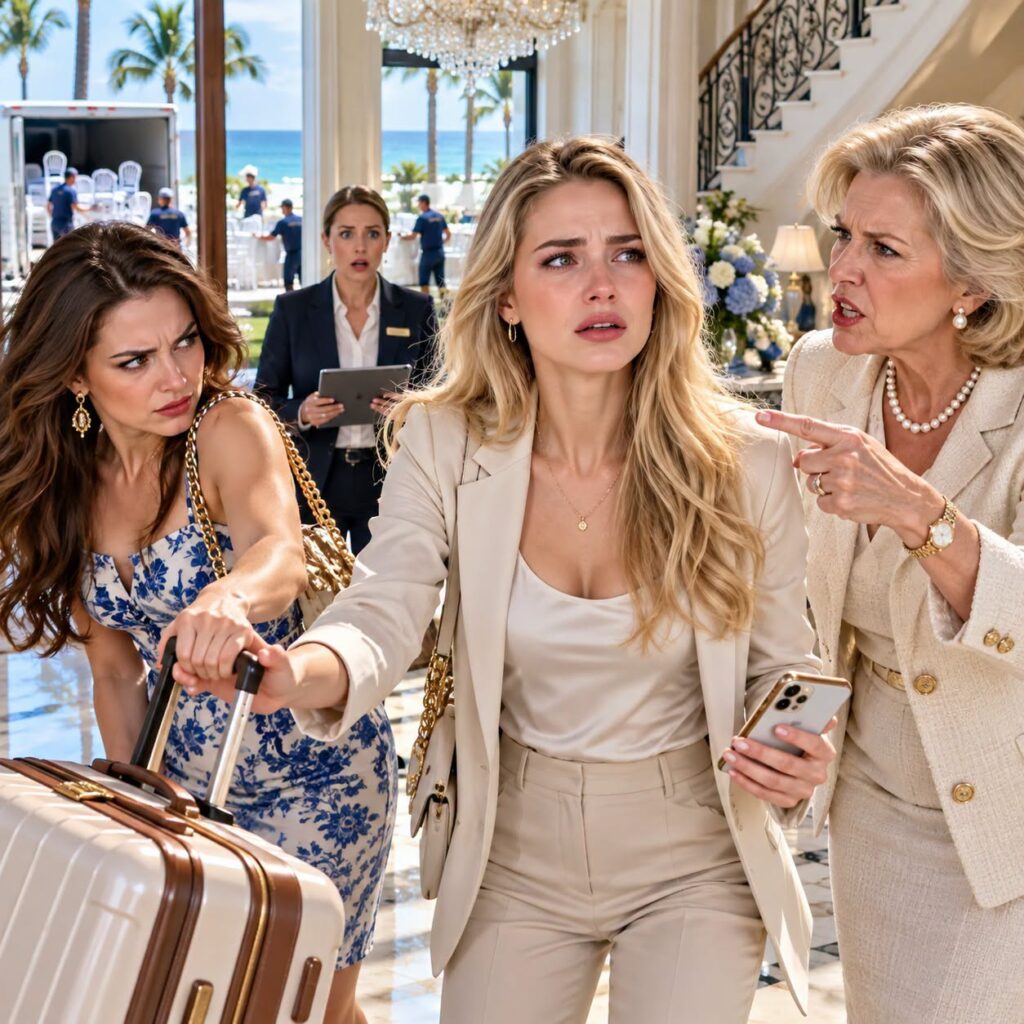
Brooke began crying, but not the kind of crying that asks forgiveness.
“You were going to ruin my wedding anyway,” she said. “At least we got something out of it.”
Then her fiancé, Ryan, arrived.
He stared at the wedding chairs stacked beside the van. “Why aren’t they setting up?”
Brooke froze.
Ryan told me they’d planned a courthouse ceremony months later. Brooke had recently talked him into a beach wedding, claiming her mother owned the property and had saved for years to pay for it. He’d already invited his family.
And Mom had been telling relatives their contributions were helping me pay for a birthday vacation, not financing a ceremony.
Ryan showed me a text from Brooke: “Mom’s foreclosure is fixed. $31,600 went to the mortgage. The rest covers wedding deposits. Don’t mention it to Grace.” The date matched the latest family transfers.
Suddenly, every humiliation made sense. They needed me quiet, grateful, and tucked away downstairs while they spent the money twice.
Then my phone filled with messages.
Mom had posted in the family group chat: Grace took your payments, canceled the reunion, and locked an elderly woman out of her room. We’re all outside. Come hear what she did.
Through the glass doors, I saw headlights lining the driveway.
And my mother smiled.
I stayed inside. Running out to argue would give Mom the scene she wanted.
Elena kept the entry clear while relatives gathered outside the gate. Ryan stood beside me, gripping his phone.
“I can show them the messages,” he said.
“So can I.”
I started with a single text to the family chat: I paid Sandglass House $39,000 myself. I never requested money from anyone. Please don’t send another payment. I’m sharing the receipts now.
I posted the redacted invoice and my original free invitation. Aunt Linda added Mom’s $3,000 request. Other relatives posted matching transfers.
Outside, the shouting changed direction.
Mom marched toward me. “You’re destroying this family over money!”
“No,” I said. “I’m telling them where theirs went.”
Brooke claimed it was a misunderstanding. Ryan found an email she’d copied him on: Please don’t contact Sandglass House directly. I’ve attached the owner’s approval. The attachment was Elena’s forged letter.
He didn’t yell. He set the velvet box holding their wedding rings on the reception counter.
“I can’t marry someone who does this,” he said.
Brooke looked at me as if I’d been the one who’d written the message.
Elena told the planner the property forbade weddings. The forged letter changed nothing. The florist packed up the arch. The chairs followed.
A deputy took the initial report. He explained that financial investigators needed statements from the relatives and copies of every document. There was no arrest that day.
My mother finally lowered her voice. “The bank was taking my house, Grace. I was desperate.”
“Then you could have asked me for help.”
“You would’ve said no.”
I swallowed. “You didn’t give me a chance to say anything. You just used my name.”
I removed Mom and Brooke from the reservation permanently. They left with their luggage while the relatives watched. I kept the rental but canceled the birthday dinner. Anyone who wanted to stay had to speak to me directly, without paying a cent.
Over the following weeks, a lawyer helped the relatives document their losses. The sheriff’s investigators received the forged event paperwork and payment records. Mom and Brooke eventually admitted what they’d done. Mom sold her house, which still had equity, and a lawyer-negotiated agreement returned the $45,000 to the relatives. The investigation led to fraud charges; months later, both accepted plea agreements with probation and restitution conditions.
Brooke moved out of Ryan’s apartment. Mom left three voicemails blaming me for everything. I saved them, then stopped listening.
I still remember the rental’s final night. Aunt Linda and I sat on the deck watching the Atlantic turn silver beneath the moon. She squeezed my hand.
“Your dad would be proud you stood up for yourself.”
For the first time all week, I cried.
I’d spent $39,000 trying to buy one good memory with people who believed my love was something they could charge against.
I couldn’t get that money back. But I could stop paying for their cruelty.
The best thing I brought home from that $39,000 vacation wasn’t a memory of my family—it was the certainty that I never had to buy their love again.



