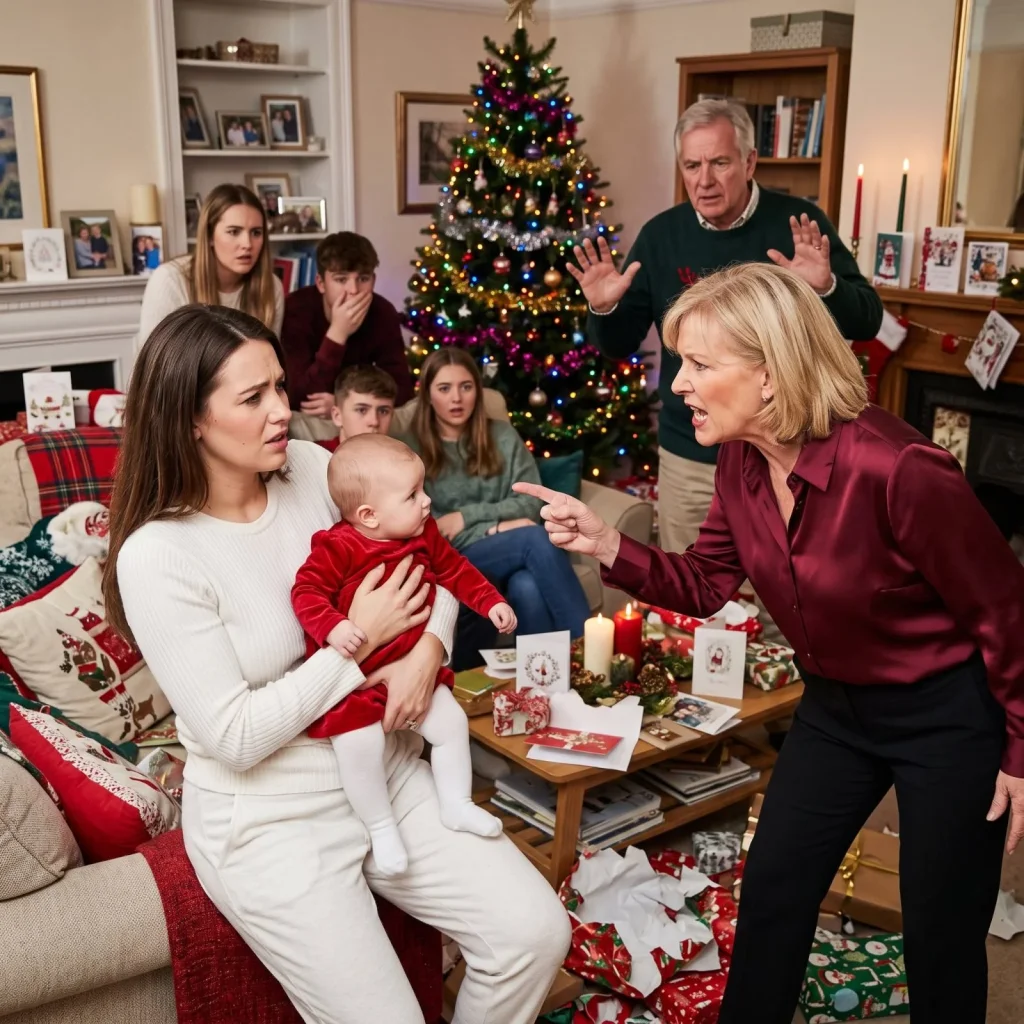
“That is not what happened,” I said, my voice dropping into a dangerous, low register. “My mother insulted my child, blamed me for her premature birth, and refused to apologize. We asked for space. No one is keeping Lily away from anyone who can respect us.”
Brenda blinked, clearly shocked that I was pushing back instead of shrinking away like I used to do as a teenager.
“Well, dear, you know how mothers are,” Brenda said, her smile turning brittle. “She only wants what’s best. It’s just a shame… half the bridge club was talking about how stressed poor Carol looks. People are worried you’re letting postpartum anxiety cloud your judgment. You really should call her, Claire. Family is family.”
Postpartum anxiety.
There it was. The weaponized psychological diagnosis, packaged as concern and distributed to half the town to discredit my anger and paint me as unstable.
“Have a nice day, Brenda,” I said flatly, turning my cart around and walking away before I said something that would get me banned from the grocery store.
My heart was hammering against my ribs, not from fear, but from a hot, blinding fury. Carol wasn’t just fighting us—she was waging a PR campaign, turning neighbors and acquaintances into flying monkeys to guilt-trip me into submission.
When I got home, I told Evan. He listened quietly, pacing our kitchen island, his face dark with anger.
“That’s libelous,” Evan said, running a hand through his hair. “She’s telling people you’re mentally unstable because you set a boundary?”
“She’s rewriting history,” I said, dropping my keys onto the counter. “In Carol’s version, she’s the saintly, concerned grandmother, and I’m the unhinged, ungrateful daughter withholding her grandchild out of spite.”
“So what do we do? Sue her for defamation?”
I let out a dry, humorless laugh. “No. That’s what she wants—drama, attention, a spectacle. If we fight her in the mud, she wins.”
“Then how do we stop it?”
“We don’t,” I said, looking out the kitchen window at the falling snow. “We just live our lives so loudly and happily that everyone in town realizes her stories don’t match reality. And if anyone asks? We tell the truth, plain and simple.”
Little did I know, Carol’s whispering campaign was about to backfire in a way she never expected—starting with an unexpected phone call from the person she least wanted to cross.
Chapter 6 – Nana Ruth Draws the Line
The phone rang late Thursday evening.
Evan and I were sitting on the couch folding laundry while watching a documentary when my phone buzzed on the coffee table. I glanced down and saw the caller ID: Nana Ruth.
I froze. Nana rarely called after eight o’clock unless something was wrong.
“Is everything okay?” Evan asked, pausing the TV.
“It’s Nana,” I said, picking up the phone. “Hello?”
“Claire, honey,” Nana’s voice came through the speaker, crisp and steady despite her eighty-four years. “Are you and Evan and the baby free this Saturday? I’d like to take you out for lunch. Just the four of us.”
I blinked in surprise. “Lunch, Nana? You hate going out in January.”
“I hate bad weather, yes. But I hate family foolishness even more,” Nana said dryly. “And I have some things I want to say where your mother can’t interrupt me with her dramatics. Can you make it?”
“Of course we can, Nana. Where do you want to meet?”
“The Maplewood Diner, twelve o’clock sharp. Don’t let your mother know. She thinks she’s the only matriarch in this family, and it’s about time someone reminded her that the throne has seniority.”
I couldn’t help the small smile that tugged at the corner of my lips. “We’ll be there, Nana.”
“See you Saturday, darling. Give Lily a kiss for me.”
The line went dead.
Evan looked at me, raising an eyebrow. “What was that about?”
“Nana is taking us out to lunch on Saturday. And she explicitly told me not to tell my mother.”
Evan grinned. “Sounding like the plot thickens.”
When Saturday arrived, the weather was freezing, but the sun was shining brightly off the snowbanks. We drove to the Maplewood Diner—a classic 1950s-style spot with red vinyl booths, chrome trim, and the best homemade pie in the county.
Nana Ruth was already sitting in a corner booth near the back, wearing a sharp winter coat and her signature pearl necklace. When she saw us walk in, her face lit up.
We slid into the booth, and Lily immediately reached out for Nana’s sparkly brooch, babbling happily. Nana chuckled, taking Lily’s tiny hand in her wrinkled, warm fingers.
“Look at you,” Nana cooed, her eyes softening. “Not a thing wrong with this child. She’s got her mother’s stubborn spirit already.”
After we ordered coffee and lunch, Nana looked across the table, her expression turning serious.



