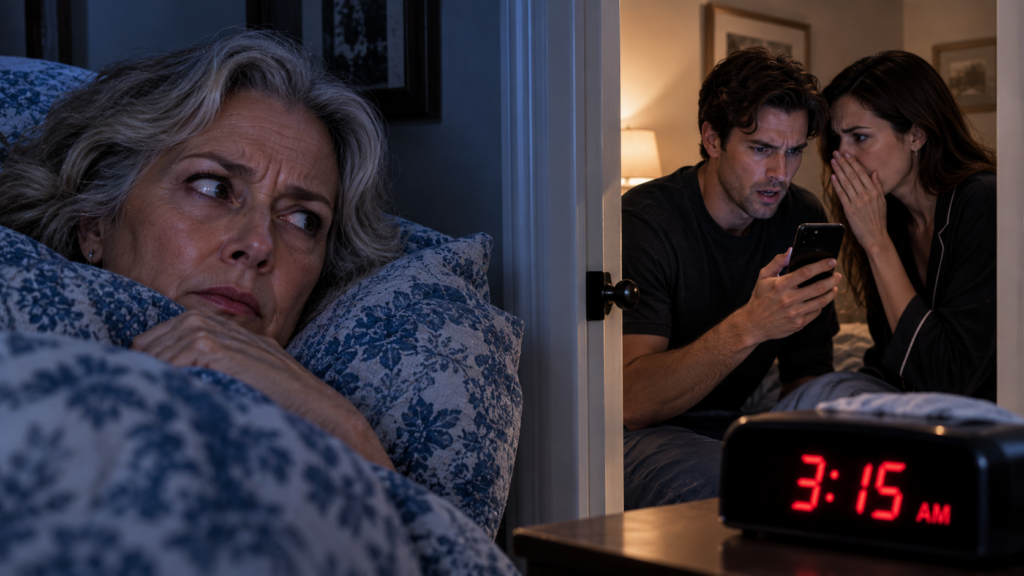
“Because the bank stopped you.”
She looked away.
I turned to Mark.
“And you gave her my PIN.”
He stood.
“Mom, we can fix this.”
I looked at him.
“No, Mark. You can begin taking responsibility for it.”
He stepped closer.
“Please don’t do this.”
I felt tears rise.
“You were willing to leave me without my retirement savings.”
He flinched.
I continued.
“You knew I needed that money. You knew I’d worked my entire life for it. And you still told Clare to take everything.”
He lowered his head.
I walked toward the stairs.
Behind me, Mark whispered, “Mom?”
I stopped.
He sounded like a frightened little boy.
For one terrible second, I wanted to turn around and hold him.
But I didn’t.
Because the boy I had raised was gone.
And the man standing in my kitchen needed to face what he’d done.
At eight the next morning, I called an attorney.
Her name was Rebecca Lawson.
She specialized in estate planning and financial exploitation involving older adults.
A neighbor had recommended her months earlier when I’d mentioned wanting to update my will.
I explained everything.
Rebecca listened carefully.
Then she asked whether I’d contacted the bank.
“Yes.”
“Good. Have they confirmed that no funds were withdrawn?”
“Yes.”
“Have you preserved the notifications and written down what you heard?”
“Yes.”
She paused.
“Mrs. Hayes, I’m glad you acted quickly. But I want you to understand something. Attempting to take money without permission can be a serious matter, even when the person involved is your child.”
I swallowed.
“I know.”
“Are you willing to make a police report?”
I stared at the kitchen wall.
For a moment, I couldn’t answer.
Mark was my only son.
I’d carried him for nine months.
I’d held his hand through fevers, heartbreaks, and disappointments.
The idea of reporting him to the police made me feel physically ill.
Rebecca waited.
Finally, I said, “I need to think about it.”
“That’s understandable. But don’t let anyone pressure you into staying silent. And please don’t promise to protect them from consequences.”
I thanked her.
Then I went upstairs and sat on the edge of my bed.
The house was quiet.
Mark and Clare had gone out.
They’d left a note on the kitchen counter.
We need some time to think. We’ll be back later.
I stared at it.
Then I looked at the framed photograph beside my lamp.
My husband, David, stood beside me at our twenty-fifth anniversary dinner.
He’d been gone six years.
I traced the edge of the frame.
“Oh, David,” I whispered. “What happened to our boy?”
There was no answer.
Only the familiar silence of a house that had once been filled with laughter.
I cried then.
Not loudly.
Not dramatically.
I simply sat there with my hands in my lap and let the tears come.
Because protecting my money had been easy compared with accepting that my own child had tried to take it.
That afternoon, I went to the police station.
I brought my notes, the bank notifications, and the compromised card.
An officer took my statement.
He asked careful questions.
I answered honestly.
I didn’t exaggerate.
I didn’t speculate about what Mark might have done.
I described exactly what I’d heard and what I knew.
The officer explained that investigators would need to obtain records and determine whether a crime had occurred.
He gave me a report number.
When I walked out of the station, my hands were trembling.
But I didn’t regret going.
That evening, Mark returned alone.
He found me sitting in the living room.
“Mom?”
I looked up.
“Where’s Clare?”
“At her sister’s.”
I nodded.
He stood awkwardly near the doorway.
“Can we talk?”
“Yes.”
He sat across from me.
For a long moment, he said nothing.
Then he asked, “Did you call the police?”
I looked at him.
“Yes.”
His face went pale.
“Mom.”
I waited.
“You reported me?”
“I reported what happened.”
He stared.
“You’re going to ruin my life.”
I felt something inside me tighten.
“Mark, you made the decision to take my bank card.”
He shook his head.
“I didn’t actually take any money.”
“You tried.”
He looked away.
I continued.
“You didn’t stop because you changed your mind. You stopped because the card was blocked.”
He rubbed his face.
“Clare said the ATM wouldn’t work. Then she went to the branch entrance and tried calling the bank’s automated number. They told her the card had been reported compromised.”
I listened.
He swallowed.
“She panicked because she thought someone had already reported it stolen.”
I nodded.
“That someone was me.”
He looked up.
“How did you know?”
I told him about the handbag.
The questions.
The bank visit.
The precautions I’d taken.
He stared at me.
“You suspected us?”
“Yes.”



