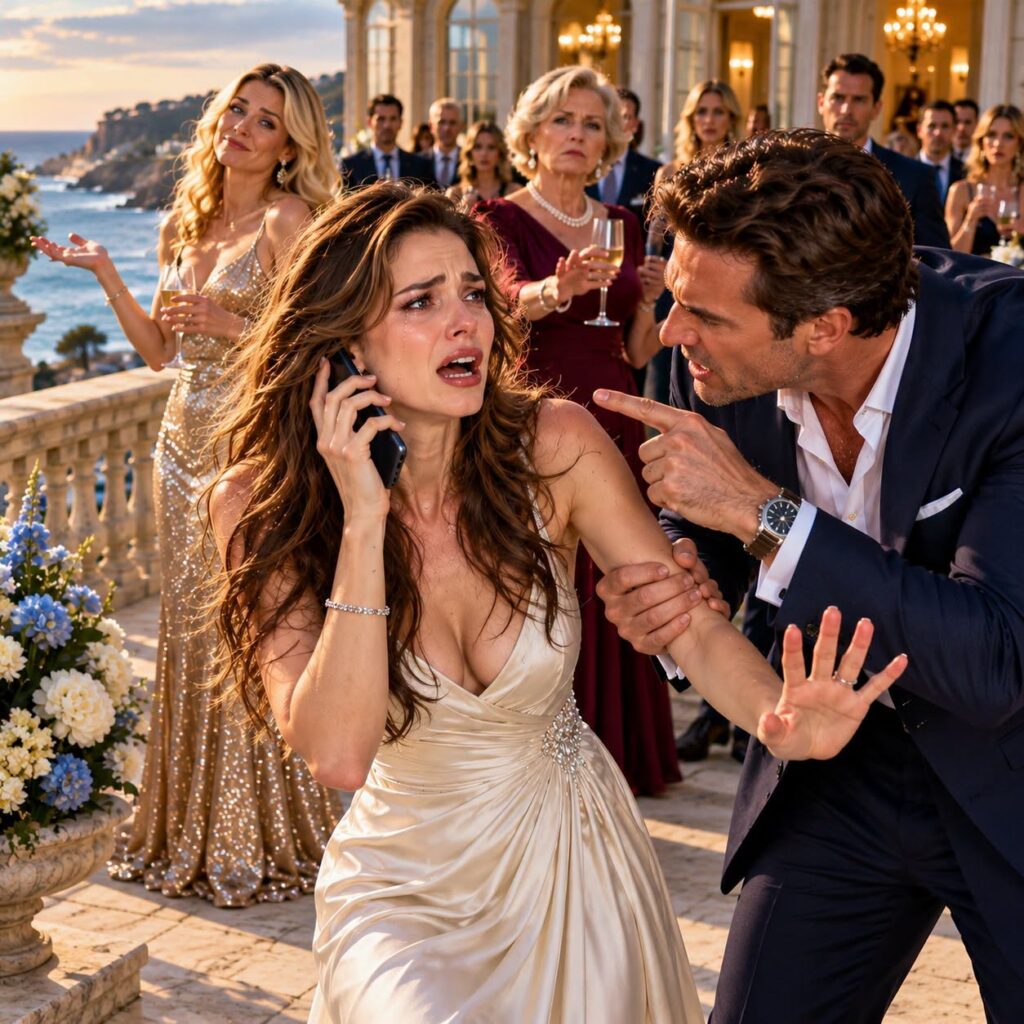
Evelyn arrived twenty minutes later, still smelling of champagne. She pressed a folded paper into my hand. It was a prepared statement saying Ava had leaned too far over the railing, witnessed by several relatives.
At the bottom, someone had typed my name.
“Sign it,” Evelyn whispered. “Ava needs peace, not a scandal.”
I photographed the paper and gave it back.
Then a young caterer named Noah approached me near the elevators. He was shaking.
“I was taking pictures of the guests,” he said. “My camera was pointed toward the balcony. I think I caught it.”
I told him not to edit or delete anything. Ruiz arranged for an officer to collect the original image files directly from him.
The photographs showed Vanessa moving behind Ava. Then her arms extended. Then empty space where my daughter had stood.
There was no reaching to save her.
An hour later, Ruiz called again. Investigators had also recovered messages from Vanessa’s phone under a warrant in the financial case.
One message was from Mark, sent eleven minutes before Ava fell.
Ruiz read it slowly.
“She’s bringing the records to the lawyer Tuesday. Make sure she never gets there. I’ll handle Claire.”
I sat down on the hospital floor.
Then Ruiz said, “There’s one more message. This one is from your mother-in-law.”
And she told me what Evelyn had promised them.
“I’ll get Claire to sign the accident statement,” Evelyn had written. “Everyone here knows what to say.”
For nineteen years, I’d mistaken their loyalty to one another for love. Now I understood it was an agreement to protect whoever held the money.
Ruiz asked me to stay away from the family and let detectives do their work. I agreed. Revenge wouldn’t help Ava. Evidence might.
I gave a recorded statement, including Mark’s demand that I lie. Noah preserved the untouched photographs and supplied the memory card. Investigators interviewed guests separately, before Evelyn could gather them around another story.
Two cousins admitted they’d seen Vanessa shove Ava. One had kept quiet because Evelyn warned him he’d be cut out of the family business. Another handed over a voicemail telling relatives to say Ava had been drinking.
She hadn’t consumed a drop.
The trust investigation moved quickly after that. Banking records showed that Mark and Vanessa had routed more than $1.4 million through a fake renovation company. Evelyn had received some of the proceeds. My lawyer petitioned the probate court to remove the co-trustees and appoint an independent fiduciary. A judge froze the accounts while the court considered the claims.
None of those victories mattered when Ava’s surgeon finally came toward me.
“She survived,” he said. “But the next several days are critical.”
I cried so hard I couldn’t speak.
When Ava opened her eyes four days later, her first words were barely audible.
“Mom. Did you see?”
“I saw everything, sweetheart.”
“I told Dad I had proof,” she whispered. “He said he’d take care of it.”
I held her hand. “He won’t get near you again.”
Ava spent six weeks in rehabilitation. She relearned how to climb stairs. Loud noises frightened her. Her left leg dragged when she was exhausted. There were nights she woke crying because she remembered the sensation of falling.
Meanwhile, prosecutors filed charges against Vanessa for attempted murder and against Mark for conspiracy and financial crimes. Evelyn faced charges related to obstructing the investigation. Their attorneys fought everything.
At a pretrial hearing, Mark looked across the courtroom and mouthed, “Please.”
I didn’t look away.
Months later, facing the photographs, messages, bank records, and witness testimony, Mark and Vanessa pleaded guilty in negotiated agreements. Both received substantial prison sentences. Evelyn pleaded guilty to witness tampering and received a shorter sentence with probation afterward.
A civil judgment ordered repayment, though recovery would take years. The court replaced the trustees. I filed for divorce, and Ava chose to cut contact with her father’s family.
The next summer, I took Ava to a quiet beach farther down the Rhode Island coast. She crossed the sand, steadying herself with my arm.
“Do you think I’ll ever feel normal?” she asked.
“Maybe not the old normal,” I said. “But you’ll get to decide what comes next.”
She stepped forward without holding on.
I watched the ocean roll over the stones, remembering the sound of her body falling and the laughter from the balcony above.
They had tried to turn my daughter’s life into a financial loophole.
Instead, she was standing beside me, alive, choosing her own future.
And I knew then that justice wasn’t watching the people who hurt us fall—it was watching the daughter they tried to erase rise again.



