I glanced at the scar on my thumb from the year I sliced apples for thirty guests while running a fever. I understood more than he realized about doing unglamorous work for people who expected everything to be beautiful by the time they arrived.
“You told her she could charge for my house,” I said. “And you both decided I didn’t need to know.”
“It was only a few events. You’d be there anyway.”
“No, Adam. I would have been there cooking Christmas dinner for my family. Those are different things.”
That afternoon I sent written notice, through my attorney, that no commercial use had ever been authorized and that the events could not take place there. Brooke responded with a furious voicemail accusing me of destroying her reputation, then sent a spreadsheet of the bills she claimed I would owe if she had to cancel.
I was about to close the email when I opened her event package. Under the heading “Included Amenities,” she had listed freshly prepared holiday meals, daily cleaning, and an on-site hostess available from breakfast through midnight.
Beside the hostess’s name was a photograph of me carrying a roasting pan last Christmas. I was wearing Tom’s old apron, the one with a faded blue stripe, and I hadn’t even known anyone took the picture.
Then Linda forwarded the message Adam had sent Brooke in September: “Don’t tell Mom about the deposits. She’ll think she’s just doing Christmas like always.”
For twenty years I had been waiting for someone to notice how much I gave them. My own son had noticed every bit of it—and worked out how much more he could take.
Eleven days before Christmas, Brooke arrived at Pinewater House with printed contracts while Adam carried decorations. My attorney joined us by video call so nobody could misunderstand what happened next.
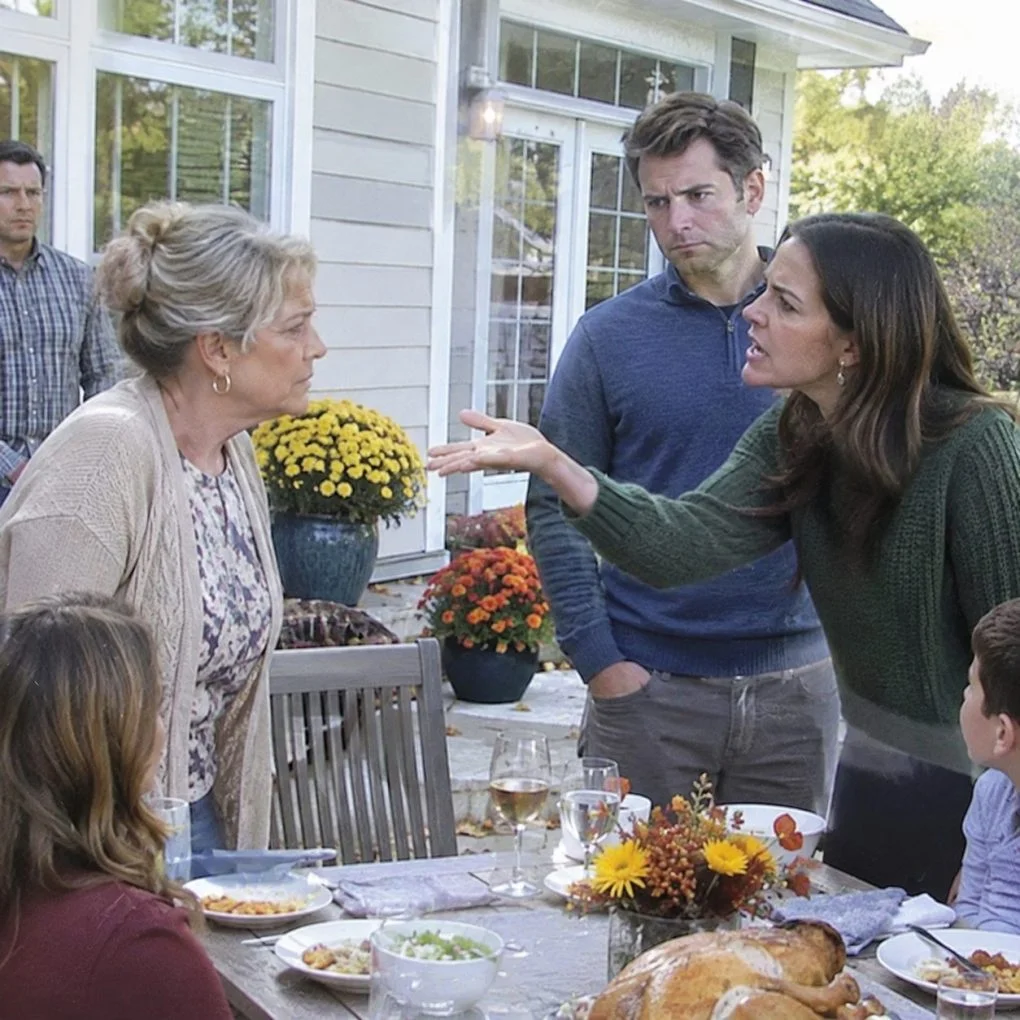
“This is family property,” Brooke announced, laying down her papers. “You can’t suddenly take it away because your feelings got hurt.”
“It is my home,” I answered. “It passed into my sole ownership after Tom died, and I never authorized you to rent it to customers.”
Brooke demanded reimbursement for lost bookings, but her contracts promised a venue she had no right to rent. My attorney explained that the customers’ claims were against Brooke’s company, not automatically against me; we had already notified clients and vendors.
Adam sank into a chair and stared at the tabletop. I saw his father’s old pencil line beside his wrist, still visible after all those Christmas dinners.
“Mom, can’t you let us do the events and go to Portugal afterward?” he asked. “We’ll make sure you don’t have to do much.”
I opened Brooke’s brochure to the photograph of me in Tom’s apron. “You sold them my cooking, my cleaning, and my time without asking me. Tell me what ‘not much’ is supposed to mean.”
Brooke reached for the page, then stopped. My son looked from the photograph to my hands, where the skin was rough from years of hot water and winter dishwashing.
I took Tom’s faded apron from its hook beside the pantry and folded it over my arm. For twenty Christmases, someone had called me from the kitchen whenever a tray was empty, but that afternoon nobody spoke as I carried it past them.
The clients were angry, and Brooke’s company had to refund their deposits or face contract claims. Some events found other venues; others were canceled, damaging the reputation she had built on my free labor.
Brooke accused me of ruining her business. I told her its promises were hers to honor, not mine to subsidize.
Adam finally asked how much I had spent on Christmas over the years. I showed him my household records: nearly $9,000 the previous year in utilities, food, gifts, repairs, and cleaning.
He stared at the total. “I thought we paid for more than that.”
“You paid for the wine twice,” I said. “I remember because you wanted me to keep the receipts.”
For the first time, he didn’t argue. He gathered the decorations he’d brought, apologized for the September message, and left with Brooke, who had not yet found words for me.
I changed the entry code, and Linda checked the empty house while I was abroad. I mailed the grandchildren gifts, explaining that Grandma was taking her own holiday; none of this was their fault.
On Christmas morning in Portugal, I sat at a café overlooking the Douro River with a cup of coffee cooling between my hands. Tom’s old travel notebook lay open beside me, and in its margin he had written, “Next year, let’s finally go.”
Adam texted: “I’m sorry I treated you like the help. I knew what you did. I just thought you always would.” I replied that we could talk after New Year’s, without another request attached.



