I spent three years sending my mother 150,000 pesos monthly to care for my daughter. At Mom’s extravagant birthday party, I found my little girl eating discarded food behind the kitchen. When I asked why, she started crying. My mother’s response terrified me even more. Then my lawyer uncovered something about those 36 payments…
I found my eight-year-old daughter behind the catering tent at my mother’s seventieth birthday party, searching a garbage bag for food. Inside, eighty guests raised champagne beneath white orchids while a violinist played the song Mom used to hum as she braided my hair.
“Mia?” I whispered, and she dropped a half-eaten roll as if I’d caught her stealing. Her dress hung loosely, and instead of running to me, she watched the kitchen door.
“Please don’t tell Grandma,” she whispered. “I wasn’t supposed to be hungry today.”
I’m Elena Reyes, a respiratory therapist in Sacramento; after Mia’s father died, my mother, Vivian, offered to keep her in her San Diego school while I finished a three-year hospital contract. I sent 150,000 Philippine pesos monthly to Mom’s longstanding Manila account, which she accessed from California, for Mia’s food, clothes, and savings.
During visits Mia was always neatly dressed and fed; lately she’d grown quieter on our evening calls, but Mom blamed grief. On my last trip, Mia held on so tightly when I left that I missed my flight; Mom laughed and called her dramatic, and I promised my daughter I would return after the next rotation.
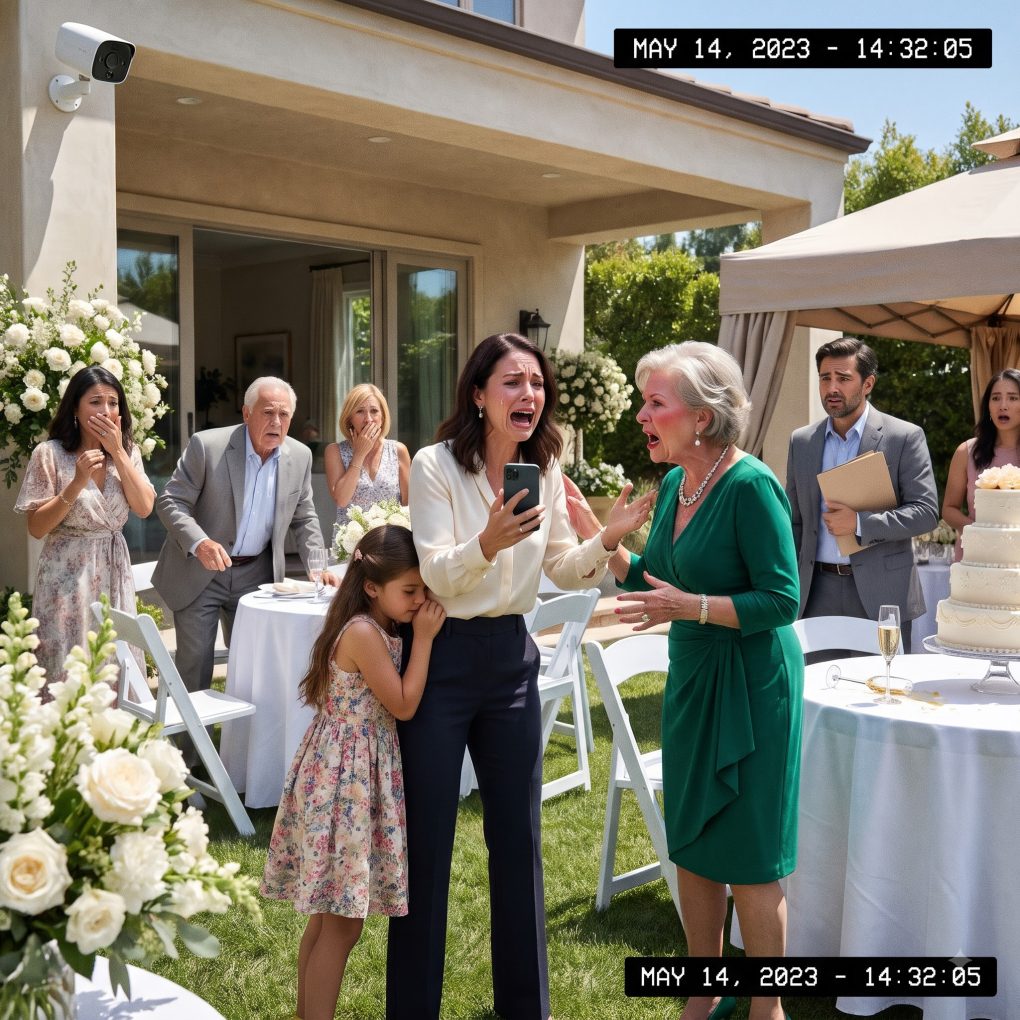
Vivian appeared wearing an emerald gown I’d paid for and a diamond bracelet from my brother Lucas. “There you are,” she said, before noticing the bread and grabbing Mia’s arm.
Mia screamed and hid behind me, clutching my dress. Three years of double shifts had never made me feel as helpless as that sound did.
“WHERE ARE THE 150,000 PESOS I SEND EVERY MONTH?” I shouted. Music drifted through the open ballroom doors as guests turned toward us, and Mom smiled the thin smile she used whenever I embarrassed her in public.
“Lower your voice,” she hissed. “She eats perfectly well; she’s simply attention-seeking.”
I called Maya Chen, the attorney who’d handled my husband’s estate. “I need help reviewing thirty-six transfers,” I said, holding Mia close, “and I need to know whether Mom can stop me taking her home.”
“She doesn’t, under the school-care authorization we prepared,” Maya said. “Take Mia somewhere safe, and don’t sign anything new.”
Mom heard the last sentence and went still. Then she pulled an envelope from her purse and said, loudly enough for the nearest guests to hear, “You already signed away the right to make that decision, Elena.”
Inside was a document claiming I’d given Vivian custody until Mia turned eighteen. The signature resembled mine, but I’d spent its dated Thursday working a hospital shift in Sacramento….Curious how it ends? Continue reading here.
I photographed the paper, lifted Mia despite her long legs, and walked past the champagne tower. Behind me, Mom shouted that I was humiliating the family.
Lucas caught up outside. “Mom’s just trying to help,” he said, wearing an expensive watch Mom claimed she couldn’t afford.
At the hotel, Mia ate eggs, toast, and strawberries before asking whether she should save some for breakfast. When I promised more food tomorrow, she asked, “Even if Grandma finds out?”
She told me that most weekdays she ate cereal in the morning and whatever was left after Lucas and Mom had dinner; if she asked for seconds, Vivian said she’d had enough. Last week Mom took her lunch money after she told a teacher she was hungry, then made her practice saying she’d eaten at home. “Sometimes I was good all day,” Mia said, looking at her plate, “but Grandma still got angry if I asked for more.”
I lay awake listening to the hotel air conditioner. I’d called nightly, asked about spelling tests, and driven eight hours each way when shifts allowed, yet I’d mistaken Mia’s obedience for reassurance. I remembered my own mother slipping extra mango into my lunchbox when I was little, and wondered when feeding a child had become something she regarded as a punishment.
A pediatrician documented Mia’s weight and planned follow-up care. Her school then showed me warnings about missed lunches sent only to the address Mom had listed after falsely telling staff I worked overseas.
I had never worked overseas; I was in California, and my original school forms listed Mom only as a temporary caregiver. When I asked why the school hadn’t tried my original phone number, the secretary said Vivian had repeatedly insisted that I was unreachable.
Maya confirmed the envelope contained no court order and could not transfer custody. We reported the suspected forged signature, revoked Mom’s authorization in writing, and arranged a stable school placement near my apartment while Mia began counseling with someone experienced in childhood neglect.



