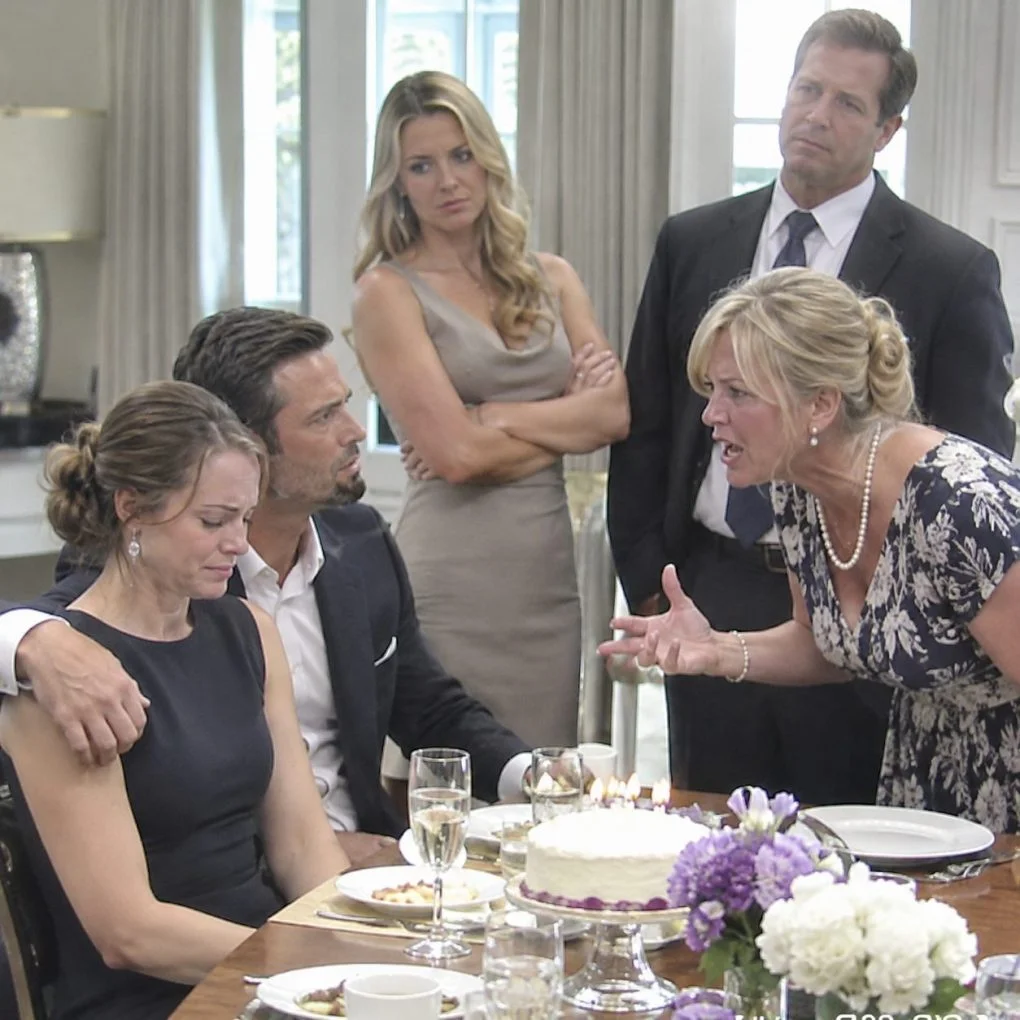
Mom looked at Vanessa. “You told me you were paying those bills yourself.”
“I was the one visiting,” Vanessa snapped. “I did all the hard things you never saw, Julia. Driving her places, taking her calls, cleaning up after appointments. Does none of that count?”
“It counts,” I said. “And I’ve thanked you for it. But you don’t get to make me the family failure to cover what you did with my money.”
Mom said nothing for a long time. Then she picked up the little music box I’d left beside her plate, and I recognized the way she held it: both hands around the cracked lid, as if she were afraid it would fall apart.
Vanessa suddenly pushed back her chair. “Fine. Let them have their little revelation. It doesn’t change the fact that Julia needs Nathan to make her important.”
Nathan looked at her. “Julia designed the system our first forty clinics used. I handled sales. We signed equal founder agreements before we earned a cent.”
“Then you can afford to help your sister,” Mom said automatically, and I watched her realize what she’d said. In the space of one dinner, I had gone from an embarrassment to a bank account. I wasn’t sure which hurt more.
I stood, leaving the birthday dessert untouched. On my way out, Eric stopped me near the door, looking pale.
“Julia, before you go, there’s something you should see,” he said. He turned his phone toward me, showing an email Vanessa had sent from their shared address that morning.
She had booked a venue and production vendor for a Harborline conference, listing my company as the client. Attached was an authorization.
The signature looked like mine. I had never written it.
The email carried Harborline’s logo and a convincing imitation of my signature. Vanessa had assumed I’d pay to avoid a scandal.
I asked Eric to forward the original email to our lawyer. Then I asked Vanessa whether she’d sent it.
“You wouldn’t give me a chance,” she said. “Harborline needs events.” Her voice rose, but her hands stayed flat against the table.
“Procurement declined your proposal,” I answered. “I recused myself because we’re related. You lacked the required insurance and references, so you signed my name.”
Mom leaned toward her. “Vanessa, did you really do that?” My sister stared at the cake until she whispered, “I thought Julia would approve it afterward.” Mom set down her fork so carefully I heard it touch the plate, and I knew she was beginning to understand how often she had mistaken my silence for weakness.
I remembered taking the blame when nine-year-old Vanessa broke my lamp. Somewhere along the way, she’d decided I always would.
Our lawyer notified the venue and vendor that Harborline had authorized no contract. Both stopped before incurring expenses, and the company formally rejected the forged authorization.
A bookkeeper helped Mom and me reconcile eighteen months of payments. The mortgage was current, but Vanessa couldn’t account for $11,200 meant for medications, insurance, and repairs, including the $4,800 roof payment diverted to her agency. Mom sat beside me as we checked each statement, sometimes stopping to ask whether I had really sent that much without ever mentioning it.
Eric moved out. Through our attorneys, Vanessa acknowledged the missing funds and signed a repayment schedule; I needed documentation, not another promise.
Six weeks later, the same relatives gathered at Aunt Linda’s. When Vanessa accused me of exaggerating, Mom opened a folder of bank records.
“Julia paid my mortgage,” Mom said, the paper bending in her hands. “Vanessa claimed the money was hers. I believed her, and I treated Julia terribly. I was wrong.”
Mom used to correct my clothes and my choices, never herself. Hearing her apologize before the relatives who’d laughed at me tightened my throat, but it did not erase her birthday words. As a child, I would have given anything to hear her say she was proud of me; now I needed her to learn how to speak to me when nobody was watching.
Vanessa pushed back her chair. “So I’m the villain, and Julia’s some saint?” She looked around, but nobody excused her this time.
“No,” I answered. “You’re my sister. But you can’t take my money, forge my signature, lie about me, and expect protection from the consequences.”
She left her handbag, then returned for it with red eyes. I wanted to embrace her, but affection didn’t mean surrendering my boundaries. I could remember us sharing one umbrella on the way to school, and still know I could not trust her with my signature or my savings.
Mom asked whether I’d visit again. I said yes, but future help would go directly to the lender or pharmacy, and I’d leave if she mocked me again.



