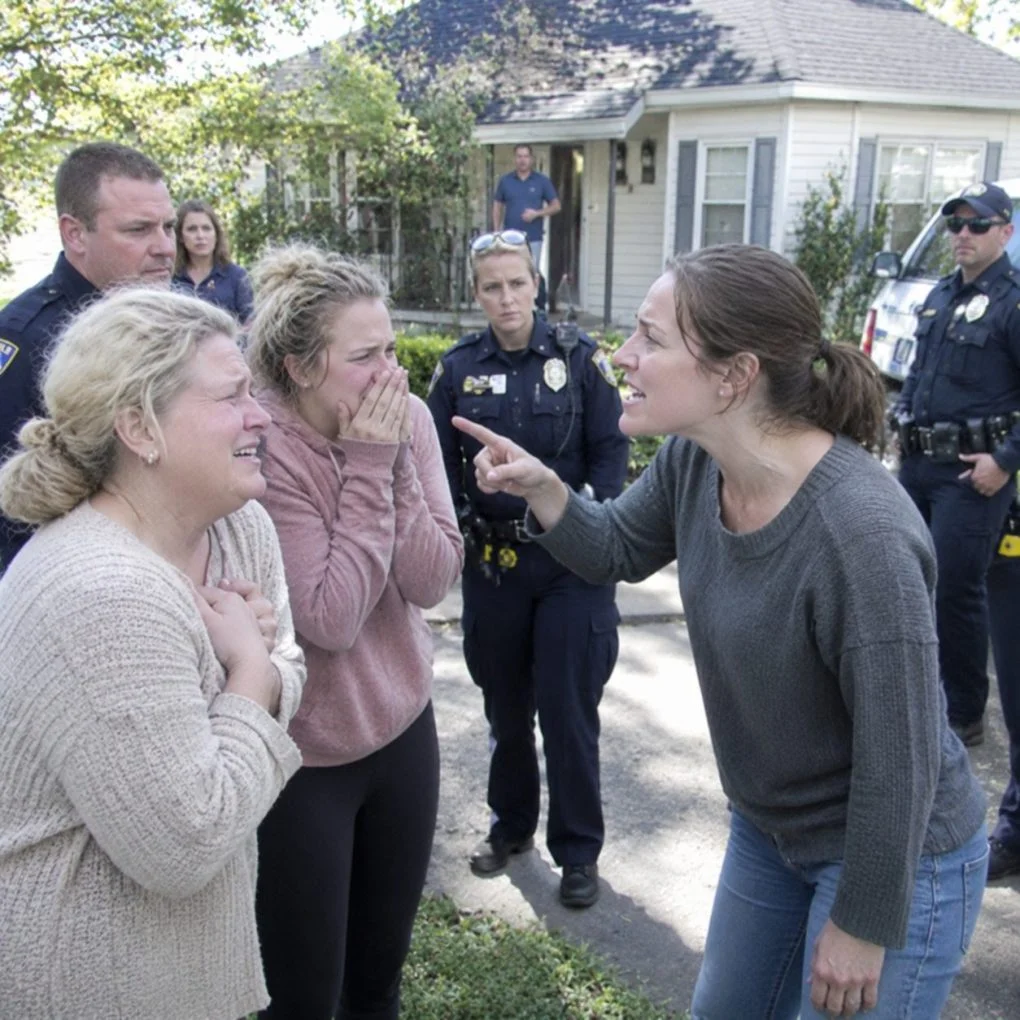
I agreed to pay for a hotel while their attorney and mine worked out a written move-out agreement and repayment claim. It was money I could barely afford after months of carrying Dad’s mortgage, but watching Noah reach for his wife’s hand made the decision simple. The buyers, who had been counting down to their closing date, now needed an extension and written proof that the home was safe.
Mom finally answered when I called her. “Brooke only needed a little time,” she said, before asking whether I had really involved police. “You inherited everything, Emily. Your sister has a failing business and you won’t even share an empty house.”
“You told strangers you could rent property you don’t own,” I said. “They almost died in it.”
Mom’s response was so soft I nearly missed it. “Don’t make this bigger than it has to be.”
By Thursday, firefighters had traced the carbon monoxide to a faulty furnace vent, and investigators were interviewing the handyman Brooke had hired to prepare the house for tenants. Once he learned I was the owner, he forwarded Allison a screenshot of a group message he’d sent Brooke and Mom six days before the Bennetts moved in: Do not use the heating system or allow anyone to stay there until a licensed contractor repairs this.
I stared at the screenshot until the letters blurred. Beneath his warning was Brooke’s reply: Can it wait until the first rent payment clears?
But the final message belonged to my mother.
“Don’t tell Emily. She’ll stop us, and Brooke needs that money.”
I drove to Mom’s house on Friday with Allison beside me. Dad’s old wind chimes hung by the door, and I could almost hear him asking me to be gentle, even when people disappointed me.
Then Brooke opened the door and said, “You have no idea what you’ve done to us.” She wore the BIG DREAMS sweatshirt I’d bought when her salon opened.
“I know exactly what happened,” I said, laying the lease, the payment record, and the handyman’s messages on the kitchen table. “You forged my signature, took a couple’s savings, and ignored a warning that could have killed them.”
Mom began crying before she read the first page. “Your father left you the house,” she said. “Brooke was supposed to get something too.”
“Dad helped pay for her salon, and I paid his mortgage while I cared for him,” I answered. “But even if neither of those things were true, you had no right to sell people a home you didn’t own.”
Brooke claimed she’d planned to repay everything before closing, as though that excused the forgery or the dangerous furnace. I told them the investigation wasn’t mine to cancel, and when Mom reached for my wrist, I gently moved my arm away.
“We called you forty-seven times,” she whispered, “because I knew you’d turn this into a disaster.”
“No,” I said. “You called forty-seven times to stop me from finding out. Once you knew about the ambulance, neither of you called to ask whether Sarah was alive.”
Brooke stared at the papers. Mom watched the driveway as if someone might still arrive to make the truth less painful.
I left without taking the spare key back; Allison advised changing the locks only after we completed the tenants’ written surrender and confirmed the home was vacant. Two weeks later, Sarah and Noah moved into a safe apartment, with assistance from my attorney and the local tenant-support organization, while investigators collected bank statements and interviewed the handyman.
The county prosecutor eventually charged Brooke with forgery and theft by deception, and Mom with helping carry out the fraudulent rental. Both later entered guilty pleas; the judge ordered restitution to the Bennetts and to me for documented losses, along with probation conditions and community service, while Brooke received a short jail sentence for her leading role.
At the sentencing hearing, Sarah described waking in an ambulance, unable to remember why she’d been lying on a stranger’s floor. My mother covered her face as the prosecutor read aloud the text she’d sent: Don’t tell Emily. She’ll stop us.
That was the moment I’d imagined wanting to celebrate. Instead, I watched two women who’d mistaken my patience for permission finally hear how their choices sounded when someone else said them aloud.
I replaced the furnace, restored the safety alarms, and disclosed the incident to the buyers, who agreed to close after a delay and an inspection. The sale brought less than I’d hoped after repairs and concessions, and restitution was being paid in installments. I stopped answering Mom and Brooke’s calls; our relationship, unlike the house, was not something I intended to repair.



