The scandal attracted reporters, and Cole struggled with the attention. One day, he admitted that he simply wanted life to feel normal again.
That reminded me that defeating a bully could still allow her to occupy our entire lives. I had spent months documenting Victoria and anticipating her next move. I did not want Cole remembering that year only because of her.
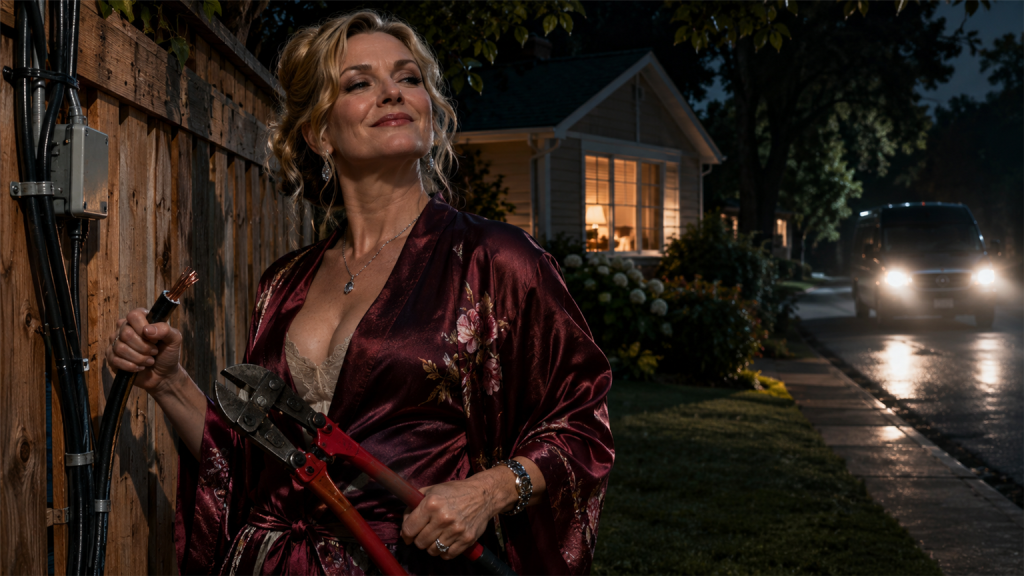
So Elliot handled the civil case, Walt led the audit, federal authorities investigated the cable, and county officials reviewed the permits. I returned to being Cole’s father.
The secure line was replaced with armored conduit, underground routing, and tamper monitoring.
The damaged oak trees could not be restored so easily. Lauren had loved their shade. Cole and I planted two saplings beside the remaining stumps.
It felt like rebuilding the fence—creating something new after losing something we could never fully replace.
The financial investigation forced Briarwood to confront how residents’ money had been managed. The new board required competitive bids, written scopes, supporting records, and independent review whenever a board member’s relative might benefit. After unnecessary expenses were eliminated, monthly dues decreased.
Walt became treasurer despite protesting. His first report was twenty-seven pages long, and he considered it insulting that almost nobody read the entire document.
Tammy resigned as secretary but continued attending meetings. Doug also resigned, repaid the assessments Victoria had waived for him, and cooperated with investigators.
When Doug visited my house, I asked why he had continued signing questionable checks.
“Because every individual decision felt small,” he said.
One payment, waiver, meeting, or vote never seemed large enough to mark the moment he became part of something wrong.
His answer stayed with me. Systems rarely collapse through one enormous decision. They decay through small permissions: just this once, everyone does it, objecting is inconvenient, or speaking up will bring retaliation. Eventually, the exceptions become the system.
That was how Victoria built her power, and how she finally lost it.
The federal cable case ended through a negotiated resolution instead of a dramatic trial. Victoria faced federal consequences for intentionally damaging the communications line, along with separate state and civil liability. Craig’s company lost much of its neighborhood business as permit violations and financial scrutiny destroyed the advantages created through HOA connections.
Eventually, the Langfords listed their house. The brass plaque disappeared first, followed by the Lexus, landscaping truck, and finally a FOR SALE sign.
I expected to feel triumphant. Mostly, I felt tired.
When Cole saw the sign, he said, “Good,” then worried that his reaction might be wrong.
I told him it was not.
He nodded and changed the subject.
That was progress.
Elliot later resolved my civil claims involving the fence, trees, and other documented damage. Instead of allowing the settlement to remain connected to Victoria, I decided to transform part of it into something honoring Lauren.
The Lauren Thornton Memorial Scholarship offered one thousand dollars each year to a local child who had lost a parent. Cole helped design the application and added one question: “What is one thing you want people to know about your mom or dad?”
The first recipient was a fourteen-year-old girl whose father had died in a construction accident. She used the award for a summer science program and later sent Cole a thank-you card with a rocket on the front. He taped it beside Lauren’s photograph.
That meant more to me than every HOA vote combined.
By spring, the damaged oaks produced new growth. The new saplings remained small, and the old trees would never be exactly the same, but they were no longer frozen at the moment of injury.
The cedar fence weathered too. Rain, sunlight, heat, and cold darkened the replacement boards until someone had to know where to look for the scars.
One evening, Walt, Diane, and several neighbors gathered in our backyard. There was no agenda, clipboard, or official meeting—only burgers, folding chairs, jokes, and Cole laughing.
Victoria had taught people that community meant obedience. She was wrong. Community was Diane bringing food when others were afraid to knock. It was Walt opening his files, Tammy admitting the truth, neighbors following evidence instead of rumors, and people disagreeing without threatening one another’s homes.
After everyone left, I stood beside the fence.
I had built it because grief gave me so little control. I could not negotiate with cancer, appeal Lauren’s death, or send a letter demanding that my wife come home. But I could measure a board, set a post, and create one straight line through a season when nothing else felt straight.
Victoria saw only a fence. To me, it proved that Cole and I could still build after losing Lauren.
That was why I had refused to remove it.
Some boundaries are not meant to keep people out. They exist to protect what is still standing.



