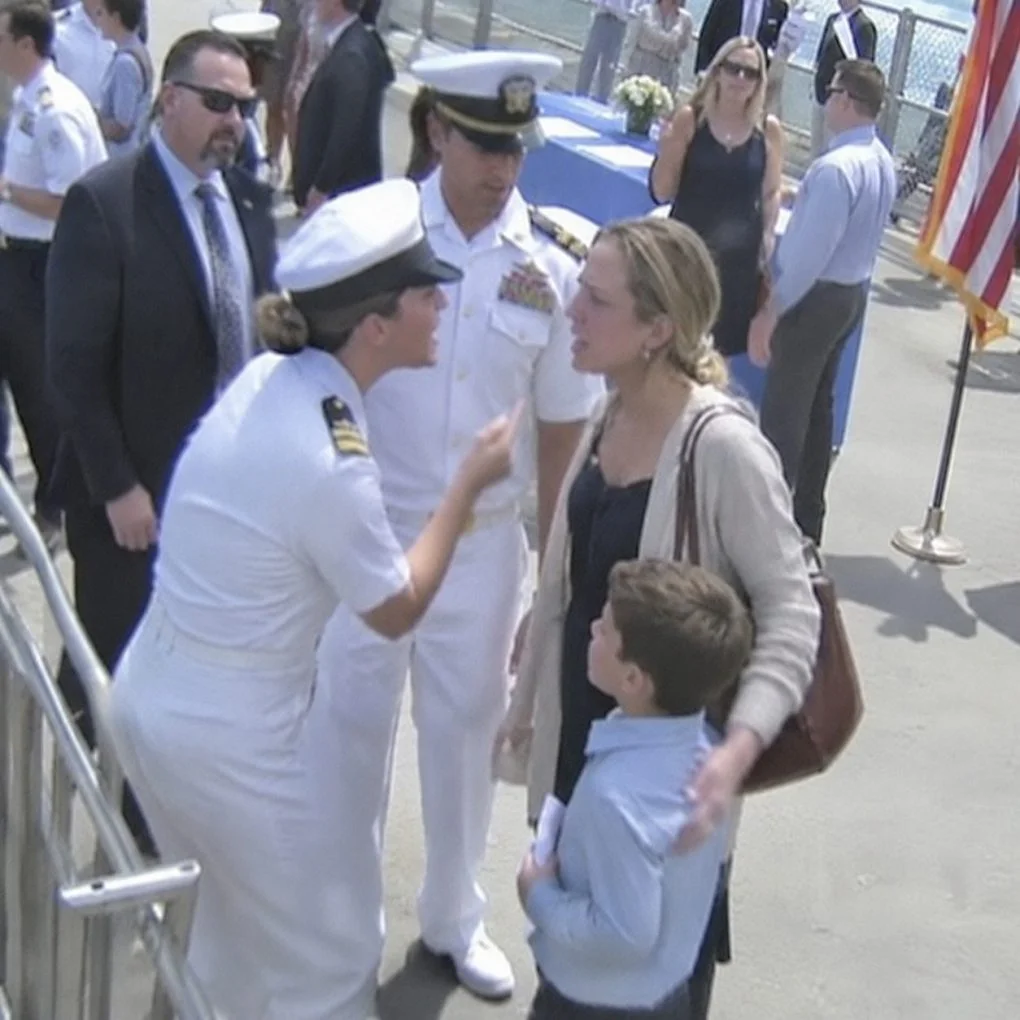
He lowered his eyes. He told me he’d said we were having problems because it made questions about Kelsey easier to avoid, and that he’d planned to tell me about her once the promotion ceremony was over. I remembered getting up at five that morning to press the creases into his sleeves, not knowing he’d already decided I wasn’t welcome in the photographs.
For years I’d rearranged nursing shifts around his watches, missed holidays with my parents, and explained to Noah why his father wasn’t at another school event. I never resented military service; I’d married a sailor knowing what duty required. I resented discovering how often he’d called selfishness duty because he trusted me not to question it.
I met with a civilian family-law attorney the next morning and began arranging a separation. A Navy legal assistance office could give me information, but the divorce and parenting questions belonged in Virginia’s civilian courts. I preserved the messages and photographs without distributing them to his coworkers or posting anything online.
Two days later, Aaron called to accuse me of triggering an inquiry into favoritism toward Kelsey. He said another sailor had already raised concerns about assignments and evaluations, and that my report had made it harder to dismiss those concerns as workplace resentment. I hadn’t known there was an earlier complaint.
That night, our shared tablet lit up with a message from Kelsey, still synced from Aaron’s phone. It said, “I did exactly what you told me at the entrance. Why are you blaming me now?”
Below it was Aaron’s message from the night before the ceremony:
“If Grace brings Noah, send them home. I need the command to see you beside me, not them.”
I read that message three times before I put the tablet down. Aaron hadn’t frozen when Kelsey humiliated our son; he had instructed her to do it. I could no longer explain his silence to Noah.
I sent the screenshots to my attorney and gave the investigator the relevant messages when requested. The Navy inquiry took months and included statements from sailors, review of evaluation procedures, and interviews with Aaron and Kelsey. I wasn’t entitled to other sailors’ confidential records; I learned the outcome months later.
The command found that he’d maintained an improper relationship with an enlisted sailor within his supervisory chain and had failed to maintain appropriate professional boundaries. He was removed from that supervisory role and received formal adverse administrative action that affected his future assignments. Kelsey was reassigned outside his reporting line, and the earlier personnel concerns were reviewed separately. The ceremony had marked a promotion already effective; the consequences came from the investigation.
Aaron told everyone I’d destroyed his career. His mother called me in tears, reminding me how hard he’d worked for the new rank, and I listened until she said Noah should have stayed home because “children don’t belong in adult disagreements.”
“He was invited to pin on his father’s insignia,” I said. “He made a card. Aaron asked his girlfriend to send him away.”
She was quiet for a long moment. Then she asked whether Noah still had the card, and I said yes, but that wasn’t the part she needed to worry about.
At our divorce mediation, Aaron insisted the incident had been a misunderstanding and accused me of trying to keep him from his son. My lawyer placed the printed invitation beside the message he’d sent Kelsey, and asked him to explain how both could be true. He stared at the papers, his face reddening, while I remembered how I’d straightened Noah’s collar outside the ceremony so he wouldn’t see me cry.
“I didn’t want a scene,” Aaron finally said.
“You arranged one,” I answered. “Then you let our child think he caused it.”
We reached a parenting agreement based on our actual schedules and Noah’s needs, not on who had behaved worse as a spouse. Noah lived primarily with me because I had been his consistent caregiver; Aaron had regular parenting time, school updates, and a responsibility to show up when he promised. We divided our property through the ordinary legal process, and I returned to full-time nursing.
The hardest part was never the paperwork. I still kept his father’s visits on the calendar because Noah deserved to know when someone was coming. It was the first time Noah asked whether he should stop drawing pictures for his father because grown-ups could get angry when he showed up. I told him he never needed to earn a place in anyone’s life by being quieter, smaller, or less hopeful.
Months later, Aaron attended Noah’s school presentation. He sat in the back row and stayed afterward to apologize to him, without asking me to make the moment easier. Noah listened, took his hand for a few seconds, and then came back to stand beside me. Their relationship would take time, and I wasn’t going to pretend a single apology repaired it.



