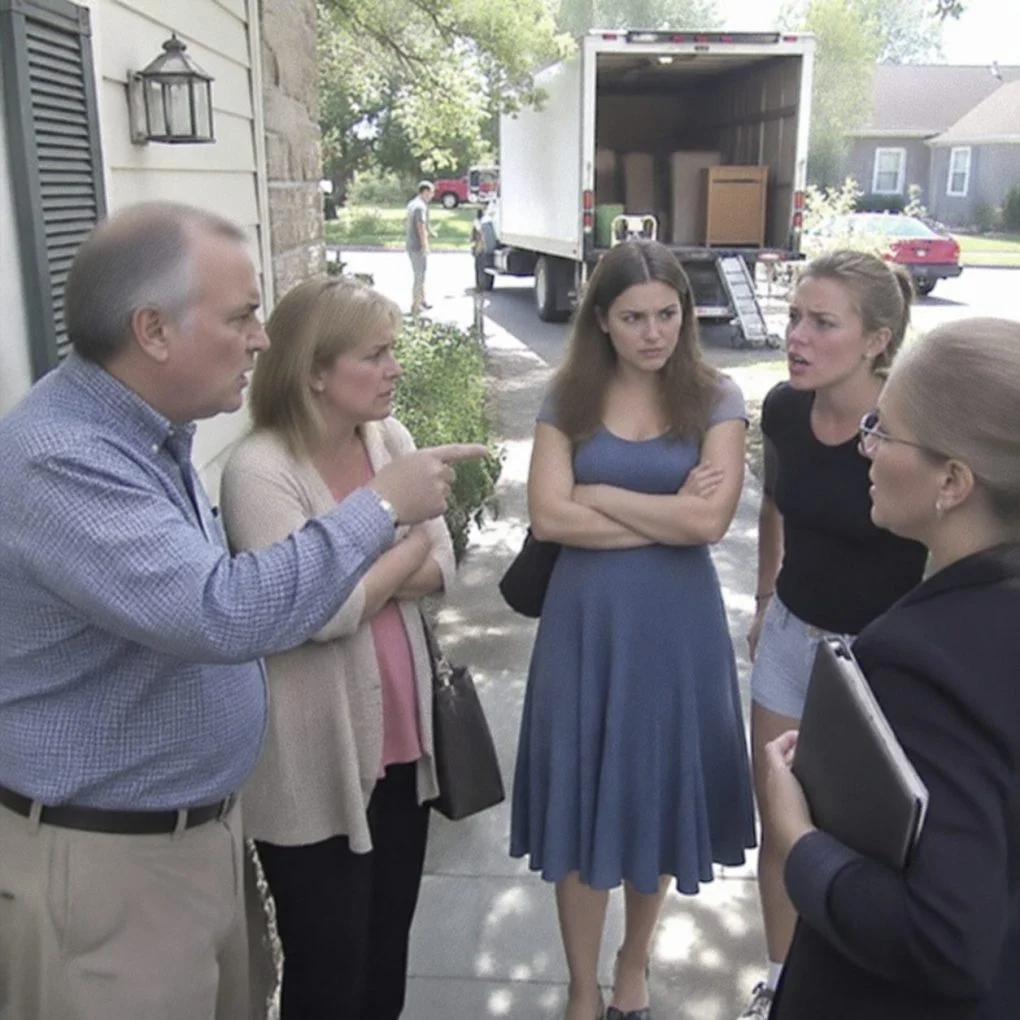
“He wasn’t frightened of dying,” I said, remembering how he’d calmly instructed me to label the freezer containers before his final hospital visit. “He was frightened of what would happen to me afterward.”
Evelyn nodded. Then she handed me the old guardianship papers from when I was five. Both my parents had signed written consent for Grandpa to take responsibility for me; nothing in the file supported Mom’s claim that he’d prevented them from visiting, and the court notices showed they’d been given opportunities to participate.
At the bottom of the filing was Grandpa’s address in his familiar handwriting. I remembered standing on a kitchen chair at six, watching him pack peanut-butter sandwiches for school, because he’d promised to learn everything a parent needed to know. He’d filled out the emergency forms, attended the conferences, and kept every drawing I’d brought home.
Mom sat down hard on the hallway bench. “We were young,” she whispered.
“You were thirty-one,” I said. “And you came back when there was a house.”
Mallory had gone quiet. She looked at Dad and asked whether he had known about the trust before telling her to give notice on her apartment. He didn’t answer.
Evelyn’s last document was a signed promissory note. Three years earlier, Grandpa’s trust had lent Dad $58,000 when his contracting business was struggling, with repayment due the previous spring. He had never made a payment.
I looked at Dad, who had spent the morning demanding a free bedroom. Evelyn turned the page toward him.
“Mark,” she said, “you weren’t coming here to claim an inheritance. You were trying to get a house instead of repaying the father who had already rescued you.”
For the first time that morning, Dad stopped calling the house his. He stared at the loan document, then at the front stairs, as though he could decide which part of the truth would hurt less.
“You can’t make me pay money to my own daughter,” he said.
“I’m not asking for a gift,” I replied. “Grandpa loaned it to you. You signed the agreement, and you never paid him back.”
Dad insisted he would challenge the trust, and Mom told me I was tearing the family apart on the day after a funeral. I thought of five-year-old me waiting on the bottom stair, listening for tires in the driveway until Grandpa carried my blanket downstairs. I had spent twenty-three years hoping one of them would say they were sorry.
“You left me here,” I told them. “Grandpa stayed. You don’t get to call that unfair now.”
Evelyn asked everyone to leave the property. Mallory walked outside first, leaving her suitcase by the door, and the driver closed the empty truck’s loading ramp. Dad paused on the porch as though expecting me to beg him to stay; when I didn’t, he followed them down the steps.
That evening I opened Grandpa’s desk, searching for the repair receipts Evelyn needed. Beneath them was a faded envelope addressed in my childhood handwriting to my mother, returned unopened when I was eight. I had drawn a family of four holding hands, then added a fifth figure at the edge, because I wasn’t sure where I belonged.
On the back Grandpa had written, I kept this because Sophie should never have to wonder whether she tried.
I cried with the envelope pressed to my chest, sitting where he’d once taught me to add fractions using dried beans. I wasn’t grieving a house, or even a childhood I could get back. I was grieving the man who had carried both of those losses without making me feel like a burden.
Dad did challenge the trust through an attorney, claiming Grandpa had been confused when he signed it. Evelyn produced the recorded deed, records of Grandpa’s independent legal advice, and the nurse’s account of his refusal to sign the later transfer. After several months of negotiations, Dad withdrew his challenge rather than pursue a trial he had little evidence to support.
At the settlement meeting, Dad asked whether I’d waive the debt if he admitted he’d been wrong. I told him an apology wasn’t a bargaining chip and Grandpa’s written agreement deserved to be respected.
The overdue loan didn’t disappear. The trust’s attorney demanded repayment, and Dad agreed to a written settlement after selling unused business equipment for an initial payment, with the remaining balance payable in installments. Nobody dragged him from a house he’d ever owned; he and Mom found another rental, while Mallory arranged an extension on her apartment lease.
Mallory came back alone the following spring, carrying a small pot of marigolds. She apologized for walking into a grieving woman’s home and choosing a bedroom before asking whether she was welcome. I didn’t invite her to move in, but I let her help plant them beneath Grandpa’s kitchen window.



