The next morning, I called both card issuers and filed identity-theft disputes, explaining what I knew instead of hiding Daniel’s involvement. I froze my credit, opened an individual account for future wages, requested the application and transaction records, and booked an appointment with a divorce attorney before moving any shared money.
The issuers suspended the cards pending investigation. Our lawyer advised me to preserve the texts, statements, and receipts, and warned that an identity-theft dispute could take time; she also helped arrange payment of our ordinary bills without giving Diane access to my new account.
Then the first issuer sent an application record. The contact email belonged to Daniel, but the phone number used for identity verification belonged to Diane, and the login history showed both of them accessing the account from their homes.
When I confronted her, Diane didn’t even pretend to be sorry. “A wife contributes to her husband’s family,” she said. “Your wages are wasted on little luxuries while my son carries responsibility.”
“My wages have been paying your bills without my consent,” I answered. “Don’t act innocent,” she snapped. “Daniel said you wouldn’t leave him over money.”
That evening, Daniel forwarded a message chain in a desperate attempt to show that his mother had pressured him. Her final text, sent three weeks before I discovered the cards, read: *Once Rachel gets her annual bonus, apply for the higher limit. Keep telling her she’s irresponsible; she’ll never question the bills if she thinks she’s the problem.*
Beneath it was Daniel’s answer: *I already asked for the increase. They approved another $15,000.*
I stared at the words, feeling the last bit of hope drain out of me. **He hadn’t been trying to protect his mother from debt; he’d been preparing to put even more of it in my name.**
I didn’t confront Diane again that night. I printed the messages and drove to my friend Ellen’s apartment, unable to sleep beside a man who had practiced apologizing while applying for more debt in my name.
For a week, Daniel sent flowers and promises. When I asked for a written explanation for investigators, he accused me of ruining his life.
One evening I was so exhausted I stood in the hospital supply room holding a box of gloves, unable to remember why I was there. A fellow nurse said, “You need somebody to take care of you for once,” and I cried beside the shelves.
Both card issuers investigated and removed the fraudulent balances from my liability, sending corrections to the credit bureaus. My separate identity-theft complaint went to local investigators; a bank dispute was not an automatic arrest warrant.
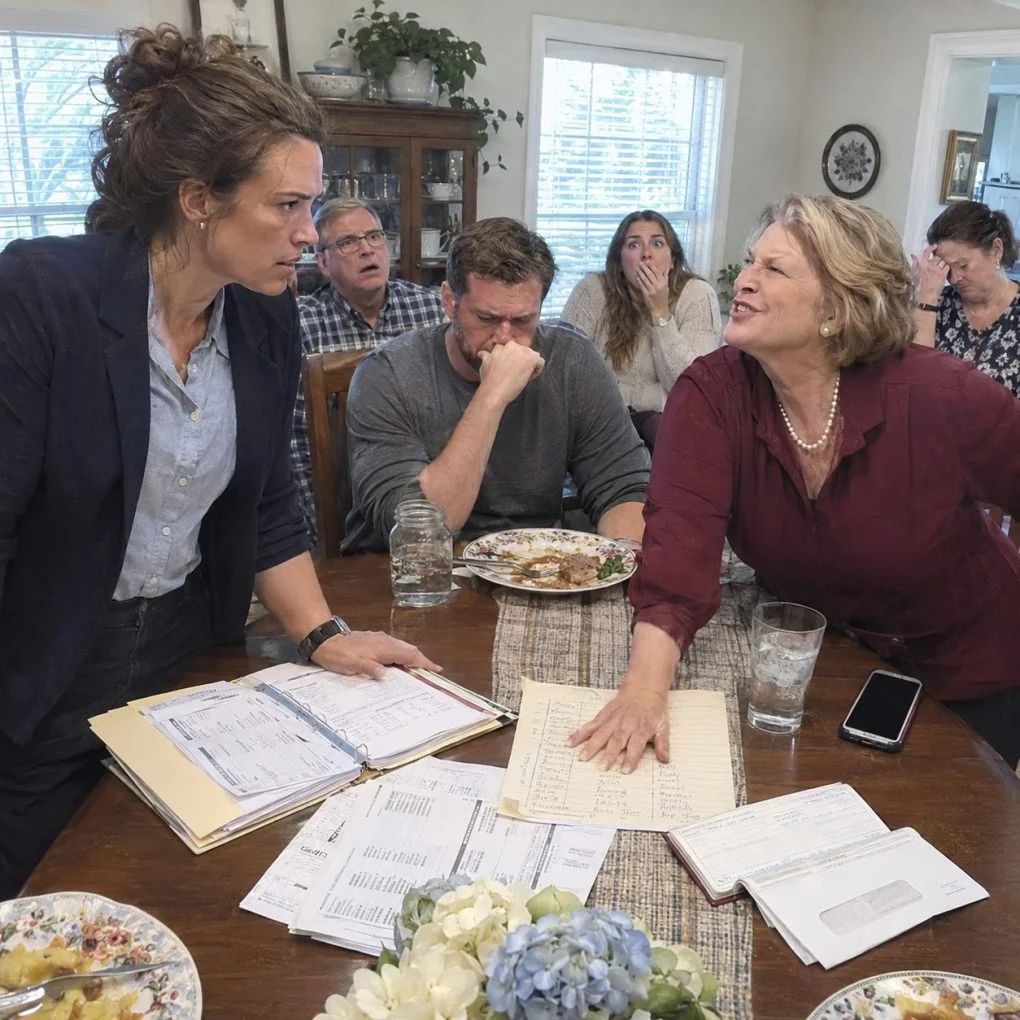
Diane told relatives I’d abandoned Daniel because I was selfish. When she arranged a Sunday dinner to “set the family straight,” I agreed to attend if I could present my documents without interruption.
I arrived carrying the same plain folder Daniel had watched me fill at the kitchen table. Diane had already placed a handwritten budget beside the roast, with my salary at the top and a line underneath labeled *what Rachel should have contributed*.
“Since you’re here,” she began, “perhaps you can finally explain why you think a pair of shoes matters more than family.”
I put the disputed card statements beside her budget. “These are the accounts Daniel opened using my identity, and this is the $24,600 charge for your cabinets. Here are the payments that came out of our checking account while you told me I wasted money.”
Melissa read the documents twice, then turned to her mother. “You told us Rachel refused to help after your kitchen flooded. She was paying for it the whole time.”
“Those were family arrangements,” Diane insisted, but Daniel finally said, “Mom, stop. Rachel didn’t consent.”
I had spent years wishing he’d say those words. Hearing them after everything was documented only reminded me I should never have needed to beg.
Diane glanced around the table, waiting for the familiar chorus of people telling me to forgive her. Melissa instead moved the budget sheet away from her plate and said, “You told me Rachel couldn’t be trusted with money while you were spending money stolen in her name.” Nobody spoke up for Diane this time.
The family stopped defending Diane. She sold furnishings and took out a loan against her own home to reimburse the unauthorized payments our household account had made; our divorce settlement accounted for that reimbursement.
The following year, Daniel pleaded guilty to an identity-theft charge and received probation and restitution obligations. Diane wasn’t charged, but she lost the trust of relatives who had believed her stories; the legal bills were real.
Our divorce became final the following spring. I moved into a small townhouse near the hospital, kept my wages in an account only I controlled, and bought another pair of nursing shoes when the old ones wore out.



