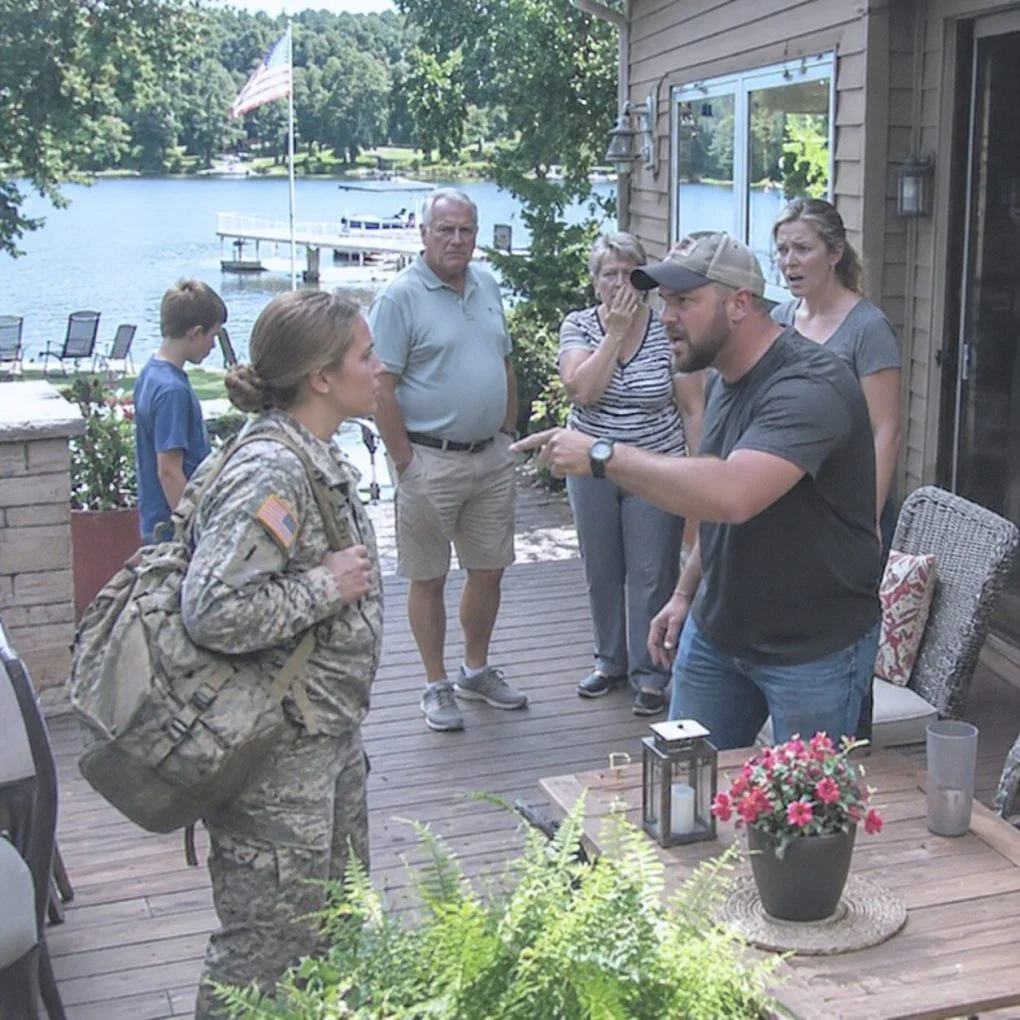
It had rained hard the previous week. I pictured the cardboard folder Dad used to keep beneath his chair, the birthday cards and handwritten recipes he saved even after Mom died.
Mara told me not to go back for it alone. Instead, she arranged a documented inspection with a local property manager, after giving the occupants notice. Travis refused to let them inside and sent me a message: You don’t scare me with lawyer tricks. Jenna says this is our house.
I forwarded it to Mara. She explained that even with proof of ownership, we would have to follow the proper process to recover possession if they refused to leave. My military rank had nothing to do with that process, and I didn’t want it to.
By Sunday morning, I was packing my duffel to report back when the rental company sent its transaction report. Alongside the payout records was an email from Jenna, dated four months earlier, asking the manager to keep all correspondence away from my military email address.
Attached was a second document: a proposed long-term lease letting Jenna and Travis occupy my lake house for three years at one dollar a month.
The tenant signatures were real. The owner’s signature was mine.
Except I had been overseas on the date it claimed I’d signed.
I reported back Monday with two hours of sleep. When my commander asked if I was all right, I told her I’d retained civilian counsel for a family property dispute. I didn’t ask the Army to intervene.
Mara challenged the forged lease in court and gave investigators the rental records and copied signature. Nobody promised an instant arrest or eviction.
The next four weeks were harder than I’d expected. Jenna cried about Travis losing his job and their children having nowhere to go, then begged to stay until spring. Travis left voicemails calling me selfish, but by then he’d seen the deed and knew exactly whose house he’d claimed.
I told Jenna the children deserved stability, but stealing my home and identity wasn’t how to give it to them.
During a court-supervised settlement conference, Mara laid out the recorded deed, the unauthorized rental proceeds, the forged signatures, and photographs showing damage to the porch. The rental company canceled future reservations, refunded guests, and sought repayment from Jenna.
Travis arrived in a pressed shirt, unlike the man who’d mocked my sweatshirt. When Mara asked why he’d ordered the owner out, he said, “My wife told me it was ours,” and looked at Jenna instead of me.
Travis’s father, one of the occupants who had eaten lunch at Dad’s table, stared at his son. “You told us she was broke and living off Jenna,” he said. Travis kept looking at the papers.
Jenna started to cry. “I thought I’d pay Claire back before she found out. I wanted something people would think was mine.” She rubbed her wedding ring, and for a moment she looked like the little girl who used to follow me down to the water. I couldn’t reach for her hand.
“You had years to tell me you were in trouble,” I said. “You chose to make me a stranger in my own home.”
They signed a settlement requiring them to leave, return the keys, and repay the rental proceeds and documented damage in installments. If they missed the deadline, we could continue the possession case; they agreed to finish moving two days early.
The day I returned on extended leave, their moving van was still in the driveway. Travis stood beside the porch steps, watching his parents carry the last boxes out. He opened his mouth as though he might tell me to leave again, then placed the keys in Mara’s hand without speaking.
After the inspection, I walked inside. The rugs were stained, the guest bedroom smelled of old food, and Dad’s cedar bench had been pushed behind a stack of folding chairs. I found his letters in the damp shed, swollen at the edges but mostly readable.
That evening I put the bench back on the porch and smoothed the worn edge with my thumb. Underneath, Dad had carved two tiny initials years ago—mine and Jenna’s—because he had believed we’d always have a place to come back to together.
I cried then, not because they’d taken the house, but because for one afternoon I’d wondered whether I could ever feel safe inside it again. I changed the locks after the occupants had surrendered possession and arranged a new caretaker; Jenna and I no longer spoke except through our attorneys about the payments.
At dawn, I made coffee, sat on Dad’s bench, and watched the lake turn silver in the cold light. The sweatshirt was still the same faded gray, my duffel still sat by the door, and for the first time in months I didn’t feel the need to explain why I belonged.



