Dad arrived carrying two coffees.
He looked at me for a long moment before speaking.
“I should’ve taken you to the hospital that night.”
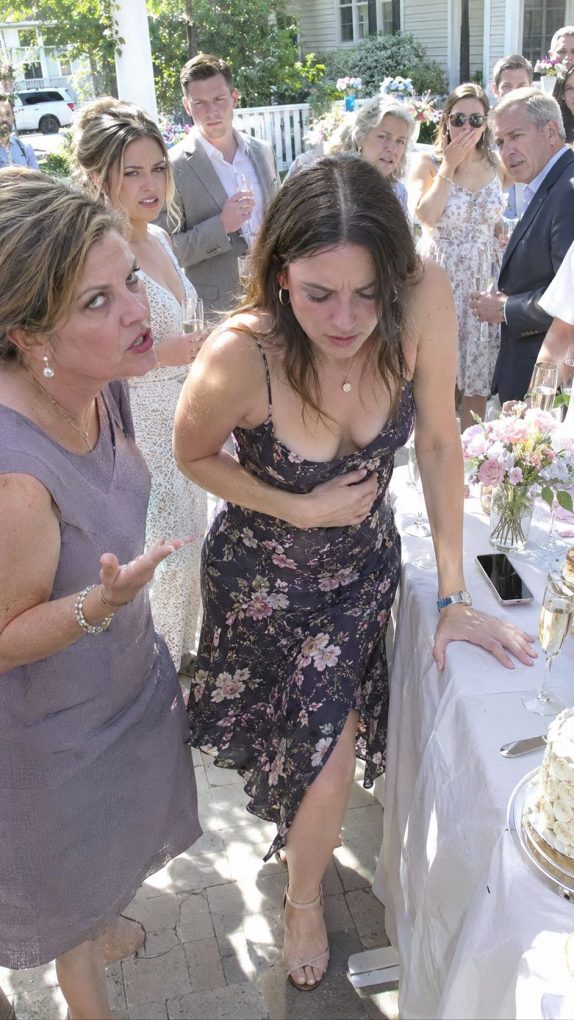
I remembered his hand reaching toward me at the engagement dinner before Mom waved him away.
“Yes, Dad. You should have.”
He lowered his head.
“I’m sorry.”
I let him hold my hand.
Mom arrived just before the nurses took me upstairs. She asked who would be making medical decisions if there were complications, and when I explained that Leah was my designated healthcare agent, her expression changed.
“Your friend? Not your mother?”
I looked at her.
“When I told you I couldn’t stand, you told me to stop being dramatic. Leah was the person who drove me to every appointment afterward.”
Mom’s lips trembled.
For once, she couldn’t think of anything to say.
My surgery lasted nearly nine hours.
The surgeons removed most of the tumor and relieved the dangerous pressure on my brainstem. A small portion was left where removing it could have caused serious nerve damage, and my doctors arranged regular imaging to monitor what remained.
I spent two nights in intensive care and several more days in the hospital.
When I finally returned home, I needed help walking safely, and the hearing in my left ear had deteriorated substantially.
Recovery wasn’t the beautiful, miraculous transformation people sometimes imagine.
Some mornings, I couldn’t make breakfast without sitting down halfway through. Leah helped me manage appointments, while Brooke brought groceries and sat with me through afternoons when the dizziness made reading impossible.
Mom sent flowers.
Later, she wrote a letter.
I thought you were seeking attention because I was so focused on Brooke’s wedding. I should have listened when you said something was wrong.
I read it twice.
Then I put it in a drawer.
I wasn’t ready to forgive her simply because she’d finally recognized what everyone else had already seen.
Six months later, Brooke married Ethan in a small garden ceremony outside Columbus. I attended with a cane, sitting in the front row beside Leah while my sister walked down the aisle carrying a bouquet of white roses.
Before the reception, Brooke hugged me carefully.
“I’m glad you’re here.”
I held her a little longer than usual.
“Me too.”
Mom approached afterward and asked whether we could begin rebuilding our relationship. I told her I was willing to talk, slowly, but I wouldn’t return to being the daughter whose needs were always treated as an inconvenience.
She nodded.
This time, she didn’t argue.
A year after my diagnosis, I returned to the library on a reduced schedule. I still attended balance therapy, and I had to turn my right ear toward children when they spoke softly, but I was learning how to live comfortably with the changes.
One afternoon, a little girl dropped her books beside my desk.
“Are you okay, Miss Hannah?” she asked when I reached for the counter to steady myself.
I smiled.
“I’m okay, sweetheart. Thank you for asking.”
She waited until I was standing comfortably before running back to her classmates.
I watched her go, remembering the night I’d held my mother’s kitchen counter while she told me to stop being dramatic.
For years, I’d believed I had to prove I was hurting before I deserved kindness. Nearly losing my health taught me something different: the people who truly love you don’t need to see you collapse before they reach out their hands.



