Sarah had retired but still kept her estate files with a successor firm, and she agreed to see me that afternoon. She confirmed that she had drafted the 2022 trust, that the signed original was in professional custody, and that no later amendment had ever been prepared through her office.
That didn’t automatically make the document Mason presented false; Thomas could have used another attorney. But Sarah examined the alleged 2025 restatement and noticed that its signing date fell during the week Thomas was hospitalized after a severe stroke, barely able to speak or hold a spoon.
We requested hospital records through counsel and sought an independent examination of the signature. The notary named on the disputed restatement initially refused to provide her journal, and Sarah said that alone would require careful follow-up, not assumptions.
I told Martha everything over supper. She placed a bowl of vegetable soup in front of me and said, “Even if that paper gives you every brick back, Evelyn, they still chose to put you out in the cold.” I couldn’t answer because it was the first time anyone had named the part that hurt most.
Two weeks later, our attorney filed a petition challenging the restatement and asking the court to protect the trust assets while the matter was investigated. Then he called with a discovery from the financial records: Mason and Rebecca had arranged to sell the lakefront house, and a closing was scheduled for the following Friday.
The sale proceeds were supposed to go into accounts they controlled.
**And the amount they had told me was gone—$4.2 million—was still there.**
The judge issued a temporary order blocking the sale before closing, but that wasn’t the victory Mason later accused me of arranging. It was simply a chance to prevent the house from disappearing while the court decided which documents were genuine.
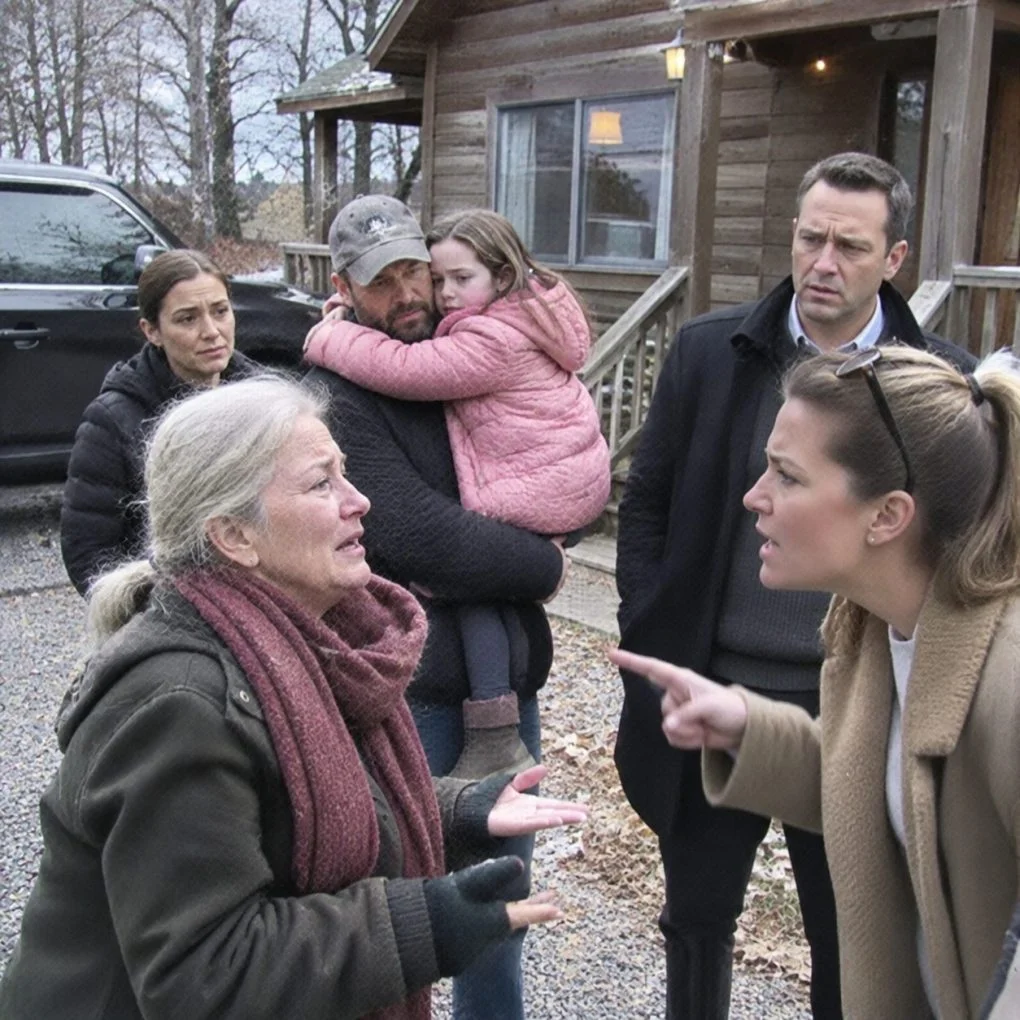
At the first hearing, my children sat behind their attorneys in the polished clothes they’d worn to Thomas’s funeral. Vanessa looked past me as though I were still the woman standing outside a cabin with one suitcase, and for a moment I heard her laugh again.
Sarah testified about the 2022 trust and produced the signed original from her former firm’s files. Hospital records showed that on the date of the alleged 2025 restatement, Thomas had been receiving treatment after his stroke and could not reliably use his right hand. A forensic document examiner found significant inconsistencies in the disputed signature, and the notary’s records failed to support the claimed signing.
The evidence didn’t arrive as one magical revelation. It took months of subpoenas, testimony, and financial tracing, including emails showing that Mason and Rebecca had discussed making sure I would sign the release before I obtained independent advice.
One message from Rebecca read, “If Mom thinks the accounts are nearly empty, she won’t fight for anything.” Another showed Mason instructing their accountant to omit $4.2 million in trust investments from the summary they gave me.
I read those words in the courtroom without crying. I’d cried when my children packed my life into two suitcases, when I ate cereal alone above Martha’s bookstore, and when I wondered whether Thomas had stopped loving me before he died; by then I had no tears left for their excuses.
The court found the later restatement invalid and set aside my release because it had been obtained through material misrepresentations. Mason and Rebecca were removed as trustees, an independent fiduciary took control, and the original plan protecting my right to live in the lakefront house and receive trust support was restored.
The court also ordered an accounting and repayment of trust money the children had improperly spent. A criminal investigation into the forged documents followed; both children later entered guilty pleas to fraud-related charges and received restitution obligations and probation, while Vanessa moved out of the house with Mason.
They didn’t lose everything overnight. They lost the power to decide what truth I was allowed to hear, and that was the part neither of them could forgive.
Mason called before the final hearing. “Are you really going to let strangers decide what happens to Dad’s money?”
“No,” I told him. “I’m asking them to honor what your father actually signed.”
When I returned to the lakefront home, I stood in the kitchen where Thomas once made Sunday pancakes, listening to the refrigerator hum. I could afford to stay, but after a few months I chose a smaller place nearby and arranged the transition with the independent trustee; the big rooms had become too quiet.
Lily and her parents live in the cabin I gave them, its porch step repaired and its stove working. They invite me for soup every winter, and Lily always insists that I take the chair nearest the fire.



