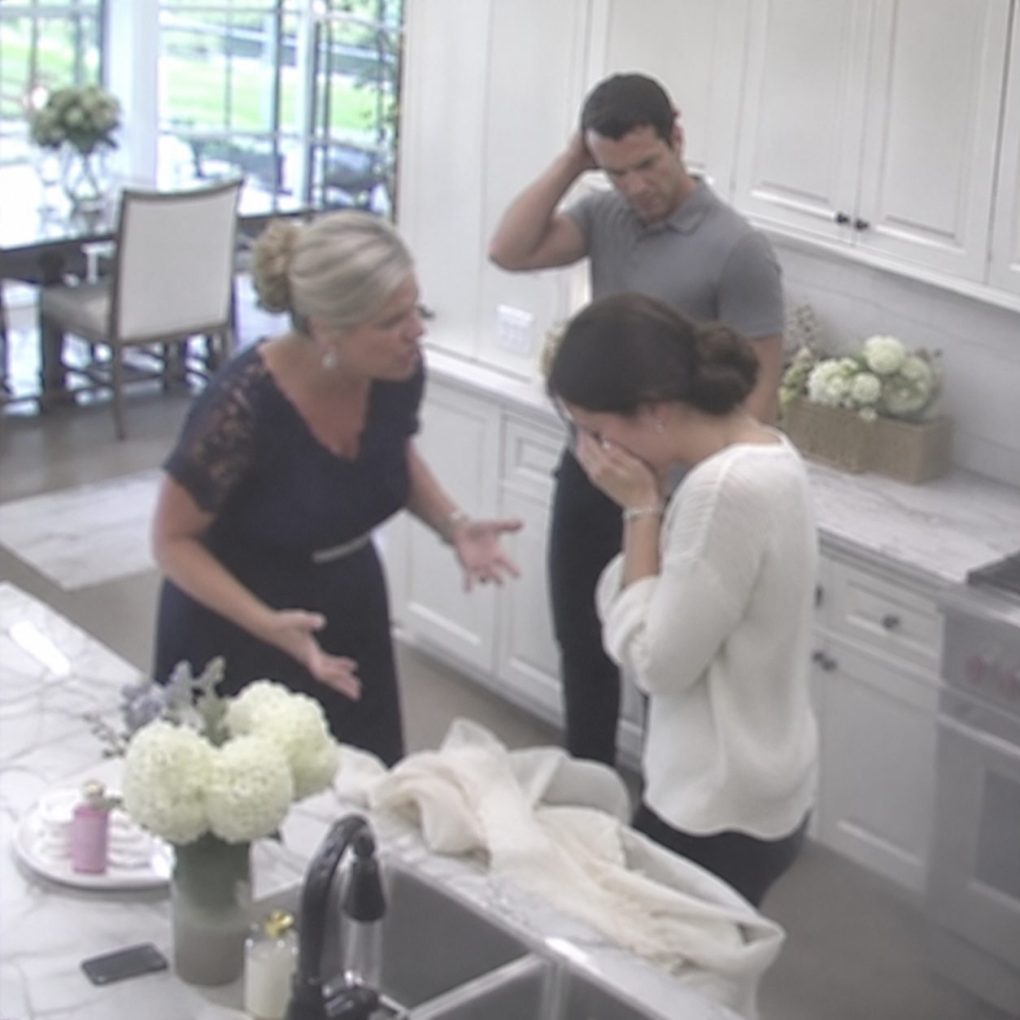
“You own NOTHING without my son!” my mother-in-law screamed, ripping my expensive ivory dress down the middle. My husband stood frozen in our luxury kitchen. I didn’t cry or defend myself. The next morning, a locksmith arrived—and what my husband told his mother afterward shattered her entire family…
My mother-in-law ripped my ivory dress down the middle while I stood barefoot in my own kitchen, holding the little pearl button that had fallen from its sleeve.
“My son paid for every luxury you own!” Margaret shouted. “You’d be nothing without him.” She shook the fabric again, and the sound of tearing silk made my stomach turn.
The dress wasn’t a luxury. My mother had sewn it for my wedding eight years earlier, on a secondhand machine that sometimes jammed at the hem; when I was nervous, she made me stand on the kitchen table so she could pin the skirt and told me to stop looking down.
She died nineteen months later. I’d kept the dress wrapped in tissue, and that afternoon I’d brought it downstairs because I planned to wear it to our anniversary dinner after a seamstress replaced the loose button.
My husband, Evan, stood at the end of the counter, his phone still in his hand. “Mom, put it down,” he said, but he didn’t move toward her. I watched him hesitate, the way he always hesitated when she came after me.
Margaret had let herself in with the emergency key we’d given her after Evan’s surgery. She’d arrived carrying invitations for her seventieth-birthday dinner, already printed with our address and the words HOSTED BY THE WHITMORE FAMILY.
I’d told her, gently, that forty guests couldn’t come to our house without our agreement. I’d offered to help her find a restaurant, but she looked around the kitchen I’d designed and asked when I’d started believing I could refuse her anything.
I bought this home before Evan and I married. I paid the down payment from my architectural-design business, and the deed and mortgage remained in my name; Evan contributed to shared expenses, and we’d always understood that arrangement. Margaret had never asked, because she’d never believed a woman could own anything her son walked into.
“Get out,” I said. My voice sounded strange, almost flat.
She dropped the torn dress beside the dishwasher. Evan opened the back door and asked his mother to leave, but he still said, “We’ll talk tomorrow,” as if tomorrow would make this ordinary.
When her car disappeared, I knelt and gathered the silk. The stitches my mother had made by hand were still holding; the fabric around them wasn’t. I could barely see through my tears.
Then Evan’s sister, Anna, sent screenshots from the family chat. One showed my ruined dress; the other contained a message Margaret had sent two days earlier.
“If Grace won’t let me use the house for my birthday, I’ll make sure Evan has a reason to leave her.”…Read the next chapter here.
The screenshot showed Margaret had been preparing this confrontation, not losing her temper in the moment. Two days earlier she’d written to Anna and Evan’s younger brother, Luke, that I needed “putting in my place,” and that if I wouldn’t host her birthday, she’d make Evan question whether he should stay married to me.
Anna hadn’t answered. That silence stung almost as much as the words, though when she called, her voice was shaking. “Grace, I thought she was just venting. I didn’t think she’d come into your house and destroy something.”
I sat at the kitchen island with the ivory dress across my knees. I ran my thumb along the uneven stitching inside the bodice, remembering how my mother had worked by the light over her sewing machine after her shifts at the pharmacy. She had asked me to promise one thing on my wedding morning: never confuse keeping the peace with being loved.
For years, I’d forgotten that promise whenever Margaret visited. She corrected how I set the table, introduced me as “Evan’s little designer wife,” and told people my business was a hobby, even after it employed seven people. When I complained, Evan would rub my shoulder and say she was lonely since his father died.
“I should have stopped it,” he said now, standing across from me. “I heard what she said, and I stood there.”
“You’ve stood there for eight years,” I answered. “I don’t know whether you’re protecting me or just waiting for me to get tired of asking.”
He looked toward the dress and couldn’t meet my eyes. I told him I needed him to sleep in the guest room until I knew whether he could set a boundary without me begging first; he took his pillow and went upstairs without arguing.



