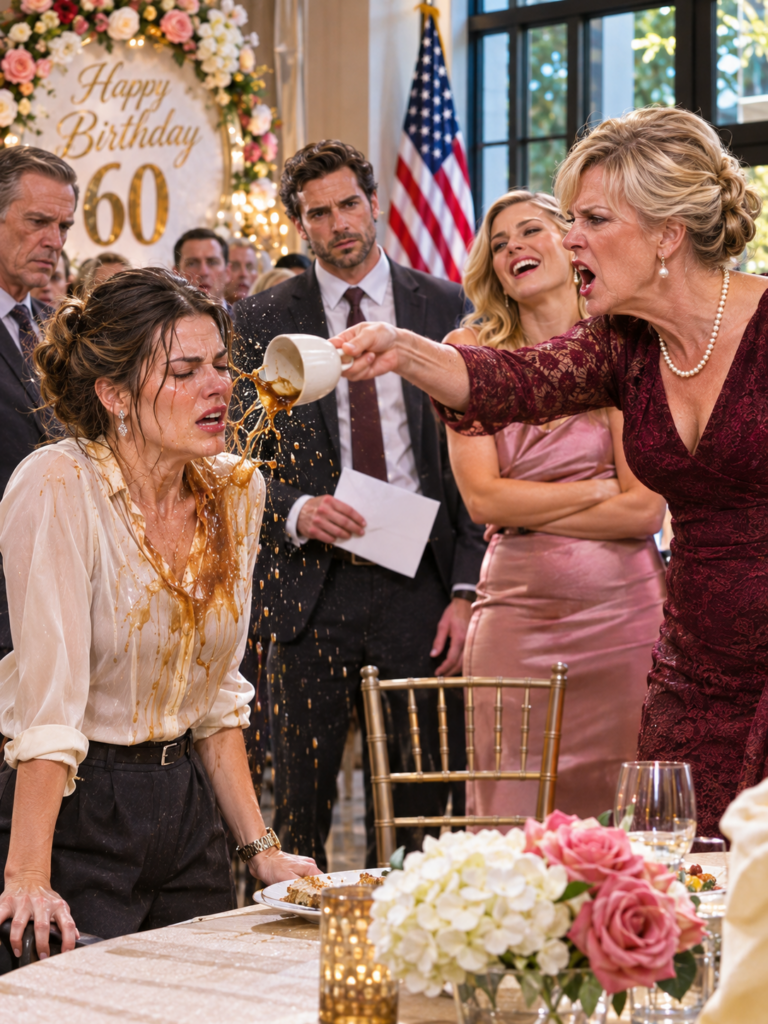
Norah Whitfield sat at the head with a legal pad. Jesse stayed in the hallway on a bench by the window the way my grandmother had asked.
An aid wheeled grandma in last. She was wearing the gray scarf Jesse had brought her for her birthday, even though it was July.
My mother stood up and kissed her cheek. Mama, you look tired.
We won’t keep you long. My grandmother didn’t answer.
My mother spoke first. She always speaks first.
She said gently that she was worried, that mama had been forgetful lately, that at her age, it was easy for people outside the family to get ideas into her head. She said it with her hand pressed to her chest, the way she had at the party when she’d thanked her pastor.
Norah looked at my grandmother. Mrs. Shaw, may I share your March assessment?
Go right ahead. Norah tapped her pen on the legal pad.
Mrs. Shaw scored 28 out of 30 on her cognitive screening in March. There’s no diagnosis of dementia in her chart.
My mother opened her mouth. I’m 84, Marlene, my grandmother said.
I’m not stupid and I’m not deaf either. Nobody touched the cookies.
Then Grandma turned to me and nodded. “Go ahead, sweetheart.”
I opened the blue folder and laid out three pieces of paper, one at a time, the way I’d lay out supplies for a procedure. My transfers, 36 months, $1,800 each. $64,800.
Everyone marked for my grandmother’s care. the Brier Hollow statement. 37,200 of it had reached this building, and not $1 that my mother had ever paid herself.
In August of 2024, the monthly cost dropped by $1,200 because grandma moved out of her room with the window and into a shared room to save money. My payments didn’t drop, not by a single dollar.
Then the texts. I read one out loud.
Don’t forget Mama’s 1,800 tomorrow. I didn’t read the pink heart.
My mother folded her hands. Her voice stayed soft.
Those payments were you paying us back, Sienna? We paid your last year of nursing school. $12,000.
I never wanted to bring it up. My grandmother put her coffee cup down on the table.
It made a small sharp sound. I paid her last year of nursing school, she said. $12,000 out of my savings.
Doug drove me to the bank. Every head turned to the end of the table.
My father had his hands flat on the table. He looked at my mother and then at me.
She did. He said, “I was there.
And I heard you tell Sienna it was us, Marlene. And I let you take the credit.”
His voice cracked on the last word. That’s on me.
That was what he’d known 11 years ago. For 11 years, I had believed I owed my mother for my career.
The person I owed was sitting next to me in a wheelchair, wearing a wool scarf in July, and she had never once asked me for anything. My father reached into his jacket, unfolded the bank statements, and read them out loud himself.
His voice was flat and slow. On the first of every month, 1,800 came in, 600 went to Brier Hollow, 1,200 went to an account labeled S.
Logan had been very quiet. Now he sat forward.
Shelby, he said, you told my parents your mom paid our deposit at Sugarland Bluff out of her savings. He looked at the bank statement, then at her.
Whose savings was it? Shelby didn’t answer.
She kept twisting her engagement ring around her finger around and around. Then she pushed her chair back so hard it scraped the tile.
Oh my god, this is insane. Grandma gave up that room herself.
Nobody made her. The room went quiet.
My grandmother turned her head very slowly and looked at my sister. “And how would you know that, Shelby?” she asked.
“Your mother told everyone I moved because I was confused. So, how would you know I asked for that room myself?
Shelby’s mouth opened and closed. And while you’re thinking about that, my grandmother said, “You can tell me who sat in that chair in my room last December and told me Sienna laughs about me at parties.”
My sister sat back down. At the party, she had laughed the loudest.
In that room, she couldn’t make a sound. Everyone turned to my mother, waiting for her to say something.
But it was my grandmother who spoke. “Marlelene,” she said.
“Look at me.” My mother looked at her.
Sienna told me what you said to her at your party. With the microphone on, my grandmother’s voice was quiet.
I know those words. I know them because I said them first.



