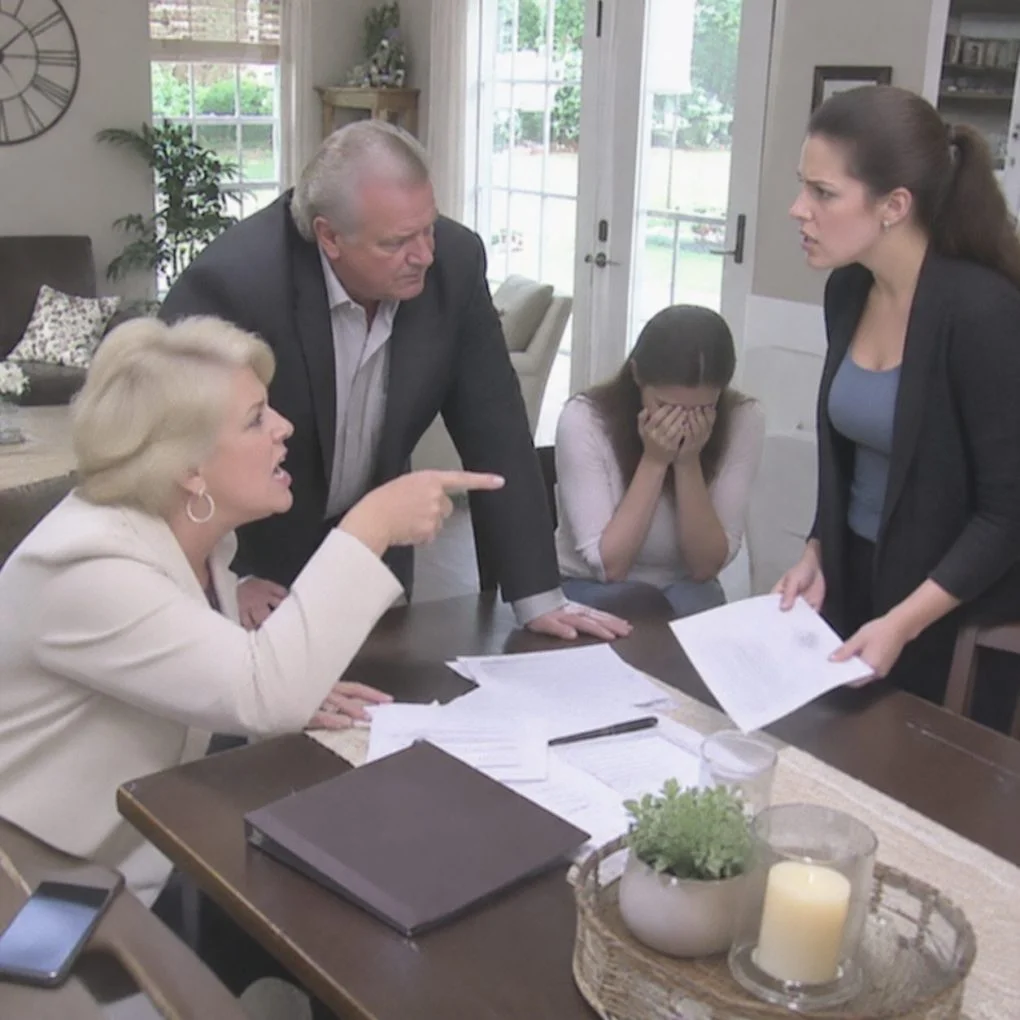
That evening, a real-estate attorney checked the county recorder’s public index with me. The first deed had been recorded eleven days earlier, so the public record falsely suggested Claire owned the house; recording didn’t make a forged signature valid, but it created a cloud on my title that would take formal steps to clear.
I asked how Michael could have copied my signature so closely. Claire covered her face.
“He used your office scanner when he fixed the printer,” she said. “He had access to the folder with your mortgage documents.”
I thought of the afternoon I’d made him coffee and thanked him for helping. He had stood in my kitchen beside Emma’s drawings, looking me in the eyes while my computer copied files he had no right to take.
Then Claire forwarded me a draft loan application Michael had sent her that morning. Bell Family Holdings wanted a $180,000 commercial loan, secured by my house once she transferred it. Attached were scanned copies of my driver’s license and a tax return.
The final page made me grip the kitchen counter.
They had also listed me as a personal guarantor, with a second forged signature authorizing the lender to examine my finances.
“You can’t notarize a signature you never witnessed,” I said.
“Then you assumed something worth four hundred thousand dollars without asking me.”
I asked how Michael could have copied my signature so closely. Claire covered her face.
The final page made me grip the kitchen counter.
The next morning I called the lender’s fraud department before Michael could turn another forged document into something everyone else was expected to accept. My attorney sent proof of my travel, the original deed, and my signed statement that I had authorized nothing; I froze my credit reports and changed every password Michael might have seen.
The loan hadn’t been approved. The lender suspended its review and referred the application for investigation, leaving Walter without the money he had already told his creditors was practically guaranteed.
Michael called twelve times. I answered once, with Claire and my attorney listening, and told him I would communicate only in writing. He said I was destroying his business over a misunderstanding.
“A misunderstanding doesn’t put my signature on two documents,” I said.
Three days later, Patricia returned with Walter and demanded Claire come outside. I stepped onto the porch with the attorney’s letter while Claire stayed inside, holding Emma’s hand; for once, it was her decision whether to face them.
“The bank won’t release the money,” Walter announced, as though I should apologize.
“The bank knows why,” I replied. “So does the investigator.”
Patricia’s face changed. She had spent years talking over Claire, correcting her in front of Emma and telling her a wife’s job was to keep her husband comfortable. Now she wanted to discuss family loyalty with the woman whose name she had falsely certified.
“You threatened to take her child,” I said. “And you used my house to do it. Don’t come here again without an invitation.”
Claire opened the door behind me. She didn’t raise her voice when she told them she had contacted a divorce attorney, but Patricia stepped backward as though she’d been shouted at.
“You said you’d ruin my marriage if I didn’t sign,” Claire told her. “Michael ruined it when he decided our daughter and my sister were things he could trade.”
The legal process took months, not days. My attorney filed an action to clear the fraudulent deed, and the court eventually confirmed that the forged document had not transferred ownership; the county records were corrected, and my mortgage lender received the order. Following separate investigations, Patricia’s notary commission was revoked, and Michael pleaded guilty to forgery under an agreement that included probation and restitution.
Walter’s business loan never closed. Michael and Claire divorced, with a parenting agreement that kept Emma’s school and routines stable, while Claire began rebuilding her finances instead of signing whatever someone demanded to preserve her marriage.
I didn’t charge Claire rent while she finished training for a better-paying job, but we made a simple written agreement about expenses and boundaries. Trust had to become something we practiced, not a word other people used when they wanted keys.
One Sunday, Emma asked whether she could paint over the pencil marks beside her bedroom door. Claire started apologizing, and I shook my head before she finished.
“Leave them,” I said. “They show you’re growing.”
I watched my sister help her daughter draw another line, steadier now, without checking the driveway. For the first time in months, she wasn’t waiting for somebody to tell her whether she was allowed to stay.
And neither was I.



