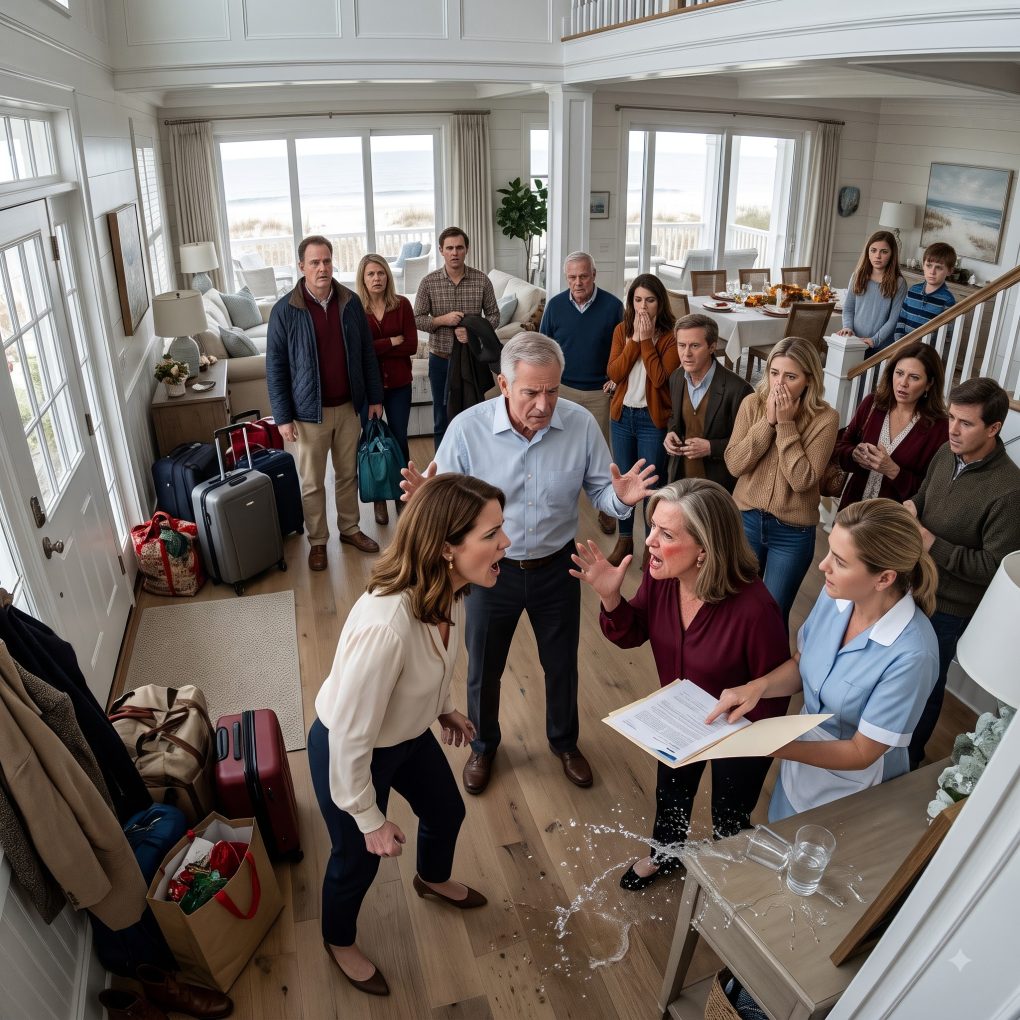
There it was again: if I refused to be used, I was somehow responsible for everyone else’s disappointment.
When I asked whether they could refund the guests, Dad looked away. Three months earlier, he had asked me for $2,000 to cover what he called a temporary cash-flow problem, then assured me everything was fine when I offered to review their budget instead. I began to understand that those suitcases were not a family reunion; they were a way to make my home pay for trouble my parents had refused to explain. And the people standing around us had trusted them with their holiday savings.
I asked guests to stop unpacking while I contacted my attorney and gave them time to call their banks or arrange hotels. Rosa helped find nearby vacancies, and I brought the children to our neighbor’s house, where Lily finally burst into tears because someone had already put a suitcase on her bed.
“It’s still my room, right?” she asked.
“Always,” I told her, pulling her close. Her hands felt icy against my sweatshirt.
My attorney asked for copies of every agreement and advised me to preserve the camera footage and the original invitation. The signature wasn’t merely misspelled; it resembled the one on an insurance form I’d signed last year while Mom stood beside me, close enough to photograph it.
As we gathered the papers, Rosa unfolded another page from the email thread. It showed two more paid reservations, this time for Christmas week, with deposits totaling $9,600.
Then I saw the message my father had sent to a prospective guest: “Don’t worry about Rebecca. Once everyone arrives, she won’t have the nerve to send people away. The kids can stay in a hotel until New Year’s.”
They hadn’t only sold our Thanksgiving.
They had already sold my children’s Christmas.
My father tried to take the papers out of Rosa’s hands, but the man from Virginia stepped between them. He held his payment confirmation, his voice steadier than mine.
“Gerald, you told us your daughter owned a rental business with you,” he said. “Did you know she hadn’t agreed to this?”
Dad looked at Mom. She stared at a crack in the countertop, the same place Ben had dropped a toy truck when he was six.
Mom finally said, “Rebecca has more than she needs. We thought she’d be generous for once.”
I remembered the nights I worked while Lily slept on my lap, and the years after Michael died when I couldn’t bear to set four plates. I looked at the visitors and said, “My children need their bedrooms, and none of you should have been charged for them.”
A few guests started to pack. Others were furious, not at me but at my parents, who had promised oceanfront suites and spent their deposits before the holiday began.
My father grew louder as people called their banks. “Rebecca is making this worse,” he said. “She hasn’t been herself since her husband died.”
Lily had come back with our neighbor to collect her schoolbag and heard him. She stopped in the doorway, her sea-blue jacket half zipped.
“Grandpa,” she said, “Mom was fine until you told us to leave our own house.”
I had never heard her speak to him like that. I wished she hadn’t needed to.
My attorney arrived that afternoon to verify ownership, formally revoke any claimed rental permission, and document what had happened. When Mom and Dad refused to return the key or leave, I called the police nonemergency line; an officer came, spoke with everyone, and remained while they gathered their belongings and went.
There was no arrest. Watching Dad carry his bags past the guests he’d deceived was enough that day.
Over the following weeks, eight Thanksgiving households and the Christmas customers sought their money back through banks and civil claims. My parents had used much of the $28,000 in deposits to cover overdue payments on their own house, as later financial records confirmed; they sold their boat and agreed to repay the remainder.
My attorney brought a separate civil claim for damage and misuse of my name. We reached a settlement, and I filed a report about the forged consent.
I changed the locks and access codes, told my parents they were no longer welcome without an invitation, and stopped answering messages that began with “After everything we’ve done for you.” For once, guilt didn’t make the decision for me.
Before Thanksgiving, Rosa found a crumpled place card with Lily’s name crossed out and a stranger’s written above it. I threw it away without telling my daughter. Thanksgiving itself was quiet; Rosa helped with the turkey and stayed because Ben insisted she deserved the biggest piece of pie.



