Pick and I rebuilt the damaged cedar using the same dimensions, wood, and honor box. We preserved everything we could because I did not want the stand to look new. It carried nearly fifty years of fingerprints belonging to Dad, my children, and generations of customers.
Inside the coffee-can lid, I wrote the hearing date and one word: “DISMISSED.”
Meanwhile, independent investigators examined Stonebrook’s finances. Former directors supplied statements, emails, transfer records, and unexplained transactions involving approximately $87,000. Crystal blamed former board members, bookkeepers, poor records, and political enemies, but documents were harder to silence than people.
She eventually faced criminal and civil consequences for the financial conduct investigators could prove. Residents removed her from office by an overwhelming vote, and she and Bryce sold their home.
I expected triumph but felt only relief. Triumph requires an enemy; relief only requires the noise to stop.
Stonebrook’s new president was retired math teacher Lurleen Quigley, who had quietly purchased my eggs for years. She ordered an independent audit, required documented approval for reserve transfers, and prohibited HOA money from funding personal retaliation against neighboring landowners.
Crystal had collected forty-seven signatures demanding that my stand disappear. Pick gathered more than one hundred supporting it, including many Stonebrook residents.
Crystal had never truly represented the neighborhood.
She had simply been the loudest person holding the microphone. Once everyone else realized they could speak, her power disappeared.
of 5
The television coverage made the egg stand unexpectedly popular. Visitors came to see Buford, my longhorn, who became an online celebrity after staring silently into a news camera for seventeen seconds.
A teenage 4-H volunteer created an account for him despite my objections. His profile read: “Retired from nothing. Eats grass. Opposes zoning overreach.”
More importantly, farmers began calling me about their own HOA disputes. One had been ordered to remove old beehives. Another faced complaints about a peach stand. A family near Seguin was told its inherited cattle pens damaged community aesthetics.
I was not a lawyer, but I understood records, agricultural agencies, and the importance of asking what legal authority supported a demand.
Pick and I created a guide covering deeds, tax classifications, historical use, photographs, sales records, complaint logs, and agency correspondence. Volunteer attorneys reviewed the legal sections, and the county extension office distributed copies.
The goal was not to claim farmers were always right. Some disputes were valid, and some farmers lost. The goal was simple: facts first, authority second, volume last.
Doyle Crampton continued visiting every Sunday in his green Silverado, paying three dollars for a dozen eggs. We never discussed the hearing.
I respected that. Doyle had disclosed that he knew me, recused himself, placed relevant information into the official record, and allowed the remaining board members to vote. Fairness sometimes means staying within the limits of your role.
My son Pierce had once advised me to treat the hearing like an inspection. That proved correct.
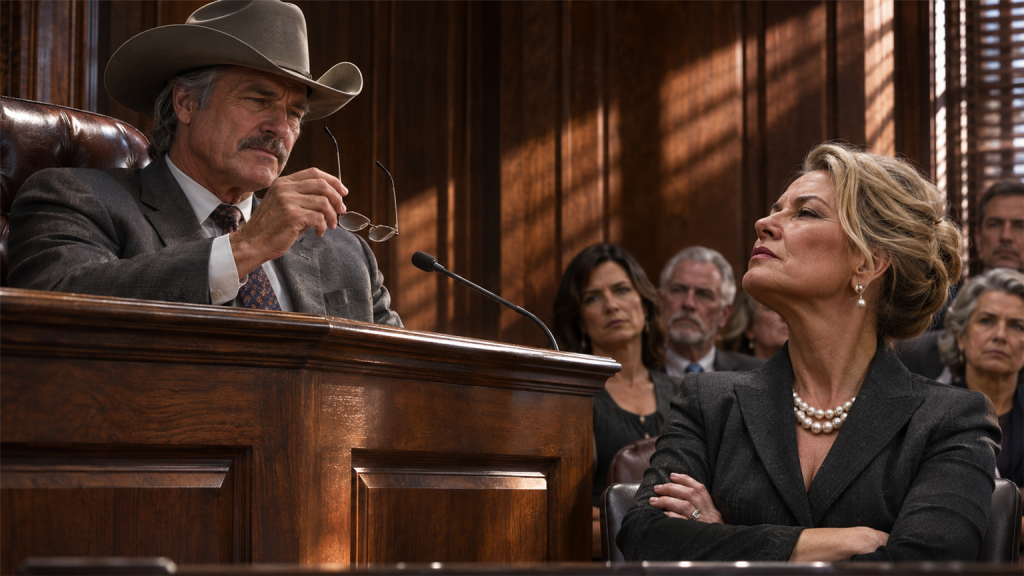
Crystal brought dramatic photographs, complaints, and an expensive lawyer. I brought dated images showing the stand had existed since 1974, records proving continuous agricultural use, and the governing rules themselves.
The strongest defense was boring: here is the permit, the date, the log, the regulation, and what actually happened.
Loud certainty meant nothing once someone finally asked for the citation.
of 5
Nearly a year later, Pick and I sat on the porch while the rebuilt cedar weathered toward the same silver color as Dad’s original boards.
A woman arrived with two children. They carefully pushed three crumpled dollar bills into the coffee can and selected a carton. When the younger child noticed a green egg, he thought it was broken. His mother laughed and explained that it was supposed to be green.
Pick again suggested raising the price.
“Three dollars in 1974 and three dollars now are very different,” he said.
I knew that, but Dad had never treated the stand as a real business. It was a ritual. People came, took eggs, left money, and sometimes stayed to talk. That was enough.
One Sunday, my granddaughters examined the dates and repair notes written inside the coffee-can lid. The older girl pointed to “DISMISSED” and asked what it meant.
“It means somebody wanted Grandpa to tear down the stand.”
“Did you yell?”
“No.”
“What did you do?”
“I brought paperwork.”
She found that answer disappointing and immediately became more interested in another green egg.
Later, I considered how much effort Crystal had spent trying to remove sixteen square feet of cedar that had stood beside the road for half a century.
She believed the stand survived because of politics, law, or my relationship with Doyle. In reality, it survived because of history, records, customers, and thousands of quiet interactions she never bothered counting.
Crystal had forty-seven signatures.



