For ten months, my family hadn’t noticed I was gone. It took me longer to realize I didn’t have to pay for a place in their picture.
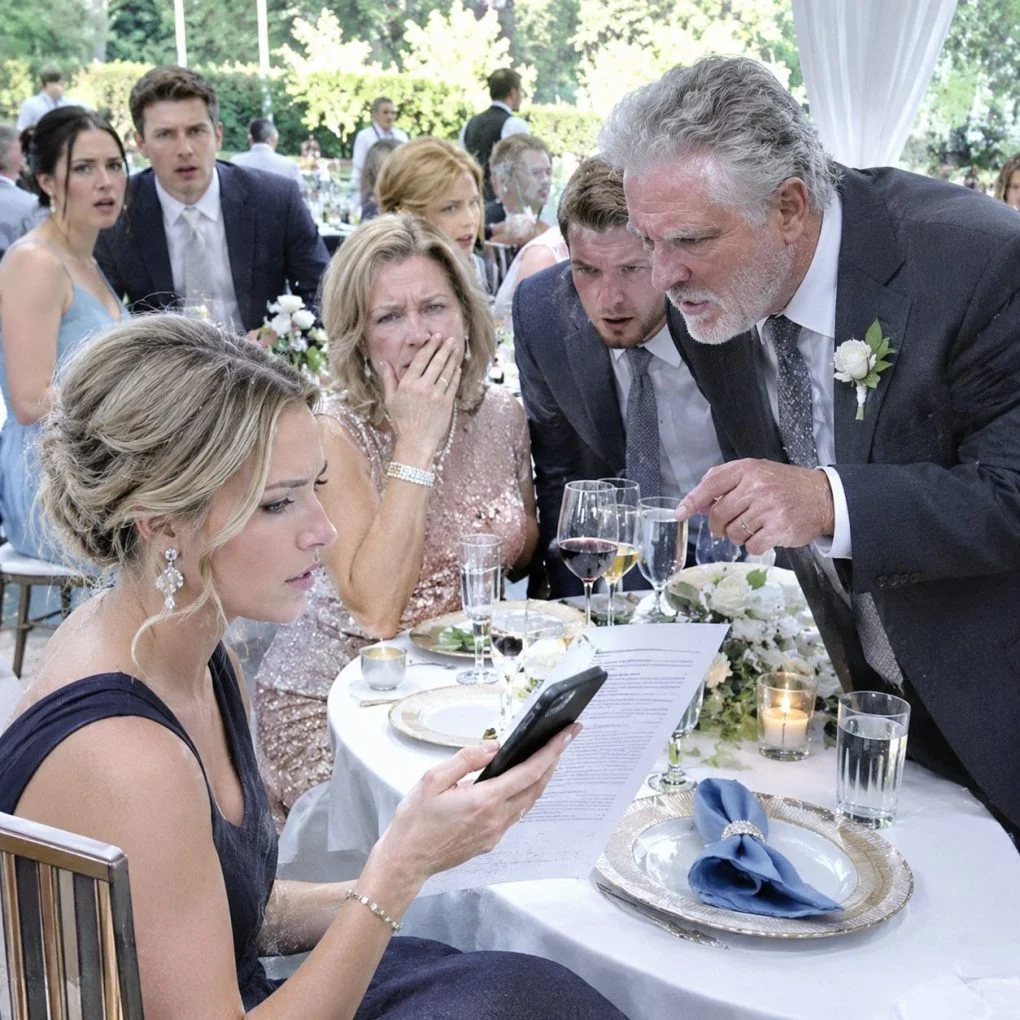
## PART 1 — THE HOUSE THEY THOUGHT THEY COULD GIVE AWAY *Word count: approximately 445 words* “Come to your brother’s wedding, Emily. We need to look like a proper family.” My father called at 7:12 a.m., while I was putting groceries away in the apartment I’d rented ten months earlier. He hadn’t asked where I lived or how I was. “I’m not coming, Dad,” I said, setting a carton of milk beside the sink. “I haven’t been invited to anything else this year.” “Don’t make this about you. Ryan’s future in-laws expect a family photograph, and I won’t have you embarrassing him.” His voice hardened. “Show up, or I’ll take you out of my will.” I watched rain collect on the kitchen window and said the one thing he had spent four years pretending wasn’t true. “You can change your will, Dad. You can’t give Ryan the house at 18 Willow Lane. I own it.” The line went silent. Then he asked, very quietly, “Who have you been talking to?” My name is Emily Carter, and I’m thirty-six. Four years ago, when my parents were facing foreclosure on the Ohio house where Ryan and I grew up, I bought it from them at an independently appraised price, paid off their mortgage at closing, and let them stay under a written occupancy agreement. I was a hospital billing manager then, taking extra weekend shifts, and the down payment swallowed almost everything I’d saved. I lived in the basement apartment with its separate entrance because keeping the house meant we couldn’t afford two households. Dad signed the deed himself. He accepted the equity left after the mortgage was cleared, then began introducing the place as “my home” again within weeks. I never corrected him at holidays; I thought letting him keep his pride was harmless. Ten months ago, after Mom forgot my birthday for the third year and Ryan joked that I was “the live-in utility company,” I moved into a small apartment across town. I took my books, clothes, and the crooked ceramic bowl Grandma made me, leaving the basement clean; no one called to ask where I’d gone. Dad cleared his throat. “You know what I mean about the inheritance.” “No, I don’t. But the house isn’t part of it.” A message flashed onto my phone from Ryan’s fiancée, Lauren, whom I’d met only twice: a photograph of their wedding-program proof. Beneath the words *Our first home, with love from the Carter family*, was a picture of 18 Willow Lane. I enlarged the second page. It described a deed presentation during the reception, and at the bottom was a scanned signature beside my name. I hadn’t signed anything. Then Dad whispered, “Emily, whatever you do, don’t tell Lauren about the house.” — ## PART 2 — THE SIGNATURE THEY STOLE FROM ME *Word count: approximately 591 words* I called Lauren before Dad could call her first. She answered from a bridal salon, sounding cheerful until I asked whether anyone had told her who legally owned the house in the wedding program. “Ryan said his parents were giving it to us,” she replied. “We’ve already arranged to move in after the honeymoon.” I heard a rustle of tissue paper, and then her voice dropped. “Emily, why are you asking?” “Because I bought it four years ago, and I’m still paying the mortgage.” She didn’t argue. She asked me to send the recorded deed and the closing statement, so I forwarded both, along with the page bearing the imitation of my signature. For a long time I sat at the kitchen table staring at the empty grocery bags. I remembered Mom pressing a warm washcloth to my forehead when I had the flu at nine, and how I’d convinced myself that paying for her house would somehow bring back that tenderness. By noon, Ryan had called eleven times. When I finally answered, he didn’t ask whether the signature was mine; he asked why I was “sabotaging” his wedding. “You lived there forever,” he said. “You owe Mom and Dad for taking care of you.” “I paid the mortgage while I lived in the basement, Ryan. I kept paying it after I left.” “Dad said the house would be mine someday.” “He knew it wasn’t his to promise.” Mom joined the call, telling me the family had merely assumed I’d be generous once Ryan was married. Then she offered to have my old basement room cleaned out so I could “come home” and keep the peace. “Mom, I moved ten months ago.” A cupboard door shut at her end. “You did? Why didn’t you tell us?” “I did. Twice. In the family group chat.” She said nothing, and I could picture those messages buried beneath Ryan’s engagement photographs and reminders about the rehearsal dinner. In the ten months I’d been gone, she’d texted me for the property-tax bill, a plumber’s number, and the password to the streaming service, but never once asked how I was. That afternoon, I met with my attorney, Diane Foster, who had handled the original purchase. She confirmed that my parents had signed the sale documents, that the title remained in my name, and that the emailed wedding-program image could not transfer ownership. “The signature looks copied from your closing paperwork,” Diane said. “Save every version they’ve sent you, and don’t sign anything under pressure.” She also reminded me that my parents had a written right to occupy the upstairs rooms until the end of June. I couldn’t simply throw them out to prove a point, nor did I want to; the agreement required notice before that arrangement ended. I sent Dad one message: *Tell Ryan and Lauren the truth before the rehearsal dinner. Take the house presentation off the program. I will not sign it over.* He responded, *You will not shame this family in front of her parents.* An hour later, Lauren forwarded a group email from the wedding planner. Dad had refused to remove the planned presentation, and a mobile notary was scheduled to attend Saturday’s reception, where he expected me to sign a deed he had arranged to have prepared. The final line of his email said: *Once Emily sees everyone watching, she’ll do the right thing.* I read it twice. Then I called Lauren and told her I would come to the rehearsal dinner after all—just not for the photograph Dad wanted. — ## PART 3 — THE WEDDING THAT EXPOSED THEIR LIES *Word count: approximately 598 words* At the rehearsal dinner in Dayton, Dad stood so abruptly his chair scraped the floor. Mom glanced toward the photographer, still hoping to arrange us into a convincing family. “Emily,” Dad said, forcing a smile, “there you are. Come sit with us.” Lauren stood with her parents, holding my envelope. Ryan looked down, just as he used to whenever Dad told me to cover another bill. Dad tapped his glass. “Tomorrow we’re giving these two a beautiful start,” he announced, “including the family home on Willow Lane.” I stood. “You can’t give them that house.” He smiled through clenched teeth. “Emily, not now.” “Yes, now. You told everyone I agreed, and you arranged for a notary to come tomorrow. I never agreed to any of it.” I also held up the program proof showing a copy of my signature beneath a promise I had never made. The image couldn’t convey title, but Dad had presented it to Lauren’s family as proof that the gift was settled. I laid out the recorded deed, my closing statement, and my parents’ signed occupancy agreement. Lauren’s father read them while Dad stared at the tablecloth. “Four years ago, you were about to lose that house,” I said. “I bought it for its appraised value, cleared the old mortgage, and allowed you to stay without rent while I made the payments. I lived in the basement so you could keep calling it yours.” Mom began crying. “We never asked you to sacrifice so much.” “You signed every page,” I said, and placed their signatures in front of her. “Then when I finally moved away, neither of you even noticed.” Ryan stepped forward. “But Dad promised we’d have somewhere to start a family.” I remembered him carrying me on his shoulders at the county fair. “He promised you something that wasn’t his, Ryan. You knew, and still demanded I give it to you.” Lauren removed her ring and set it beside her untouched plate. “I asked you if you knew Emily owned it. You said she was being difficult and we’d get it after the wedding.” Ryan opened his mouth, then closed it. Lauren postponed the wedding; she wouldn’t marry someone who expected his sister to surrender her home to preserve a lie. Lauren’s mother pushed the fake program away. “We paid for a celebration, not a performance designed to corner your daughter.” For once, someone spoke of me as a person. Dad turned to me as if I had personally canceled the wedding. “Look what you’ve done.” “No,” I said. “Look what you’ve asked everyone else to do for you.” My attorney had sent notice that their occupancy agreement wouldn’t be renewed after June. They had until then to find a place; I wasn’t taking away their legal right to remain. In May, they moved into a smaller rental. Afterward, I sold the house and used the net proceeds to buy a modest home of my own. Lauren ended the engagement. Months later, Ryan apologized and admitted he’d known the truth; I told him rebuilding trust would require time. Dad wrote an apology that still blamed me for embarrassing him. I left it unanswered. On Christmas morning, I made coffee in my new kitchen and put the crooked ceramic bowl Grandma had given me on the table. I took a photograph to send a friend, then noticed I hadn’t felt the urge to crop anything out. For ten months, my family hadn’t noticed I was gone. It took me longer to realize I didn’t have to pay for a place in their picture. Tighten Part 3’s timeline and revealDeepen Emily’s emotional aftermath
21 November 2026 · bonnie