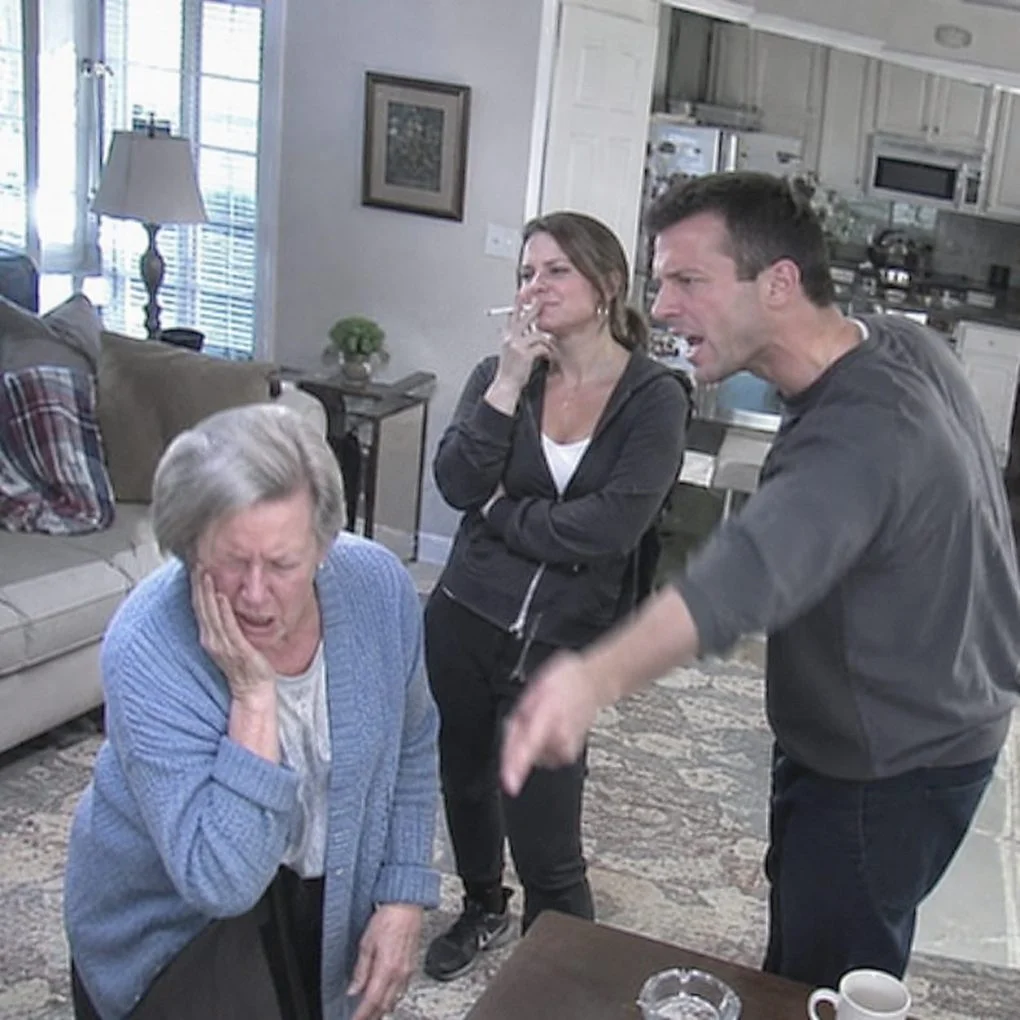
Instead, he’d slapped me over a cigarette.
The next day my attorney, Denise Coleman, helped me request a temporary protection order and arrange for communication through lawyers. She explained that Nicole, who’d been living in my house for months, still needed proper written notice before I could remove her through a civil process. I hated the thought of paperwork where family love used to be, but I signed it.
Then a lender called. A fraud analyst said Adam and Nicole had applied for a mortgage on a townhouse, using money from my account as their purported down payment. Their file contained a gift letter stating I’d freely given them $26,900.
“I didn’t give them that money,” I said. “I’ve already reported those transfers to my bank.”
The analyst said the loan would be put on hold pending verification. She asked me to examine a copy of the gift letter sent securely for my confirmation.
At the bottom was my name, written in a clumsy imitation of the signature on my checks. And in the space marked REASON FOR GIFT, Adam had written: “My mother wants to help us establish a home of our own.”
He’d used my savings to prepare an escape for himself while telling me I was lucky he still lived with me.
The lender didn’t release a dollar. Its fraud team stopped the mortgage application, and the townhouse Adam and Nicole had been planning to buy went back on the market. I learned that from the lender’s written confirmation, not from my son; after the court issued a temporary protection order, I stopped taking his calls.
Nicole stayed in my house during the legal process, while I slept at Ruth’s whenever I felt unsafe. I let my attorney handle the written notice ending her month-to-month occupancy. When she refused to leave, we filed for possession in court rather than changing the locks or dragging her belongings outside.
Aunt Sharon called to say Adam was under pressure. “He’s your only child, Helen,” she reminded me, as if I might have forgotten whose school pictures filled the hallway. I told her he had also been the person who hit me, and that being his mother did not require giving him another chance to do it.
The bank investigation and police inquiry took several months. Records showed the unauthorized transfers had paid business debts and the down payment funds, while the lender preserved the letter signed in my name. Adam admitted taking the money and submitting the false gift statement as part of a negotiated plea to theft and assault charges.
Nicole moved out after the court ordered possession, leaving cigarette burns on the arm of Paul’s favorite chair. I stood in the living room afterward with the windows open, remembering how Paul had carried that chair upstairs when we were young because I said the reading light was better there. I had spent so long protecting the house for our son that I had forgotten I was allowed to live peacefully inside it.
At Adam’s sentencing, the prosecutor summarized the financial records and my medical report. The judge allowed me to speak, and Adam kept his eyes on the table as I described the day he slapped me. I didn’t shout or ask the court to punish him for every unkind thing he’d ever said.
“I used to think if I gave him enough, he’d eventually feel safe,” I said. “I paid the bills, opened my doors, and told myself his anger was temporary. But he looked at my home and my savings and decided they were his, and when I said no to a cigarette, he hit me.”
Adam looked up. He was the boy who’d brought me a paper flower, but he was also a grown man responsible for what he had done. The court imposed a custodial sentence followed by supervision and ordered restitution; his repayment obligation survived whatever happened to his business.
Later, through my attorney, I told him I had changed my will. Whatever remained of my estate would support a scholarship at the community college where I had taken night classes, instead of being treated as money he could count on while I was still alive.
I didn’t sell the house. I repaired the chair, washed the curtains, and invited Ruth over for dinner, using the chipped blue plate because Paul had always said its flaw gave it character. She asked whether I regretted making that phone call.
I thought of the fifteen minutes I’d spent sitting alone in the laundry room, pressing a cold towel to my face and trying to decide whether protecting my son mattered more than protecting myself.
“No,” I said, and opened the window to let the evening air in. “I only regret how long it took me to believe I deserved to feel safe in my own home.”



