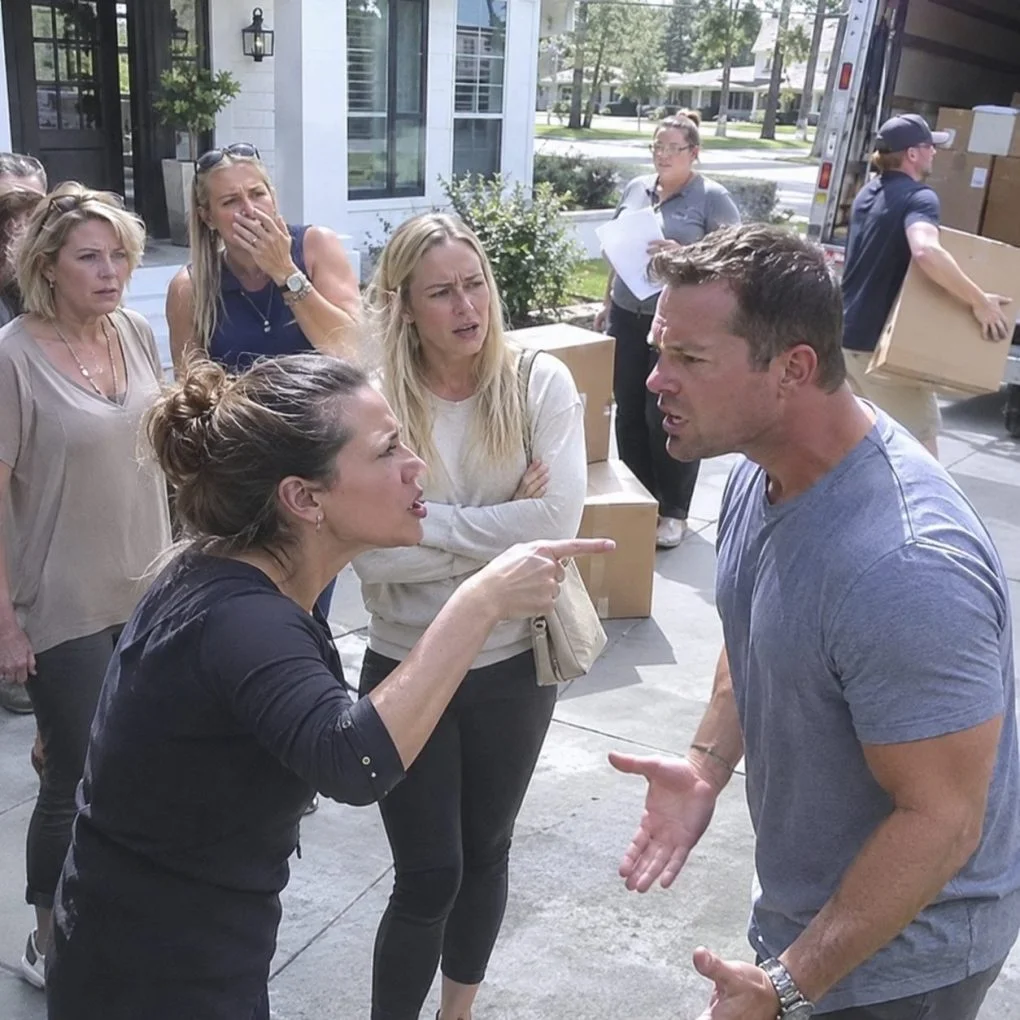
“You’re sitting on all that equity while Mom’s bills pile up,” she said. “Mark and Tessa would pay you for the place, and I could sort out what we owe. You never help unless someone begs.”
Mom had health insurance and a payment arrangement for her remaining balance; I’d been helping with her expenses for months. Heather had never mentioned any unpaid bill to me, and Denise’s search showed no legal interest, lien, or transfer giving anyone else rights to my house.
“Heather, you can’t sell my home to pay your debts,” I said.
Her answer was almost a whisper. “They’ve already moved in. You can’t just throw them out.”
She was right about one thing: I couldn’t pretend the forged paperwork didn’t exist and drag their furniture into the street. Denise contacted the police to document the suspected forgery, and we began the appropriate court process to recover possession while Tessa agreed to preserve the contracts and payment records.
That evening, I walked into Mom’s room to find her holding the knitted throw I’d brought from home.
“I didn’t ask her to do this,” she said when I finally told her. “Honey, I’m so sorry.”
I was about to answer when Tessa sent a recording she had made after confronting Mark in my kitchen. His voice came through clearly:
“We knew she never signed. But once we’re inside, she’ll pay us to leave. She always gives in.”
I read the accompanying message twice, then listened again, hearing the same contempt he’d shown me throughout our marriage.
Mark hadn’t been tricked by my sister. They had planned this together.
Tessa left my house the next morning, after photographing the rooms and sending Denise the recording she had made of Mark admitting the agreement was forged. Hearing him describe my patience as a weakness hurt more than I expected, though he had used that certainty against me throughout our marriage.
I returned to Charleston with Mom recovering safely at her sister’s house. The first time I drove past my property, I saw Mark sitting in my garden chair, drinking coffee from the blue mug I’d bought to celebrate finishing my last big contract; he’d moved my framed photographs into the garage, as though erasing them would make the house his.
“Come inside and talk like an adult,” he called from the porch.
“Not until my lawyer is here,” I said. “And you already know what you signed.”
He laughed and told me I would never get him out before Christmas. I wanted to shout about the nights I’d worked after he fell asleep, and the pride I’d felt carrying the first box into a home with only my name on the deed; instead, I walked away and let Denise do her job.
Our attorney obtained certified ownership records and filed the appropriate possession action and a civil claim over the forged documents. I reported the suspected forgery and provided the original doorbell footage, while Tessa gave investigators the transfer receipt and her statement; the police treated the ownership dispute and the possible fraud as separate matters.
At the hearing several weeks later, Mark arrived in an expensive suit and tried to portray the move as a family arrangement I’d regretted. Heather sat behind him with her arms folded, refusing to look at me until Denise displayed the forged authorization next to my genuine signature and explained the differences.
Then Tessa testified that she had paid Heather $18,000 after being assured I had approved the lease and purchase option. She explained that when she discovered the truth, Mark admitted he knew I hadn’t signed and intended to pressure me into paying them to leave.
Mark started to interrupt. The judge stopped him and asked for proof that I had ever authorized his occupancy, even for a single night.
There wasn’t any.
The court ruled the documents conveyed no rights to Mark and ordered possession returned to me. When he missed the deadline to leave voluntarily, the sheriff enforced the court’s order, and a moving crew removed his remaining boxes under supervision; the man who had carried his suitcases through my doorway without asking now had to collect them from the driveway.
The fraud investigation continued separately. Rather than promise myself a dramatic conviction, I pursued repayment and documented the damage; eventually Heather and Mark agreed in a civil settlement to reimburse my expenses and repay Tessa through installments. Heather sold her SUV to make the first substantial payment, and Tessa ended the engagement.
I changed every lock and revoked Heather’s emergency access. I loved my sister, but I could no longer trust her inside my life, and Mom did not ask me to pretend otherwise.



