“He’s not breathing! Please send an ambulance!” I begged the 911 dispatcher, pressing on my father’s chest while the kitchen clock ticked above us.
My sister Meredith snatched the phone from the counter. “There’s been a misunderstanding,” she told the dispatcher in a voice so calm I barely recognized it. “Dad has paperwork. We don’t need an ambulance.”
“Give it back!” I shouted, but she stepped into the hallway, pulling a folded document from her cardigan pocket.
My name is Rachel Garner, I’m thirty-eight, and that Sunday was supposed to be an ordinary dinner at Dad’s house outside Columbus, Ohio. He’d been complaining about the price of groceries, Meredith had brought a store-bought pie, and I was washing the plates when his fork struck the tile. By the time I turned, he was on the floor, his eyes open but unseeing.
I had taken a CPR course at the elementary school where I worked. Nothing in that classroom had prepared me for the weight of my father’s body or the terrible stillness of his face. I kept pressing, calling out his name, trying not to remember how those hands had once lifted me onto his shoulders at the county fair.
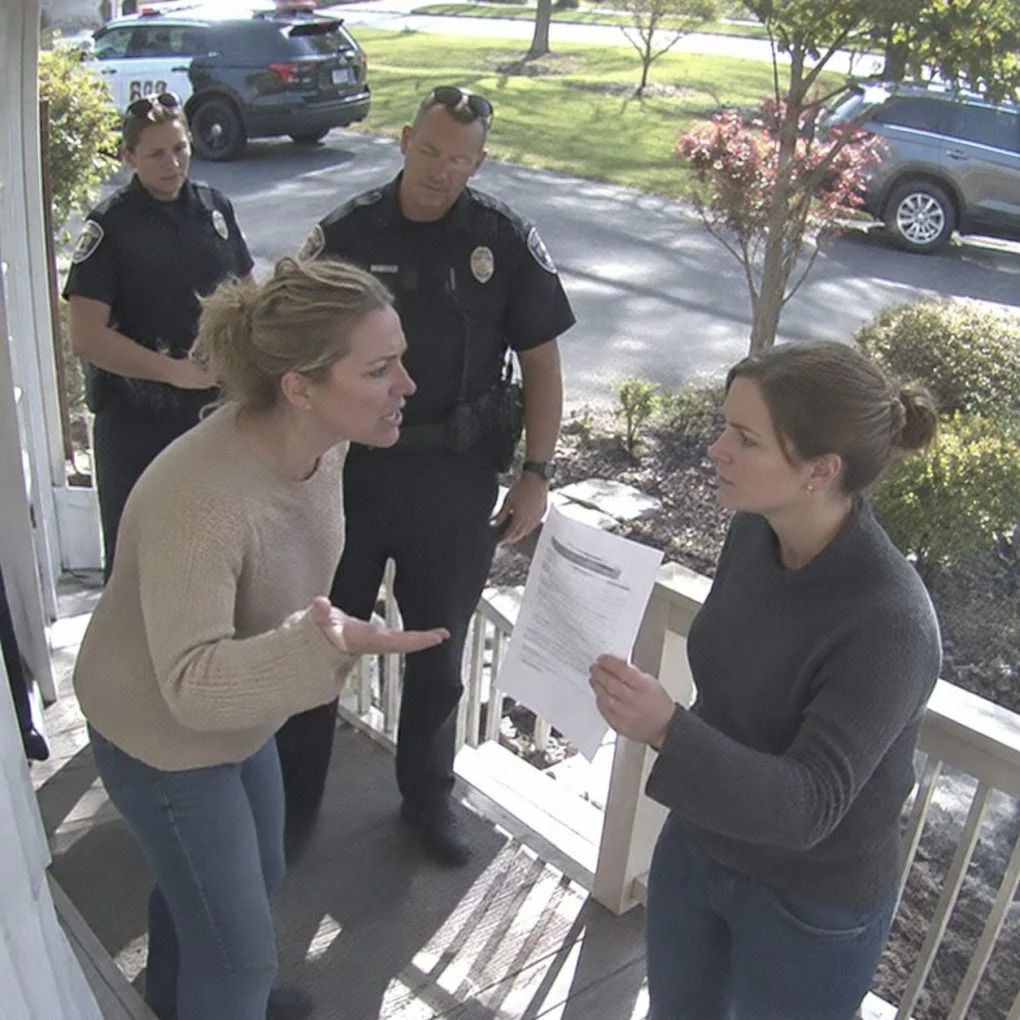
“Rachel, stop,” Meredith said, returning with the paper unfolded. “You’re going against his wishes.”
Across the top were the words ADVANCE HEALTH CARE DIRECTIVE, and halfway down was a statement requesting no resuscitation. Dad had never mentioned such a decision to me; two days earlier, he’d asked me to take him to a bank appointment on Monday because he wanted to “straighten out some things.”
“Tell the dispatcher he’s not breathing!” I shouted.
“She heard you,” Meredith replied. “I’m fixing it.”
I could hear the dispatcher through the phone, insisting that help was already being sent. Meredith tried again to cancel, but I kept shouting our address, and a neighbor who heard the commotion came through the unlocked back door to guide the paramedics in.
When they arrived, Meredith thrust the paper toward them. One medic glanced at it, explained that it was not a verified medical DNR order, and the team continued treating Dad while another asked me when he’d collapsed.
I answered with my hands shaking so badly I couldn’t hold my water glass.
As they loaded him into the ambulance, the folded directive slipped from Meredith’s fingers. I picked it up and saw Dad’s familiar, crooked signature at the bottom.
Then I saw the witness line beneath it.
Someone had signed my name, swearing I’d watched Dad choose not to be saved.…The rest of the story unfolds here.👇
At the hospital, they told me Dad had suffered a cardiac arrest and that the paramedics had restored his heartbeat. He was alive, but sedated in intensive care, and nobody could promise what he would remember when he woke. I sat beside his bed watching a machine do the breathing he had always taken for granted.
Meredith arrived an hour later carrying a fresh copy of the directive. “You need to accept what Dad wanted,” she said, smoothing the document against her knee, as though neat paper could explain away what she’d done.
“You signed my name,” I answered. “You told 911 not to come while I was trying to keep him alive.”
She looked toward the nurse’s station before replying. “I was protecting his dignity. And if you start accusing me, you’ll make yourself look unstable.”
The hospital’s social worker helped me report the disputed document, and the police obtained the recording of our emergency call. The dispatcher had heard my pleas and had kept the response moving despite Meredith’s attempted cancellation. The hospital would not treat her photocopied directive as proof of a valid out-of-hospital DNR order.
I spent that night at Dad’s kitchen table, where his half-eaten dinner still sat beneath a dish towel. There was a small crack in the blue plate he’d used every Sunday since Mom died, and I caught myself reaching to wash it, as if doing one ordinary chore might make the day unhappen.
Dad had once driven through a snowstorm to bring me a forgotten costume for my third-grade play. He was the man who still checked whether I had enough gas before a long drive, although I was thirty-eight and had my own mortgage. I could hardly bear the thought that somebody who’d eaten at his table wanted him to stop breathing.
While gathering his insurance card for the hospital, I noticed a yellow folder beside his checkbook. Inside were bank statements with transfers circled in red, and a handwritten list of dates totaling $216,800. Every payment went to a business called Mercer Freight, owned by Meredith’s husband, Colin.



