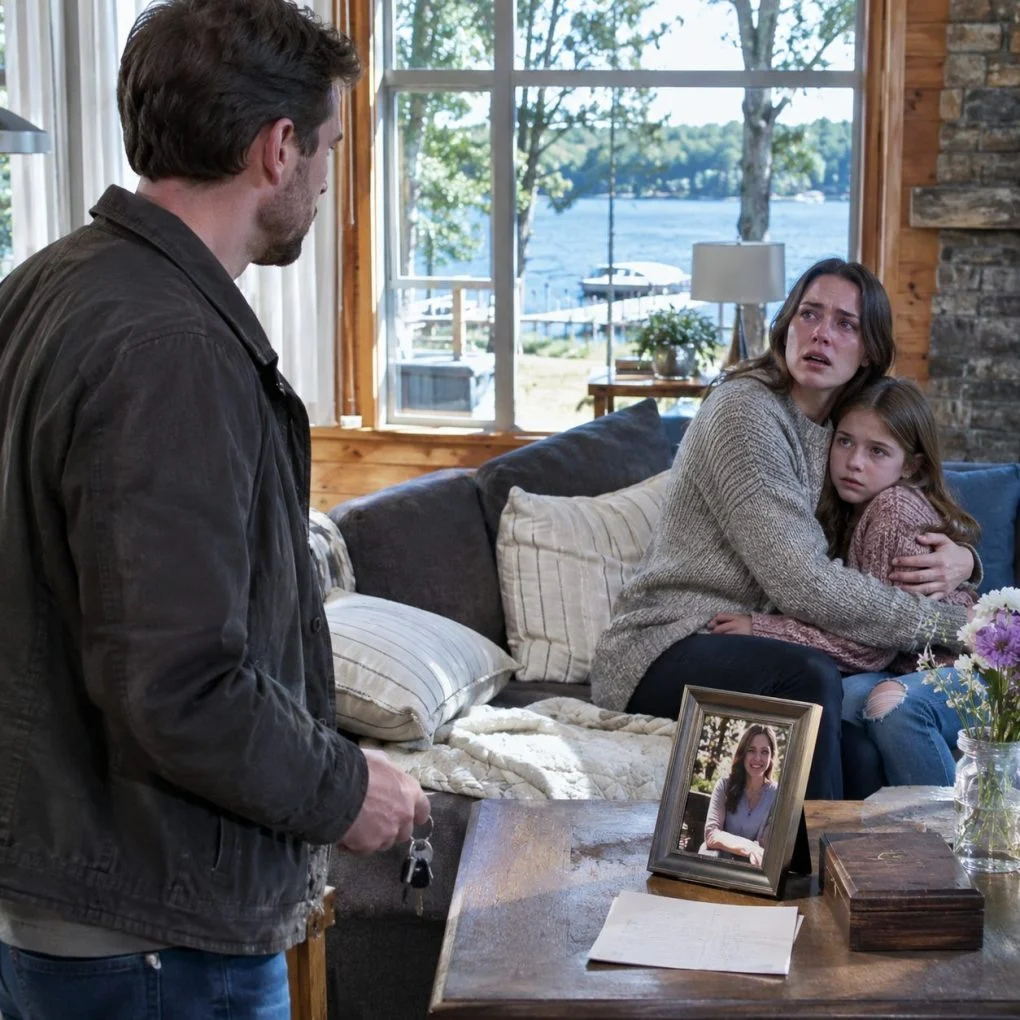
She also told me about the $64,000 in credit-card debt taken out in her name while she was married. She’d reported suspected identity theft after leaving, and Grace had helped her recover account statements and application records to dispute charges and support the investigation.
“Your wife was going to testify,” Megan said. “She had a folder with everything.”
Inside Grace’s old desk were dated bank records, screenshots of Derek’s threats, a copy of Megan’s police report, and photographs of her belongings packed into the back of Grace’s car. There was also a letter addressed to me, its envelope marked If Daniel ever needs to understand.
Grace had filled a hallway shelf with children’s books Owen had outgrown, each labeled with the year she’d bought it. I ran my finger along their spines before opening her letter.
I read it alone beside the window, where Grace had apparently watched Owen learn to swim.
She apologized for not telling me about the house, then wrote that protecting Megan’s whereabouts had become urgent after Derek threatened to take Owen if she left. “I know you would never hurt them deliberately,” she wrote, “but you believed him when I tried to explain, and I couldn’t risk giving him another way to find them.”
I folded the letter against my chest. The words were painful because they were fair, and because I couldn’t ask Grace to forgive me for having made her choose between trusting me and protecting her sister.
Then Megan showed me the final page in Derek’s emergency custody application. It was a witness declaration stating that I’d seen Megan abandon Owen and that I believed Derek should have sole custody.
Beneath the statement was a signature made to look like mine.
Derek hadn’t only come to take Owen. He’d brought a lie to court in my name.
The next morning, I took Grace’s letter and the forged declaration to family-law attorney Janet Park. We preserved the filing, reported the suspected forgery, and provided a sworn statement explaining that I had never written or signed it.
I also told Janet about the times I’d defended Derek to Grace. Admitting it felt like confessing I’d failed my wife while she was alive, but pretending I’d always understood would have been another lie.
At the custody hearing a month later, Derek sat across the courtroom, his attorney arguing that Megan had concealed Owen and alienated him from his father. Megan kept her hands folded over a drawing Owen had made of the lake house, while I sat behind her beside the deputy who had responded that night.
Derek’s attorney referred to the declaration supposedly signed by me. Janet had already notified the court of the dispute, and when I testified, I explained that Derek could have copied my signature from work documents.
“Did you witness Megan abandon her son?” the judge asked.
“No,” I said. “I hadn’t seen her in years. I believed her husband when he told me she left, and I was wrong.”
Derek stared at me as if I’d betrayed him. I thought of Grace, who’d kept calling her sister even when the rest of us accepted his story, and for once I didn’t look away.
The judge did not resolve the entire custody case that morning. But the protective order, Derek’s documented violation, the contradictions in his filing, and the evidence of Megan’s care persuaded the court to deny his emergency request and keep Owen primarily with Megan under temporary orders, with any visits supervised.
Outside, Derek approached as though he wanted to speak, then stopped when his attorney touched his arm. I’d imagined I would feel victorious, but all I felt was the ache of the empty passenger seat on the drive home.
The criminal and financial matters moved more slowly. Investigators obtained records connecting credit applications made in Megan’s name to accounts Derek controlled, and he eventually pleaded guilty to identity-fraud offenses and violating the protection order, receiving probation, contact restrictions, and restitution obligations.
The custody case ended with a parenting plan keeping Owen primarily with Megan and requiring supervised visits until Derek met specified conditions. The court hadn’t erased his father, but it had put Owen’s safety ahead of Derek’s demands.
I kept the lake house instead of selling it, arranging a written two-year lease so Megan and Owen could stay while she rebuilt her credit and found steady work. Grace had already paid the property taxes through spring, and I wondered whether she’d known that keeping them safe would depend on having more time.
I spoke with my lender, adjusted my budget, and returned to work before deciding anything else about the property.
One Sunday, Owen asked me to help repair a loose board on the dock. He held screws in his palm and said Aunt Grace had promised they’d fix it together when the weather warmed.



