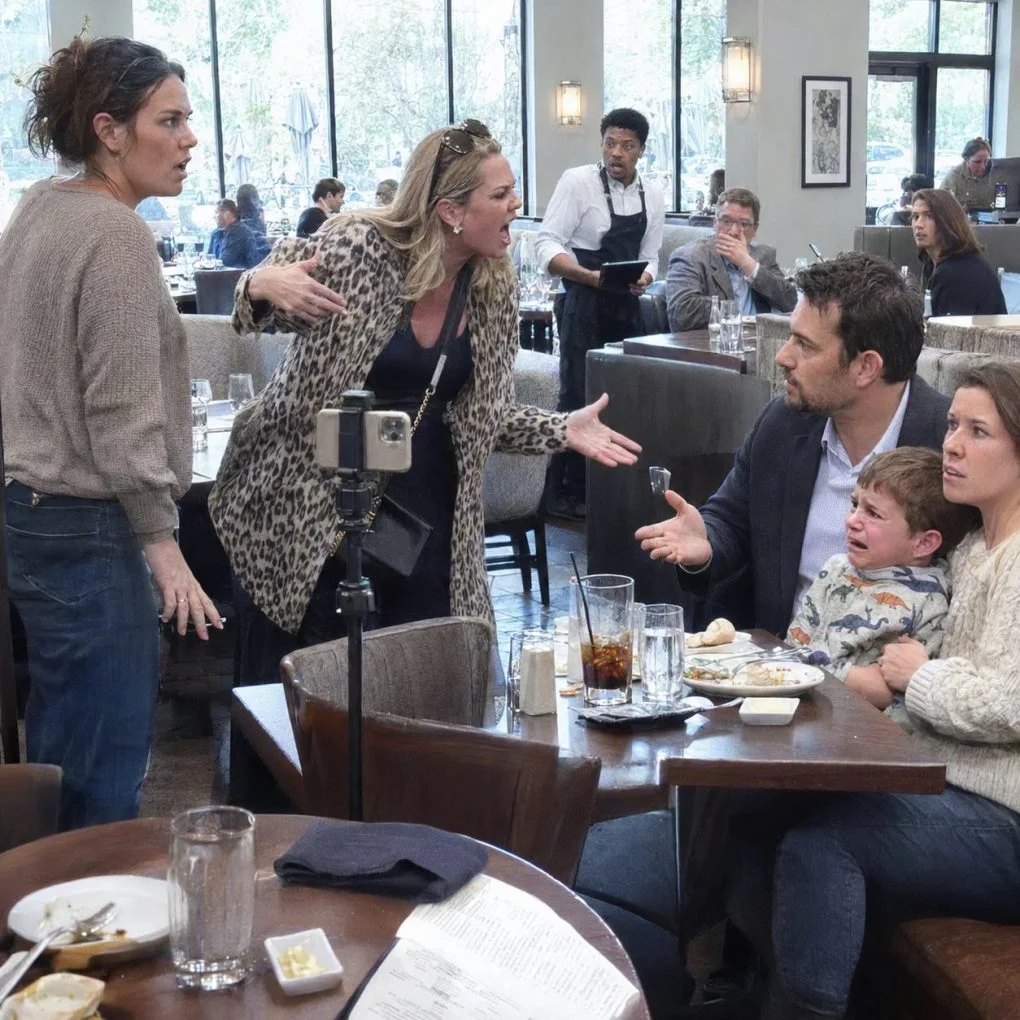
I saved it. Then I called Thomas’s marketing director, Rebecca, and arranged to submit my original file through their counsel, with the family’s permission. It included Mandy’s insults, my objection, and the mother comforting her son. I sent the agency only what was needed for its review and kept the child’s face out of any public discussion.
Rebecca thanked me, but her voice sounded strained. “There’s another problem, Hannah. Mandy has already filed a written complaint against Thomas.”
I assumed it was another exaggeration until Rebecca shared the document with my attorney copied in. The complaint alleged the family had verbally threatened Mandy and said I had witnessed it.
Beneath the statement was my name and a scanned signature from an old production invoice.
My best friend hadn’t just lied about me online. She had signed my name to her lie.
For nearly twenty-four hours, I kept reaching for my phone to call Mandy the way I always had after a bad day. My thumb would stop over her name, and I’d remember the little boy whispering an apology for dropping a spoon.
I sent the complaint to my attorney, who notified Cedar Table’s counsel that I had neither written nor approved it. We supplied the unedited video, my original invoice bearing the same signature image, and Mandy’s message threatening my reputation if I contradicted her.
A week later, Cedar Table withdrew its unsigned partnership offer. Its decision cited the filming of other diners without consent, the misleading public clip, and the false statement, not the fact that a child had made noise in a family restaurant.
Mandy responded by posting that I had betrayed her for a rich businessman. She said I’d secretly wanted her career, and for one miserable evening I watched people I’d never met decide which of us was telling the truth.
Then I remembered my mother, standing at our kitchen sink after a difficult shift at the diner where she worked. She used to say you could tell plenty about someone by the way they spoke to the person clearing their plate.
I published one short statement: I did not agree with Mandy’s remarks, did not authorize the complaint carrying my signature, and would not share footage identifying the child. I explained that the unedited material had been provided privately to the people involved; I didn’t turn the family’s worst dinner into another piece of content.
Several local businesses paused or ended Mandy’s sponsored arrangements after reviewing the facts, and one demanded corrections to claims she had made in past videos. Her online following didn’t disappear overnight, but the paid opportunities she had treated as guaranteed stopped arriving.
Two weeks later, she came to my apartment with the canvas tote I’d lent her years before. She looked exhausted, and for a second I saw the friend who had brought soup when my mother was dying.
“Tell them you misunderstood,” she said. “You can still fix this.”
The tote slipped from her wrist and landed between us.
“You could have fixed it in the restaurant,” I answered. “You could have apologized to a frightened child. Instead you used my name twice because you thought I’d never say no.”
“I was scared of losing the deal.”
“And I was scared of losing my best friend.”
Her eyes filled, but she still wanted me to change the truth. I handed back the tote, closed the door gently, and cried only after she’d gone.
Through our lawyers, Mandy withdrew the complaint and signed a correction confirming she had used my signature without permission. She removed the edited post, issued a public retraction, and paid the last outstanding invoice for my editing work; I declined any future projects.
Months later I filmed a staff-training video for Cedar Table, a job Rebecca offered after reviewing the professional work I’d done long before that dinner. Thomas and Lauren weren’t there, and I was grateful their son could simply be a little boy instead of a character in someone else’s scandal.
After the shoot, I ate lunch alone at a small table near the window. A child laughed behind me, loud and delighted, and nobody turned around.
I thought of the boy with the dinosaur sweatshirt and hoped that wherever he was eating, he knew he had never needed to apologize.



