The fluorescent lights at Crestview High School did more than brighten the hallways. They seemed to examine everyone who walked beneath them. Their constant, low buzzing filled the building, washing the rows of metal lockers in a cold, institutional glow. The corridors always carried the same mixture of damp wool, freshly applied floor wax, and the unmistakable nervous energy of teenagers trying to survive another school day.
For most students, high school was an unpredictable combination of ringing bells, surprise quizzes, awkward conversations, and the complicated business of figuring out where they belonged.
For seventeen-year-old Maya Lin, however, Crestview had become something far more frightening.
Over the previous seven months, the school had slowly transformed into a place where nearly every ordinary moment carried the possibility of another carefully planned humiliation.
Modern bullying seldom begins with the dramatic locker-shoving scenes people recognize from movies. More often, it develops quietly, like tiny cracks spreading across a windshield long before the glass finally breaks.
It starts with exclusion.
A group of students laughs softly until you approach, then immediately falls quiet. Two classmates exchange knowing looks across a chemistry laboratory table. A weekend study session is organized through a group chat, and somehow, your name is the only one missing.
Each incident seems insignificant when considered alone. Together, they build an invisible prison.
Maya had watched that prison take shape around her, experiencing the terrible helplessness of someone trapped beneath a heavy stone while the water slowly rises.
She was naturally reserved, observant, and thoughtful. Her fingers were almost always marked with charcoal from the advanced placement studio art class that had become her only reliable refuge.
Before her sophomore year, Maya had been perfectly comfortable occupying a quiet place along the edges of Crestview’s complicated social hierarchy. She had friends, participated in track, maintained excellent grades, and generally kept to herself.
She had never needed to be popular to feel that her life mattered.
Unfortunately, the delicate social ecosystem of a high school often operates according to rules that have little to do with kindness or fairness. At Crestview, those rules were dictated by one person.
Vanessa Vance.
Vanessa occupied the highest position in the school’s social order, and she understood exactly how much power that gave her.
Her father was an influential city commissioner and one of the founding supporters of the school district’s athletics foundation. As a result, Vanessa had grown accustomed to believing that consequences were problems other people faced.
Whenever she made a mistake, she seemed confident that a charming smile, a carefully chosen explanation, or her family’s influence would make it disappear.
Her sleek ponytail was always perfectly arranged. Her varsity jacket, with its immaculate leather sleeves, looked as though it had never encountered a stain. Wherever she went, a small group of devoted followers moved around her like anxious attendants serving a temperamental queen.
Vanessa did not need to shout constantly to maintain her position.
She controlled Crestview through intimidation, social pressure, and the carefully calculated humiliation of anyone who challenged her.
And Maya had made the mistake of challenging her.
The disagreement that started everything had been almost embarrassingly ordinary.
An honors English assignment.
Their instructor had paired Maya and Vanessa for a semester presentation examining dystopian literature. Vanessa, who was accustomed to letting other students handle difficult work, apparently assumed that Maya would prepare the entire project and quietly allow both of their names to appear on the finished assignment.
But Maya refused.
She had done the research, written the material, and put genuine effort into preparing the presentation. She was unwilling to give Vanessa academic credit for work she had never contributed.
Instead, Maya submitted her own completed draft directly to the instructor.
Vanessa received an academic reprimand.
It was the first time she had been held accountable in a way she could not immediately escape.
To an ordinary student, the reprimand might have been an uncomfortable but useful lesson.
To Vanessa, being held responsible for her behavior felt like a personal betrayal.
And she decided Maya would pay for it.
The harassment began almost immediately.
At first, it was subtle enough that an outsider might have dismissed it as ordinary teenage gossip. Anonymous student forums began circulating ugly rumors questioning Maya’s honesty, her family’s financial circumstances, and even her mother’s long struggle with chronic illness.
Private details about a family already dealing with hardship became material for cruel entertainment.
Then the harassment started following Maya into classrooms and hallways.
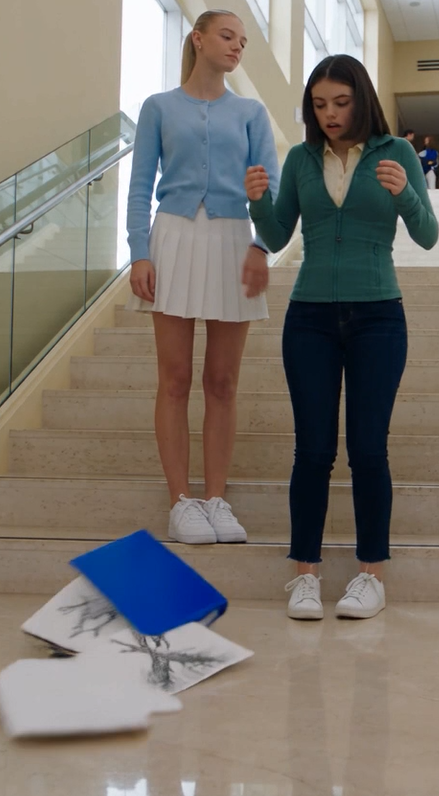
Students deliberately planted their elbows across her desk, making it difficult for her to work. Her art portfolios were knocked from her hands on crowded staircases, followed by apologies that sounded rehearsed and insincere.
When she walked between classes, shoes repeatedly scraped against the backs of her sneakers.



