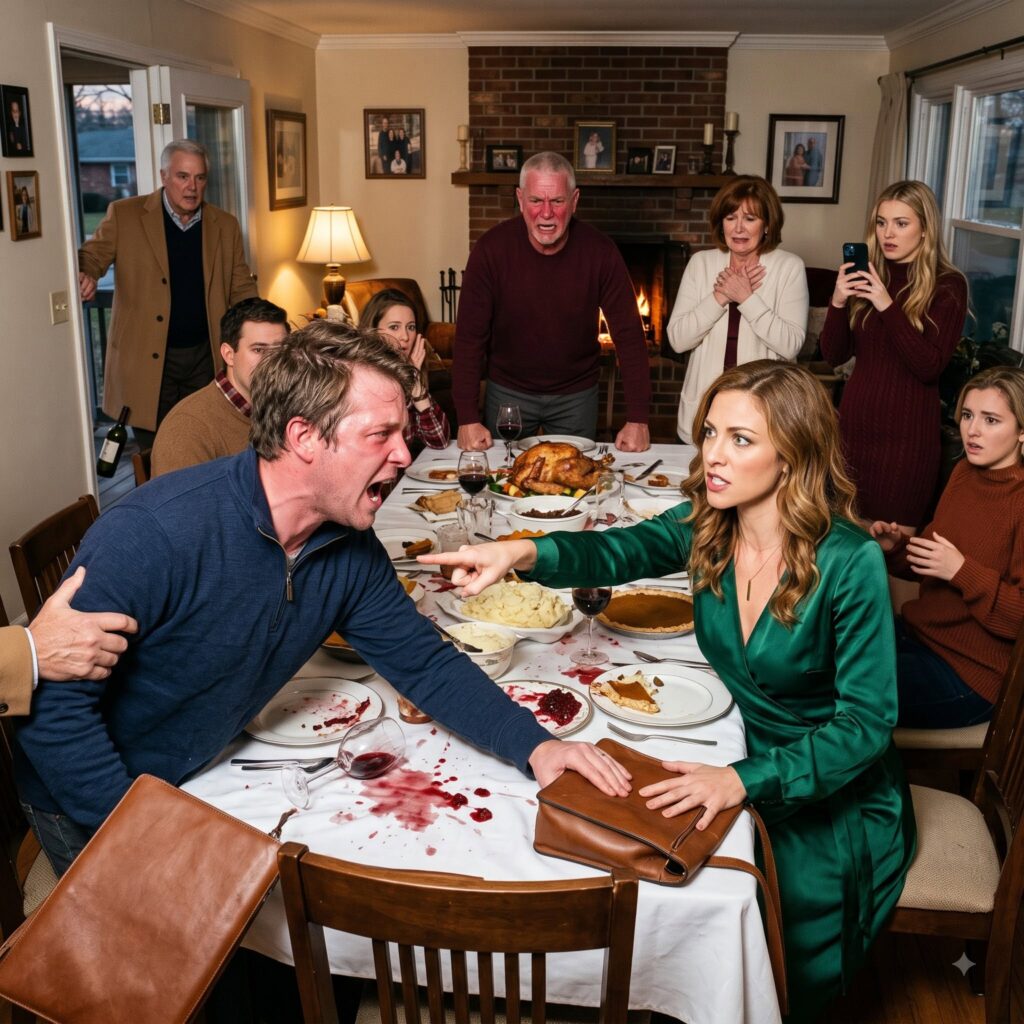
Dad looked at the stained folder, then at Tyler. For a long moment, nobody spoke.
Tyler broke first. He always did.
“It was one contract,” he said, pacing, hands in his hair. “The federal freight contract. We missed delivery windows because of driver shortages, and my bonus targets were due, so I adjusted a few numbers. Then a few more. Then two years went by.” He laughed, a horrible sound. “I lost money trading options, Dad. A lot. Your two hundred thousand just disappeared. I thought if I kept Calloway looking healthy until the sale, nobody would ever look.”
“And my house?” Dad asked, very quietly.
“I was going to fix it.”
“With what, Tyler?”
Tyler had no answer. He sank into a chair and covered his face, a thirty-six-year-old man who suddenly looked about twelve.
Whitaker cleared his throat. He looked ten years older than when he had walked in. “Tyler, I need your badge and laptop in the morning. I’m sorry, Raymond, to do this in your home. The board is required to report this to the contracting agency.”
“I know,” Tyler whispered. “I know.”
The relatives left in twos and threes, avoiding my eyes the way people do after watching a family catch fire. Aunt Linda squeezed my hand at the door. Whitaker went last, driving Tyler home himself. On the porch, he turned to me. “Your offer stands, Ms. Brennan. If Calloway reports this ourselves, those eleven hundred jobs survive.”
Then it was just Dad and me in a kitchen full of cold turkey.
He picked up the folder and began wiping cranberry sauce off the cover with a dish towel, slowly, like it mattered. I let him.
“Nine years ago,” he said, “you quit your job the year your mother died, and I told you she didn’t leave you that money to chase trucks.”
“I remember.”
“I thought I was being strong for both of us.” He set down the towel. “I invited you today to embarrass you, Maya. I told myself I was shaking you awake. If it hurt enough, you’d come home and take a safe job at Tyler’s company.” His jaw trembled. “That wasn’t love. That was pride, and I used it like a weapon.”
I had imagined this moment for nine years. In every version, I felt triumphant. Standing in that kitchen, I only felt tired, and so much sadder than I expected.
“I should have told you, Dad,” I said. “I didn’t want your love to depend on a number. So I hid the number. That was my pride.” I took a breath. “Mom’s money bought one used box truck. It’s still parked behind our Dayton terminal.”
He let out a laugh that turned into a sob. “You kept it?”
“Of course I kept it.”
We sat there for a while with the dish towel between us. Then I told him the other thing.
“I’m paying off the second mortgage, Dad. Priya’s already drafting the paperwork.”
“No.” His chin lifted, the old stubbornness. “I won’t take your money.”
“You taught me never to leave a debt unpaid,” I said. “This one belongs to the family.”
He was quiet for a long time. “Then I’ll pay you back.”
“A dollar a month,” I said.
“Deal,” he said, and we both laughed, wet-eyed, at one in the morning.
On Monday morning, I sat across from Calloway’s board in a glass conference room, and for the first time in nine years, nobody asked me to prove I belonged there. Harold Whitaker slid a signed disclosure letter across the table. Calloway would report the falsified records to the contracting agency itself, before anyone else found them. My team would stand behind the company through the review. The price came down by eleven million dollars to cover penalties, and not one board member objected.
“Eleven hundred drivers and warehouse workers keep their jobs,” Whitaker said. “Because of you.”
I thought of Dad’s face over the folder. “Because of a lot of things,” I said.
Tyler walked into the U.S. Attorney’s office in Columbus on his own two weeks later, with a lawyer I did not pay for, and told them everything. He pleaded guilty to one count of making false statements. The judge sentenced him to eighteen months and ordered restitution. He wrote to me from the federal camp in the spring, three lines on lined paper: I’m sorry. I was jealous of you my whole life and too proud to admit it. I’m going to earn my way back. I read it twice and drove it to Dad’s house myself.
Dad read it standing in the kitchen. He didn’t say anything for a while. Then he took a pen and wrote back, and every Sunday since, he has driven two hours to sit across from my brother in a plastic chair. Some families break and stay broken. Ours is being rebuilt one Sunday at a time.



