By late morning, my attorney, Michelle Grant, was beside my hospital bed.
“I need you to see something,” she said.
She opened a title-company email she’d received after calling the closing agent listed on the documents police had photographed.
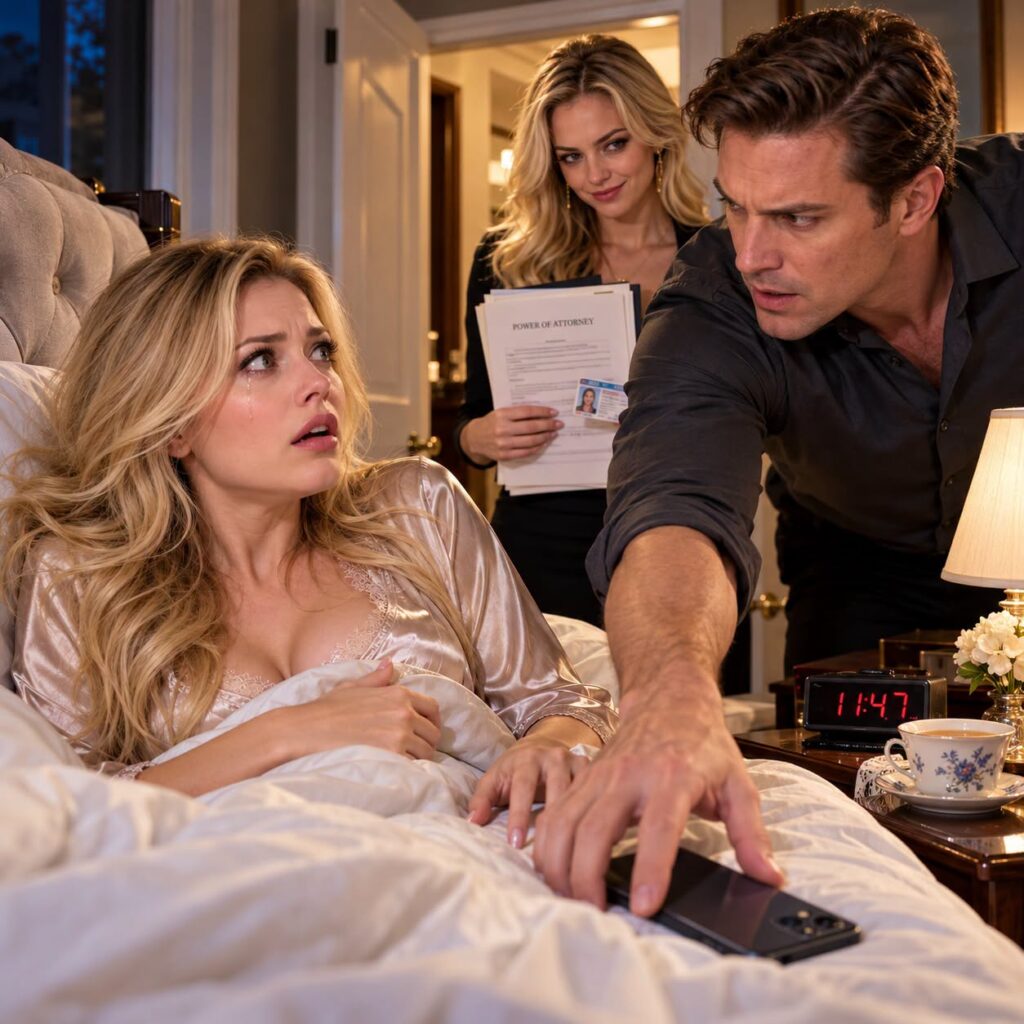
Someone had submitted a durable power of attorney naming Daniel as my agent. It carried my signature and a Tennessee notary’s seal. Under that document, Daniel had signed a contract selling the farmhouse for $920,000.
Less than half its recent offer.
“The buyer is Orchard Ridge Holdings,” Michelle said.
I recognized the address on the company’s filing. It was Leah’s real estate office.
My sister wasn’t helping Daniel steal an inheritance. She was buying it from him at a discount, through a company she controlled. An investor had already agreed to purchase it from her for more than $2 million.
“There’s more,” Michelle said.
The notarized power of attorney stated I’d appeared in person the previous Thursday.
But Thursday I’d been in Chicago at a financial compliance conference. I had boarding passes, hotel receipts, and photographs with colleagues.
Michelle zoomed in on a security still the title company’s investigator had obtained from the notary’s lobby after the closing agent questioned the identification and requested a security review.
A blonde woman stood at the counter wearing my navy coat. My driver’s license lay in front of her.
Leah had dyed her hair to match mine.
Beside her stood Daniel, one hand resting on her back.
At the bottom of the email was the closing appointment: 9 a.m. tomorrow.
They hadn’t merely forged my signature.
They’d sent my sister to become me.
“Call the title company back,” I told Michelle. “Tell them the person who supposedly signed that document is sitting right here, ready to swear she didn’t.”
Michelle put me on speaker. I gave the closing manager my full name, answered the identity questions, and stated clearly that I’d never signed a power of attorney or authorized a sale.
The manager immediately placed the closing on hold. Michelle followed with a written fraud notice, my sworn statement, and copies of my Chicago travel records. She notified the title insurer and county register’s office about the suspected forgery and began preparing an emergency court filing to block any attempted transfer.
Then I made the call I’d dreaded most.
Daniel answered on the second ring.
“Claire, sweetheart. You scared me last night.”
“Who taught Leah how to sign my name?”
Silence.
“You’re spiraling,” he said finally. “Let me come get you.”
“No. You don’t get to call me unstable because I found your paperwork.”
He hung up.
I wanted to scream. Instead, I forwarded every bank statement, email, and estate photograph I’d preserved to Michelle and the detective assigned to my report.
I’d worked in financial fraud investigations before changing careers. I knew an accusation wasn’t enough. Dates, records, and independent witnesses mattered.
My conference organizer confirmed I was speaking onstage at the exact time the notary claimed she’d verified my identity. The lobby footage showed Leah entering in my coat and leaving with Daniel. Detectives obtained the notary’s journal and found that the listed identification details had been copied from my stolen license.
The hospital’s initial screen raised concerns about sedative exposure. Follow-up laboratory testing identified medication I had never been prescribed. Investigators tested the tea officers had collected and reviewed my medical records. They later found matching prescription medication among Daniel’s belongings.
By Monday, the sale was dead. No deed had transferred. No investor had received the land.
Leah still called me.
“Mom would have wanted us to split it,” she sobbed. “I only needed the money because my business was drowning.”
“Then you should’ve asked me.”
“You would’ve said no.”
“Yes,” I said. “And that was my right.”
The criminal case took months. Daniel eventually pleaded guilty to charges arising from the drugging and forged documents. Leah pleaded guilty to her role in the impersonation and property-fraud scheme. Both received prison sentences. Leah also lost her real estate license through a separate disciplinary proceeding.
I divorced Daniel. Michelle helped me change the locks, secure my accounts, and place fraud alerts on my credit reports. I started seeing a therapist, not because Daniel’s accusations were true, but because fear does not vanish the moment a courtroom empties.
I kept the farmhouse, which had always been mine alone. The orchard needed pruning. The porch steps sagged. Some mornings, grief still hit me before my feet touched the floor.
But I could finally sleep.
On the first anniversary of Mom’s death, I walked to the hill behind the trees with a cup of coffee. I told her I had protected the place she loved.
I walked back down the hill as sunlight reached the kitchen windows.
They had stolen three weeks of my nights, but they would never steal another morning.



