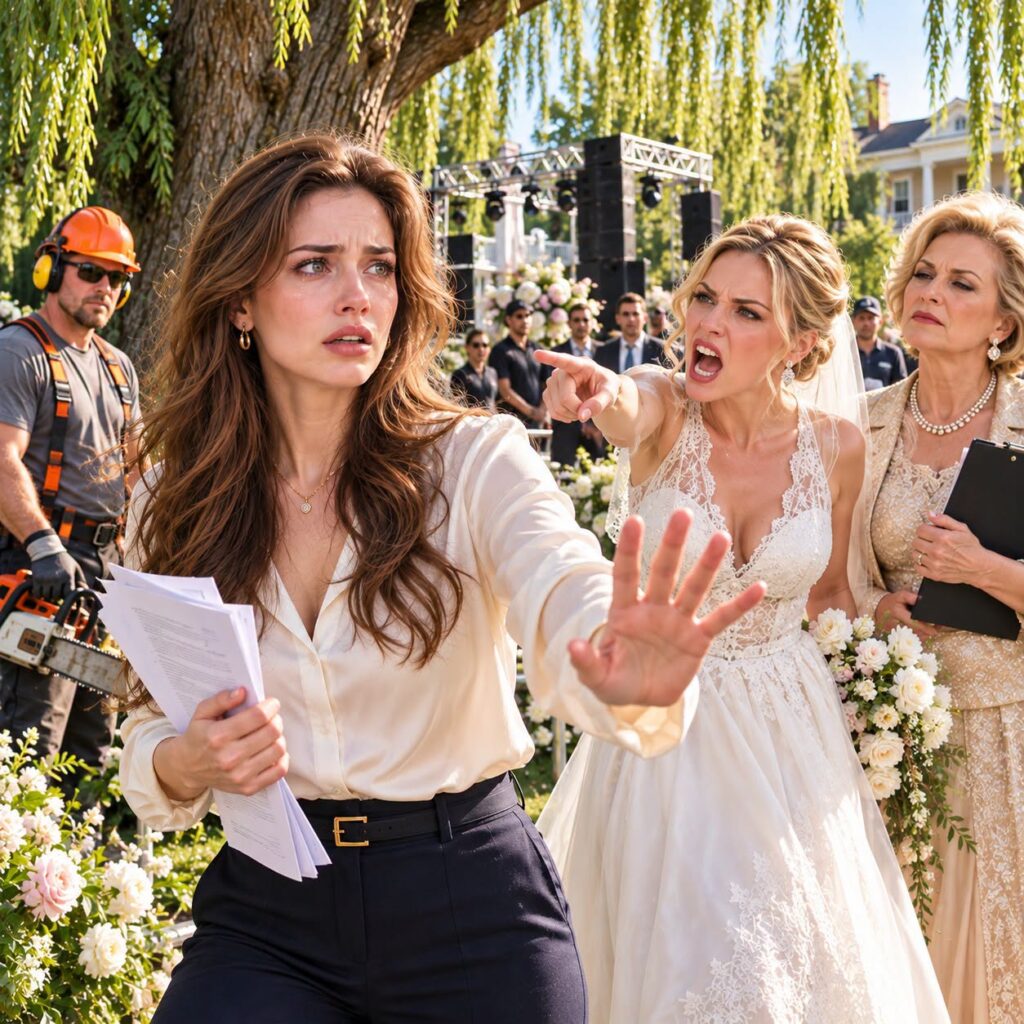
Rachel sent him a photograph instead.
I recognized the backdrop immediately. Not Grandma’s lawn. It was the interior of a production warehouse I’d visited for a corporate landscaping job. I found the venue’s public social-media post from Thursday night: the same DJ stage, same blue lights, same scratch across the left speaker.
Only Rachel’s photograph had substituted Grandma’s property behind it, erasing the willow altogether.
I forwarded both images to Lionel. “She fabricated the setting.”
“That establishes dishonest photographs,” he cautioned. “Not necessarily an invalid marriage.”
He was right. I hated that he was right.
That evening, I drove back to the farmhouse to lock the garden gates. A black SUV waited beside the road.
A woman stepped out carrying a manila envelope. She looked exhausted, as though she’d been awake for days.
“Are you Mara?” she asked. “I’m Ava Mercer.”
The name meant nothing until she opened the envelope.
Inside was a certified marriage certificate from Durham County. The groom’s name was unmistakable.
Ethan Mercer.
Rachel’s groom.
Ava handed me a printout from the county court docket. Her divorce petition had been filed eight months earlier. No final judgment had been entered.
“He promised he’d tell your sister,” she whispered. “But Rachel already knew.”
She showed me a message Rachel had sent three weeks earlier:
DON’T RUIN THIS. AFTER THE TRUST PAYS OUT, I’LL MAKE SURE YOUR DIVORCE GETS FINISHED.
And then Ava said something that made my blood run cold.
“Your mother offered me money to keep quiet.”
“How much?” I asked.
“Twenty thousand dollars,” Ava said. “For agreeing not to contact the trustee until after the money changed hands.”
She played me a voicemail. Mom discussed the payment without hesitation.
I sent Lionel the recording and Ava’s message thread. He filed an emergency petition to prevent any distribution until the marriage claim could be examined. The contractor’s records traced that authorization to Mom’s email account, with my signature lifted from an old repair contract. Lionel sent the records to the sheriff’s office.
Rachel showed up at the farmhouse Monday wearing her wedding ring and a smile that looked painful to hold.
“You found some bitter ex,” she said. “Congratulations.”
“Ava isn’t his ex.”
“Ethan said the divorce was basically done.”
“Basically divorced isn’t divorced.”
Mom stormed through the kitchen door. “You’re trying to steal your sister’s inheritance.”
I laid Ava’s records on the table.
“You knew,” I said.
Neither woman answered.
Then Lionel arrived with a copy of the Friday “certificate” Rachel had sent him. It was a souvenir document from a wedding-photo service, not a certified government record. The officiant listed on it told Lionel she had never conducted Rachel’s ceremony.
Rachel’s face lost its color.
“I just needed the paperwork to look finished,” she muttered.
Mom grabbed her arm. “Stop talking.”
But the room had already changed. Rachel had a lavish party, a designer dress, and a ring. She didn’t have a lawful marriage. Ethan’s previous marriage remained in force, making his attempted marriage to Rachel void under North Carolina law.
Daniel was waiting on the porch when everyone left.
“We can still have our wedding in October,” he said.
I looked toward the willow. A shallow gash from the crew’s equipment scarred its bark. The tree surgeon said it should survive, but the sight of that wound made me ache.
“I don’t want to marry you to win a race,” I told him.
“Then don’t.”
“I want to marry you because you stayed when things got ugly.”
He took my hand. “That sounds like the only reason worth marrying.”
Two weeks later, after getting our marriage license, we exchanged vows under the willow with a minister and two witnesses. No DJ. No expensive flowers. Just Daniel, me, and sunlight moving through the leaves.
Months passed before the court ruled. The records established that Rachel hadn’t entered a valid marriage and that mine was the first qualifying marriage after Grandma’s death. The court authorized Lionel to distribute the estate under the trust terms.
In a civil settlement, Rachel paid for the tree damage and unauthorized work. Mom reimbursed legal expenses her forged authorization had caused. The forgery investigation continued. Neither came to our wedding.
I set aside funds for the willow’s care and kept Grandma’s farmhouse, but I refused to turn her porch into a monument to what we’d won.
Last spring, I sat beneath the tree with Daniel and read Grandma’s old gardening notes. The wind moved through its branches like someone breathing.
My sister had tried to erase a hundred years of roots for five million dollars.
I inherited the money—but what I saved was the one thing no one had the right to sell.



