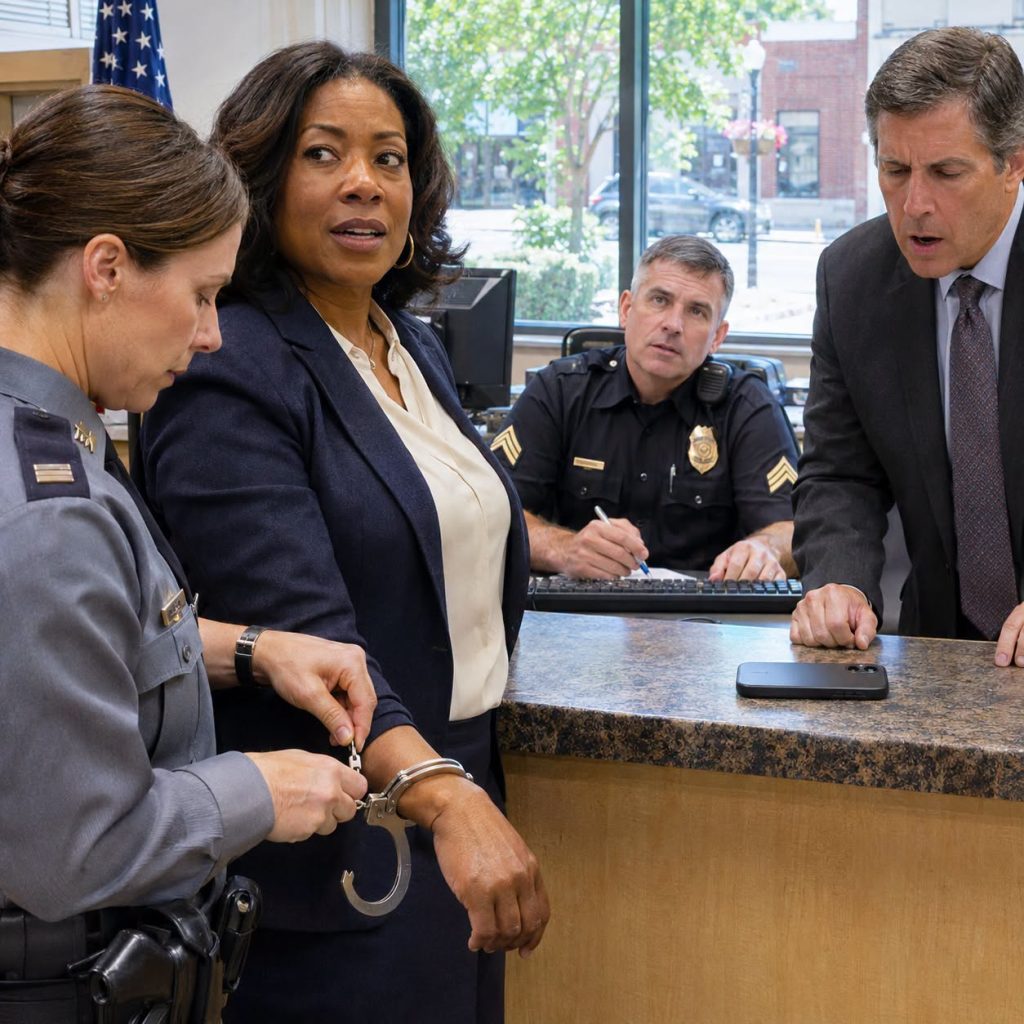
The pattern was clearest in the records Holmes probably never expected anybody to put side by side. A driver would be cleared by dispatch and still get searched. A report would describe a driver lunging, while the camera showed hands flat on a dashboard. Many of the drivers whose accounts were contradicted by altered reports were Black. Investigators found complaints marked resolved in the system, although the people who’d made them said nobody had called them back. Several arrests that had looked defensible on paper fell apart as soon as prosecutors heard the original dispatch tapes.
Terrence agreed to meet me at a diner near his old campus. He arrived in a work shirt with his first name stitched above the pocket and kept checking the clock over the counter. He had forty minutes before his shift. His arrest had cost him a paid placement with a local electrical contractor, he told me. He had withdrawn from two classes to work more hours. “Everybody keeps telling me the charge was dismissed,” he said. “I know. I’m the one who still has to explain why I left school.”
I asked him what he wanted the investigators to hear. He said there’d been a passenger in his car, a classmate who’d offered to testify. Nobody had interviewed her. He still had her number, and when the investigators called, she remembered that Terrence had asked Holmes for permission to take his seat belt off. She remembered because Holmes said yes and then wrote that Terrence had moved without warning. Terrence gave a statement himself the next week. This time he took the morning off. He said he wanted enough time to tell it once, all the way through.
Holmes pleaded guilty. At his federal sentencing, I sat behind Terrence, who’d brought his sister and asked her to hold his statement until it was his turn. Holmes received seven years in prison and three years of supervised release. He surrendered his law enforcement certification and agreed to a lifetime ban from police work. Lewis cooperated with investigators, admitted to altering reports, and was demoted and removed from supervisory duty. When Terrence finished reading his statement, he folded the pages slowly. We waited for him to finish before we left.
Months later, Kyle Moore invited me to sit in on a training session for new officers. He’d been commended for preserving the video and was teaching recruits their duty to intervene. He played the ten seconds when Holmes asked him to say he’d seen me reach. Then he paused the video. “Right here,” he said, pointing to himself on the screen. “I could’ve said, ‘Take the cuffs off. I saw her hands the whole time.’ I said half of that. I want you to practice saying all of it.” He walked to the back of the room and let them try.
When Terrence finished his electrical program the following spring, he sent me a picture of his certificate. His sister had taken it in the parking lot because he had to get to work and she didn’t want him leaving without a picture. I called to congratulate him. He told me he’d asked his new supervisor for the afternoon off and got it. Then he laughed and admitted he’d never asked for the afternoon off in his life.
That Sunday, I dropped my niece’s keys on her kitchen counter. She asked if I wanted her to drive us to lunch. I picked them back up and told her to grab her jacket. We took the road through Hamilton. Halfway down the block where Holmes had stopped me, she asked what I wanted to eat. “Fried catfish,” I said. She laughed. “You sound just like Grandma when you say that.” I waited until the light turned green, then asked if she wanted to call Grandma and tell her where we were headed.
What do you think of this story? Please leave a like and share your thoughts in the comments. Your support means a lot to us and inspires us to keep writing more meaningful and powerful stories. Thank you! 👍❤️



