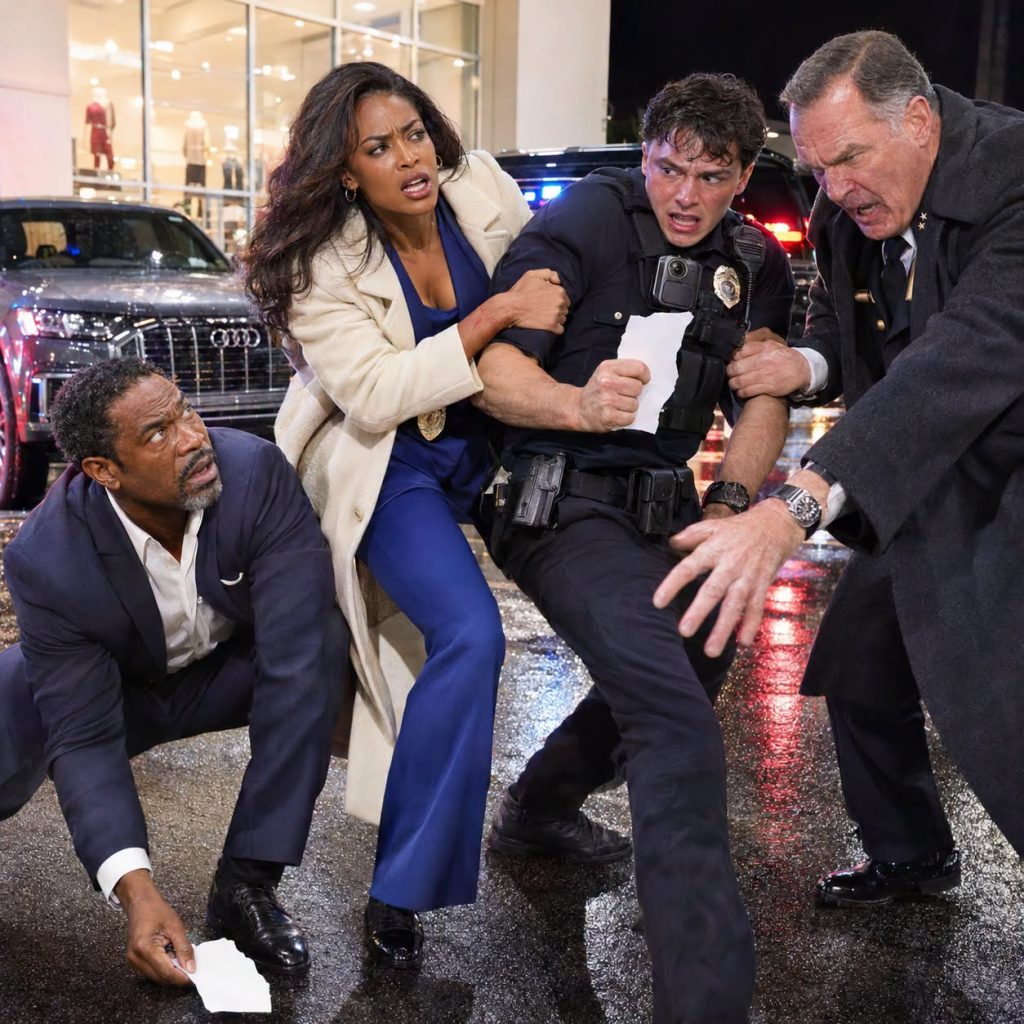
I didn’t question him. Neither did Claire. We gave separate statements, handed over our phones for copies of the recordings, and went to an emergency department. While a nurse photographed the marks on my wrist, Claire sat beside me with an ice pack balanced on hers. “I should have stayed in the car,” I said. “I should have reached for my badge sooner.” She looked at me until I stopped. “We can spend all night finding different ways to make this our fault.” I bowed my head. She moved closer. “Or we can tell exactly what happened.”
The investigation belonged to another team and prosecutors outside my chain of command. I became what I had asked so many frightened people to become: a witness willing to surrender control. Over the following weeks, investigators obtained warrants for phones, messages, and departmental records. The answers arrived slowly. Rourke had learned my name from the meeting correspondence. An employee at the hotel where our review team was staying had photographed our car for cash. Rourke supplied its plate to Voss with the forged pickup sheet. There had been no carjacking alert.
They had planned to take us to the abandoned building, separate us, seize our devices, and manufacture a report claiming we had impersonated federal officials. Messages recovered from Voss’s phone explained the rest: keep us inaccessible overnight, search what we carried, and buy Rourke time to destroy records before the federal review. The building’s access log and surveillance from a neighboring business showed Rourke visiting that afternoon. Investigators found fresh restraints and an unlocked interview room inside. Nobody could prove what further violence he might have intended. What they could prove was frightening enough.
The original allegations came from a mechanic named Leon Watkins. Voss had stopped him outside his own shop, taken eleven thousand dollars from a bank withdrawal, and reported that Watkins had abandoned it. Watkins complained. Rourke buried the complaint. When Watkins obtained surveillance footage, Rourke threatened his business license. He sent copies to my office anyway. Six other drivers eventually came forward. Their stories differed in detail, but certain phrases repeated. Wrong neighborhood. Suspicious vehicle. Stop asking questions. At one interview, Watkins looked at my wrist and said, “So he does that to everybody he thinks he can.”
Nolan testified under oath about the false briefing and his own actions. He did not receive a clean slate. He lost his job, and the civil settlement addressed his role along with the others. Brooks admitted that she had dismissed warning signs in earlier complaints. She testified too. Months later, in federal court, Voss’s attorney called the stop an unfortunate misunderstanding. The prosecutor played Nolan’s body camera. The courtroom heard Claire identify herself. It heard Voss order the camera off. Then it heard the radio transmission, followed by the demand that we enter his cruiser. Nobody needed me to explain the silence afterward.
Rourke and Voss were convicted of civil rights offenses and obstruction. Their sentences came at a later hearing. I attended beside Claire, listening as Watkins described the employees he couldn’t pay after losing his money. The department’s settlement compensated the affected drivers, required an outside audit of seizures, and placed stop records and camera compliance under independent monitoring. Watkins recovered his money. His daughter still drove him to the courthouse because police lights made his hands shake. A judgment could return what had been taken from his account. Other repairs would take longer.
A year after the stop, Claire and I parked outside Watkins’s reopened shop. He met us wearing work gloves, with three employees arguing cheerfully over a stubborn engine behind him. “You two doing okay?” he asked. Claire slipped her hand into mine. “Getting there.” Watkins nodded. No speech. No photograph. Just room for the truth. Driving home, I saw a cruiser in my mirror and felt my chest tighten before it turned away. Claire noticed. She always did. “Still here,” she said. I squeezed her hand at the next red light. “Both of us.”
What do you think of this story? Please leave a like and share your thoughts in the comments. Your support means a lot to us and inspires us to keep writing more meaningful and powerful stories. Thank you! 👍❤️



