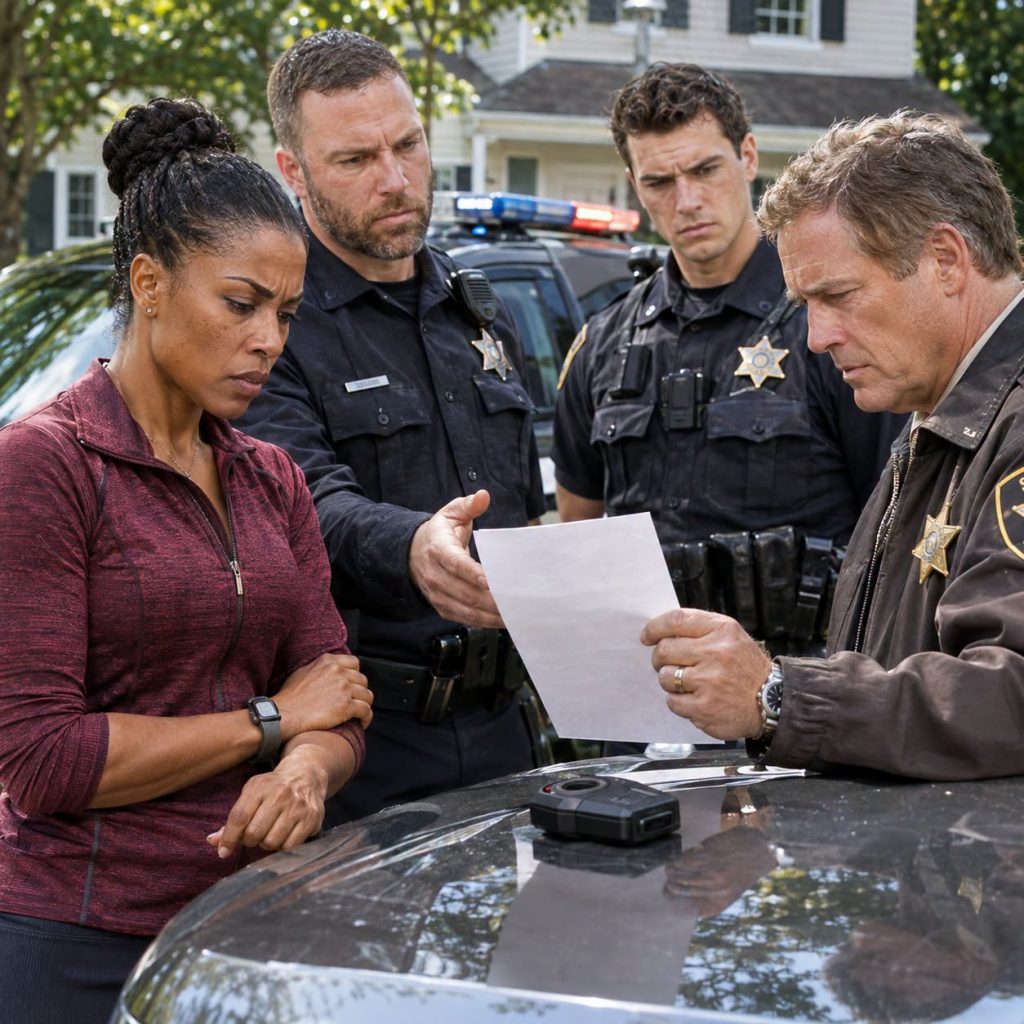
The original dispatch audio gave investigators the rest. There had been no resident complaint about anyone trying car doors. Harlan had radioed the assignment himself as a welfare check at my address. Minutes later, his account changed it to a suspicious-person call and added Tasha as the reporting party. He’d learned my name and address because I’d given them to the county investigator when I offered to drive her. The altered log and prepared report would have made it look as though Tasha had independently accused the person helping her challenge the department. The voicemail was supposed to keep her home long enough for that version to stick.
Callaway’s body camera had caught Miller reading my registration aloud. It also caught Callaway calling my military ID fake after Miller told him the name and photograph matched. The recording I kept thinking about, though, was Miller’s. After the plate check, while Callaway was talking to me, Harlan had called Miller directly. Miller stepped away from the cruiser, but his camera was still running. “Use the report you were given,” Harlan told him. Miller said, “She lives here.” Harlan answered, “I know where she lives.” There was a long pause. Then Miller said, “Okay.”
Both officers were suspended that day. In the months that followed, Virginia State Police and federal civil rights investigators gathered records and interviewed residents about earlier complaints. The town fired Callaway for the unlawful detention and for statements the recordings contradicted. It fired Miller for going along with the detention and signing off on earlier reports he knew were inaccurate. His cooperation that morning went into the record, too. Harlan resigned before the town finished its review. The police chief who’d told Tasha to let him handle the paperwork had left a trail in nearly every place he expected people to take his word.
When the prosecutor dismissed Andre’s citation, he came to my house with Tasha. He was wearing the same navy sweatshirt I’d seen him in at her kitchen table months earlier. He handed me a copy of the dismissal, folded into quarters. “My mom wants me to keep it,” he said. “I was going to throw it away.” Tasha looked at him. “You can throw it away when you feel like it,” she said. “I just wanted you to have something in your hands that said it was over.” He unfolded the paper, smoothed it against his thigh, and put it back in his pocket.
I eventually sat for a deposition in my civil case. The town’s lawyer asked at what point I’d informed Callaway of my rank. I told him when the card fell and when Callaway read it. Then I asked if he wanted to know when I’d told him where I lived. He looked up from his notes. I gave him the answer anyway. “Before he put a hand on me.” Months later, the town settled my case and Tasha’s family’s claim. The agreement also required the town to put an outside reviewer in charge of checking how officers handled complaints and preserved recordings.
The first time I ran down Hawthorn Lane again, I nearly turned around at the corner. Then I saw Ellen at her mailbox in those same slippers. She asked if my wrist still hurt. I told her it did sometimes. “I almost went inside when he told me to,” she said. “I keep thinking about that.” I walked across the street. There were two letters and a grocery flyer in her hand, and she’d been standing there long enough to crease all three. I asked if she wanted to walk the last block with me. She tucked the mail under her arm, and we went home at her pace.
What do you think of this story? Please leave a like and share your thoughts in the comments. Your support means a lot to us and inspires us to keep writing more meaningful and powerful stories. Thank you! 👍❤️



