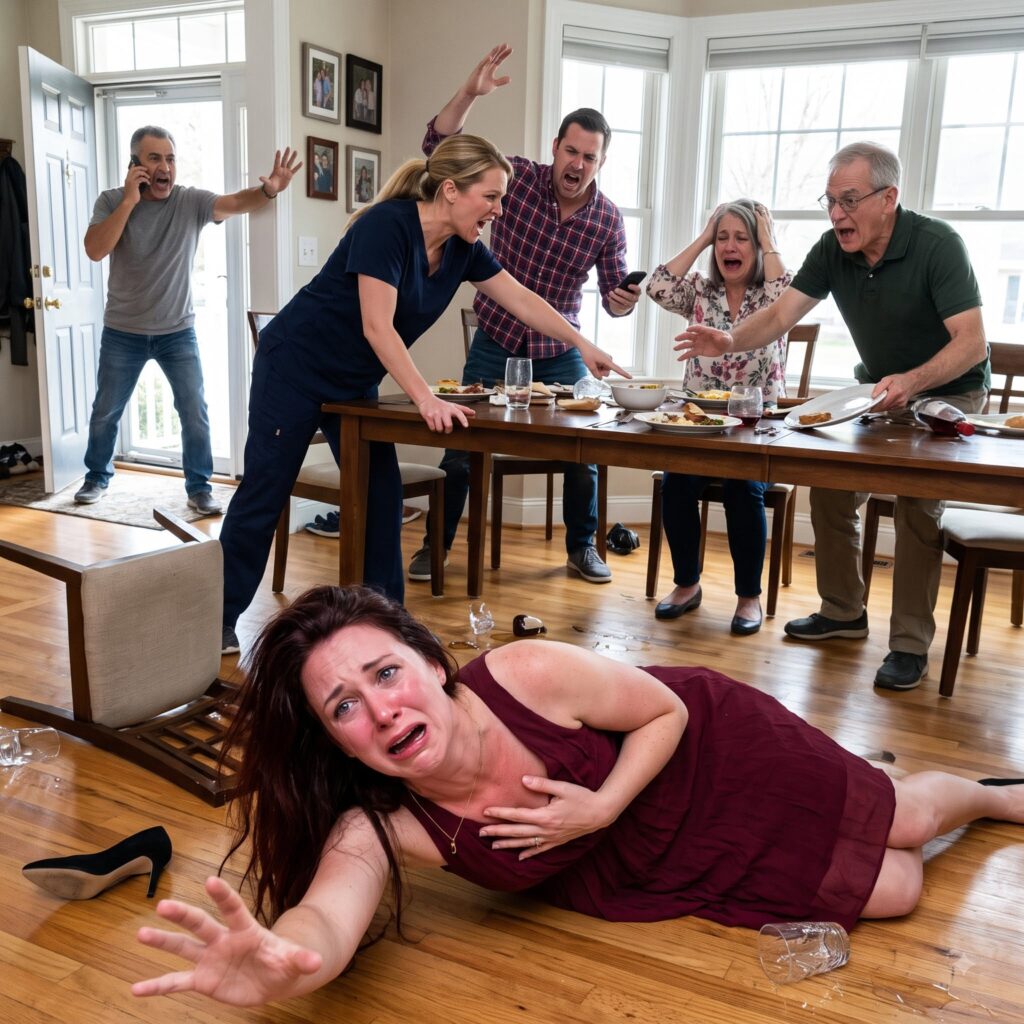
The second Jessica touched the call-button cord, my heart rate spiked—and the alarm went off.
A night nurse burst in. “Hey! You are not assigned to this patient!”
Jessica jerked back. “I was just fixing her cord.”
The nurse stepped between Jessica and my bed and hit the emergency button on the wall. Two security officers arrived in under a minute. Jessica still had my call cord in her hand.
Later, ICU footage showed how she got in: she changed into scrubs from her locker and followed a respiratory therapist through the doors, holding her old badge up for the camera. She hadn’t come to finish what the stroke started. It was almost worse.
The nurse heard her whisper before she realized anyone was behind her:
“You can’t tell them I knew. Please, Megan. I’ll lose everything.”
She wanted the only witness who couldn’t speak to save her.
She was wrong about one thing: I wasn’t the only witness.
There were cameras in the emergency room. Cameras in the ICU hallway. An audit trail inside my chart. A Ring camera at Mr. Delgado’s house. And, most damning of all, the security camera in Ryan’s dining room, which had recorded every minute my family kept eating while I lay on their floor.
Ryan made the decision that finally mattered.
At 3:07 a.m., while Jessica was being questioned downstairs, my brother walked into the hospital security office, put his phone on the desk, and gave them his password.
“Take all of it,” he said. “Not just the clips she told me to delete. All of it.”
His camera showed Jessica kneeling beside me at dinner. It showed her lifting my right arm and watching it fall. It showed her checking my face, checking her watch, and then standing up.
It also saved a text she had sent Ryan from across the table when he went to get my purse:
“Do NOT call. If they pull my morning chart, I’m finished. Trust me.”
Ryan had trusted her. That was his shame to carry—not a crime, the detective told him, but a choice he would have to live with.
Jessica told investigators the truth in pieces, the way people do when every lie has already been recorded.
That morning, she had been at the end of a double shift. I came in with a weak arm and slurred speech, but I also had a history of panic attacks, and Jessica had heard our family call me dramatic for years. She decided in less than a minute that I was anxious. She wrote the note before she had examined me. She sent me back to the waiting room, and when my symptoms eased for a little while, I made the mistake of believing her and went home to rest before dinner.
At my parents’ table, when my face began to droop, Jessica understood before anyone else what was happening.
And she understood what it would prove about that morning.
“If I called 911, they were going to ask when it started,” she told the detective, crying. “They were going to see my note. I kept telling myself she’d snap out of it. Then it was five minutes. Then ten. And every minute I waited, calling got harder.”
She didn’t cause my stroke. A blood clot did.
But she stole the minutes my brain needed. Then she stole three words—“Patient refused testing”—and tried to use them to steal the truth.
The hospital fired her that week. The Ohio Board of Nursing opened an emergency case, and after its hearing, her license was revoked. She later pleaded guilty to tampering with records and reckless endangerment. The judge gave her probation, community service, and a sentence that mattered more to me than jail would have: she could never work as a nurse again.
The hospital settled my claim without forcing me to stay silent. I refused to sign anything that would have turned my story into a secret. The money paid for rehabilitation, home changes, and the months I could not work as a third-grade teacher. It did not buy my forgiveness, and no one at the table that night got to pretend it did.
My parents didn’t ask me to forgive them in the hospital. My mother sat beside my bed during speech therapy, listening to me fight for words as simple as cup, door, and home. One afternoon, after I finally said her name clearly, she whispered, “I taught them to call you dramatic. You came to us as a scared teenager, and instead of protecting you, I made it a family joke. I will spend the rest of my life being sorry for that.”
Dad simply said, “We believe you now. We should have believed you first.”



