He leaned closer.
“Oh, and by the way, I filed for divorce last week. That house was bought during our marriage. That makes it community property. Half of it’s mine. My lawyer says your parents won’t see the inside of it for years.”
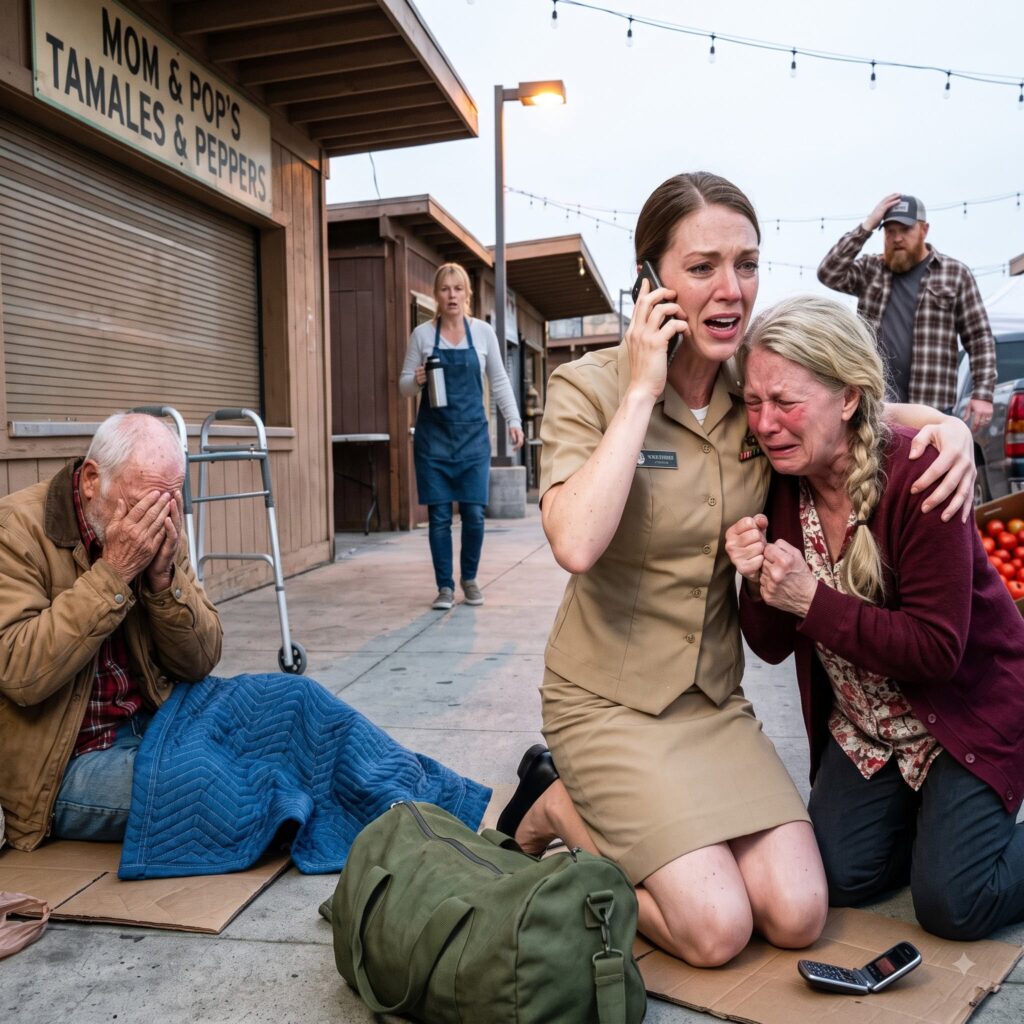
Before I could answer, my phone rang. It was my mother, screaming.
“Elena! It’s your father! He can’t talk, he can’t move his arm! Mija, please, HURRY!”
I ran.
Even as I sped down Blackstone Avenue, I was talking my mother through it on speaker the way I’d talked dozens of families through it in the ER.
“Mamá, look at his face. Is one side drooping? Can he lift both arms? What time did it start?”
“Ten minutes! Maybe ten!”
“Hang up and call 911. Tell them stroke. Say the word stroke.”
I beat the ambulance to the motel by ninety seconds. My father was slumped in the chair by the window. His mouth was pulled down on the right, and his eyes were full of fear. I knelt in front of him, held his face, and kept him talking until the paramedics came through the door.
Because we caught it within twenty-five minutes, the stroke team at Community Regional Medical Center gave him clot-busting medication. By that night, he could squeeze my hand again. By the next morning, he could say my name.
The neurologist told me plainly: “Six weeks without his blood thinner caused this. Another hour, and we’d be having a very different conversation.”
I sat in the hallway outside his room and cried harder than I had ever cried in my life.
Then I wiped my face, called a lawyer, and got to work.
Derek had made one enormous mistake. He’d never actually read the deed.
When I bought that little blue house two years earlier, my parents were terrified I was spending too much on them. To give them peace of mind, I had the title put in their names, Manuel and Rosa Ortiz, as a gift. I paid the down payment from savings I’d built before I ever met Derek, and I kept every bank statement.
It had never been my house. It had never been community property. Derek had no claim to it at all.
So Derek hadn’t evicted his wife’s parents from his house. He had illegally locked two elderly homeowners out of their own home.
My attorney, Raquel Mendoza, filed for an emergency restraining order. She also sent a stack of evidence to the Fresno Police Department, starting with my official Navy records. On the day that text was sent, my ship was four hundred miles off the coast of Guam, and my phone wasn’t with me. Then Raquel subpoenaed my phone carrier. The records showed that every message to my parents came from my phone while it was connected to the Wi-Fi network in Derek’s apartment in San Diego.
Good luck proving it, he’d said.
It took nine days.
On a Tuesday morning, two Fresno police officers and a locksmith met us at Maple Avenue.
Gloria answered the door in my mother’s bathrobe again. This time, she wasn’t smiling.
The officer read the court order aloud. Gloria and Travis had two hours to remove their belongings. Travis argued and refused, then started packing when the officer reached for his handcuffs. Gloria cried, called my mother “selfish,” and slammed every cabinet in the kitchen on her way out.
My mother stood on the lawn, holding my hand, watching it all happen.
When the moving truck pulled away, she walked inside slowly, ran her fingers along the kitchen counter, and found her old Virgin of Guadalupe picture in the trash bag by the door. She wiped the glass with her sleeve and hung it right back on the nail where it belonged.
Then she sat down at her kitchen table and wept.
Derek’s case was quick and ugly.
The Fresno County District Attorney charged him with elder abuse, causing elderly people to suffer harm through his actions, and with impersonating me electronically. His lawyer looked at my Navy records, the phone carrier logs, and the neurologist’s report and advised him to take a plea deal. He got three years of probation, two hundred hours of community service, and a court order to pay my parents’ medical bills and every dollar of their motel stay. He is also never allowed within a hundred yards of them again.
His “community property” claim collapsed the moment my lawyer showed his lawyer the deed. The divorce became final in the spring. I left with my savings, my car, and my name.
Gloria called me once, screaming that I’d “ruined” her son.
“No,” I told her. “He did that himself. I just made sure he couldn’t do it to anyone else.”
Then I blocked her number.



