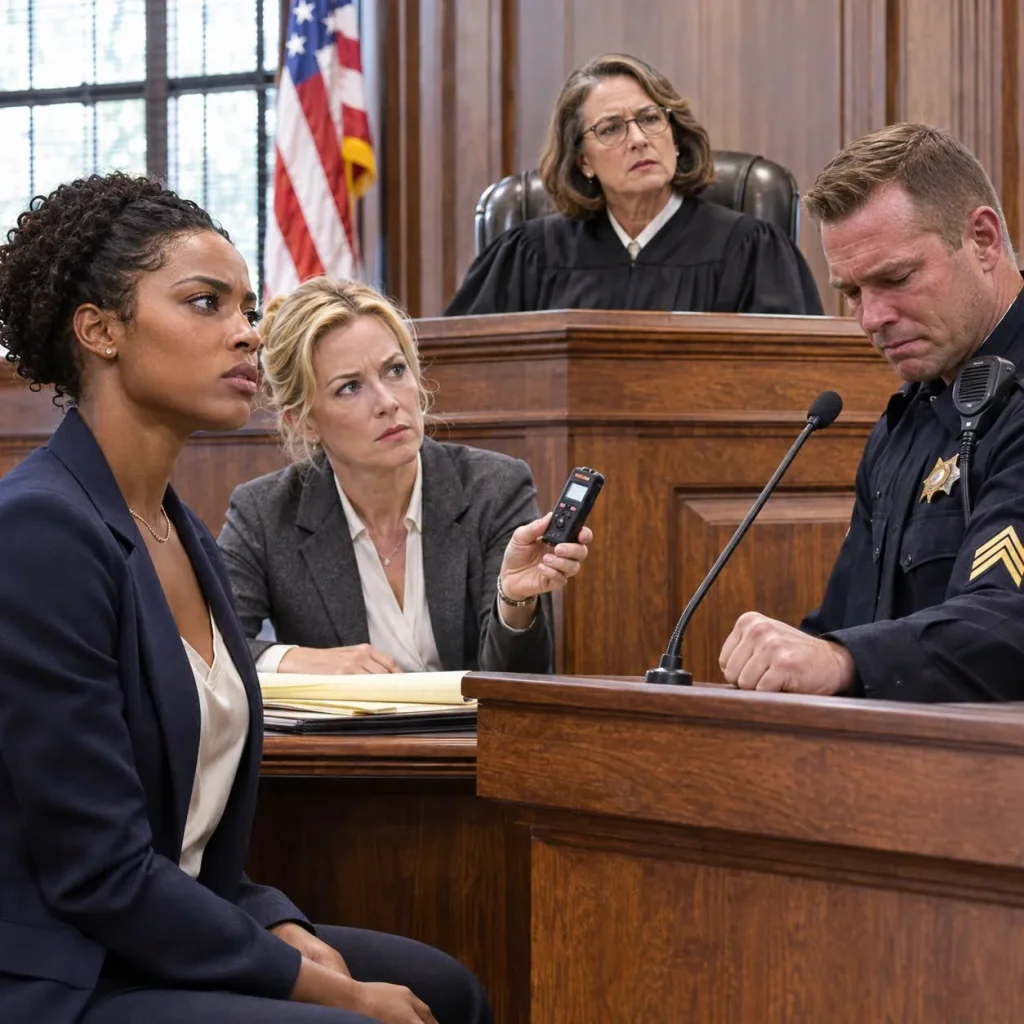
After the recess, Hector’s daughter wheeled him through the courtroom doors. He wore a dress shirt that hung loose around his shoulders. Colleen asked if he remembered giving Bradock a key. He remembered standing on a step stool to take it off the hook behind his register. At first, he said, Bradock had offered to look in on the store at closing. Then he started charging Hector cash for the visits. After Hector refused to pay again, Bradock came in through the back and called him by name. Hector had turned in time to see who hit him.
Colleen gave him a moment. Then she asked what he remembered about me.
“You kept saying my name,” he said, looking over at the defense table. “I was trying to let you know I could hear you.”
I remembered watching his face for any sign that he knew I was there. I’d thought the whole time I’d spent on that floor counted for something only if I could prove what Bradock had done. Here was Hector, telling me he’d heard me long before he could open his eyes.
The jury came back after thirty-eight minutes. I knew because Nana had been checking the clock and told me to take her hand when the door opened. The clerk read “not guilty” twice, once for each charge. The first time I was still bracing for the second. After that, I felt Nana’s grip loosen. She pulled her house keys out of her purse, looked down at them for a moment, and said, “Let’s go home, baby.”
By the next morning, a clip of the testimony was everywhere. The FBI opened an investigation, and Dawson eventually sat down with federal agents. At Bradock’s federal trial I heard him admit he’d helped cover up the racket for years. Bradock had collected money from Beacon Street businesses for nine years. The night Hector refused to pay, he used his account to shut off the camera, let himself in with the key, and tore up the store to make it look like a burglary. He expected to blame somebody once he had a story he could sell. Dawson saw me through the window and told him I was inside. Later, he signed the report knowing exactly where the crowbar had come from.
Bradock was convicted and sentenced to twenty-five years in federal prison without parole. I went to the sentencing with Nana and Hector. When the judge finished, Hector asked if we could get lunch. He wanted a booth by a window and a grilled cheese with tomato. By the time our food came, he was telling Nana she’d been buying the wrong kind of bread from him for fourteen years. It was the first time I’d heard her laugh in a courtroom outfit.
A full scholarship took me to Howard University School of Law. I graduated first in my class and came back to Beacon Street to open a free legal aid office. The mother who’d asked for a photograph of my index cards was there when we unlocked the doors. Her son’s conviction had been overturned by then. He’d volunteered to assemble the chairs in our waiting room. In the years since, our office has helped overturn dozens of wrongful convictions. We still have those chairs.
On opening day, Hector came over with a carton of milk and set it on the desk. “For Ruth,” he said. “You never did bring her the first one.”
I carried it home after work. Nana was at the kitchen table sorting the mail. She slid the envelopes aside and got two glasses out of the cupboard. I poured. Then I sat down and told her about the people who’d come through our door.
What do you think of this story? Please leave a like and share your thoughts in the comments. Your support means a lot to us and inspires us to keep writing more meaningful and powerful stories. Thank you! 👍❤️



